Webinar: Abolition and Liberation

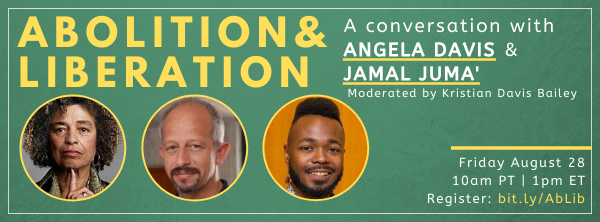
Please join our brothers and sisters at Friends of Sabeel North America (FOSNA) and other partners to hear Angela Davis and Jamal Juma’ discuss the connections between the Black Lives Matter (BLM) calls for police and prison abolition and the Palestinian calls for liberation.
Thursday, August 28, 2020
10:00am PST;  1:00pm EST
Webinar on-line
Event information here →
Free, Registration required
Event Details

Our speakers bring years of on-the-ground experience and strategic thinking to the conversation. Angela Davis has been an activist and liberatory scholar since the 1960s. Her 2003 book Are Prisons Obsolete? laid the strategic groundwork for the current abolition movement, as did the first Critical Resistance Conference, which she co-organized in 1998.

She will be joined, from Palestine, by Jamal Juma’, a leading grassroots organizer since Palestine’s First Intifada in 1987. A founding member of the Palestinian Agricultural Relief Committees, Palestine National BDS Committee, Palestinian Association for Cultural Exchange, and Palestinian Environmental NGO Network, Juma’ is coordinator of the Palestinian Grassroots Anti-Apartheid Wall Campaign and Stop the Wall

Kristian Davis Bailey, who will be moderating their conversation, is a co-founder of Black for Palestine and a co-author of the 2015 Black Solidarity with Palestine Statement signed by more than 1,000 Black activists. He was a member of Black Youth Project 100 and Students for Justice in Palestine. Kristian currently works at Palestine Legal and is a member of LeftRoots.

Kristian Davis Bailey will be moderating their conversation.
More information here →

How Israel wages its war on Palestinian history

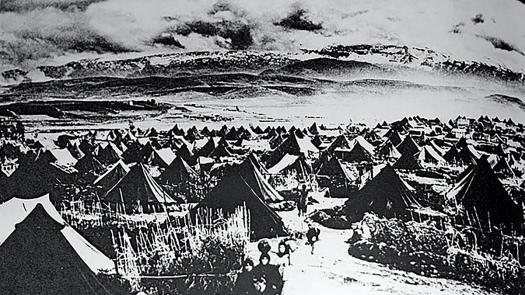
op-17-08-20-Palestinian-refugee-camp
A Palestinian refugee camp in 1949. Israeli archives confirm massacres of Palestinian civilians carried out in 1948, the year Israel was established. (photo: Alamy Stock Photo)
The state is using a variety of means to create a perception that its policies vis-a-vis the Palestinians have been driven by security concerns.

By Jonathan Cook |   The National   | Aug 20, 2020

Israel’s archives are being hurriedly sealed up precisely to prevent any danger that records might confirm long-sidelined and discounted Palestinian history

When the Palestinian actor Mohammed Bakri made a documentary about Jenin in 2002 – filming immediately after the Israeli army had completed rampaging through the West Bank city, leaving death and destruction in its wake – he chose an unusual narrator for the opening scene: a mute Palestinian youth.

Jenin had been sealed off from the world for nearly three weeks as the Israeli army razed the neighbouring refugee camp and terrorised its population.

Bakri’s film Jenin, Jenin shows the young man hurrying silently between wrecked buildings, using his nervous body to illustrate where Israeli soldiers shot Palestinians and where bulldozers collapsed homes, sometimes on their inhabitants.

Continue reading “How Israel wages its war on Palestinian history”

Media show little interest in Israeli bombing of Gaza

Gaza-Bombing
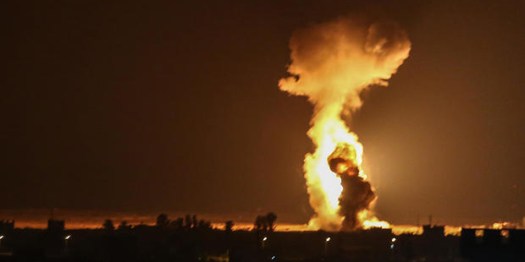
Smoke and flames rise after war planes belonging to the Israeli army carried out airstrikes over the southern Gaza Strip city of Rafah, August 12, 2020. (photo: Said Khatib / AFB via Getty)
The US press has done little reporting on the 11-day (and counting) bombing campaign of Gaza.

By Alan MacLeod | FAIR  | Aug 21, 2020

The story clearly presents the bombing as a reactive Israeli counter-effort—not an attack on Palestine, but a response against Hamas, which it describes not as a political party but as an “Islamist group.’

Israel is bombing Palestine again, although you likely wouldn’t guess that from watching TV news. For the eleventh straight night, Israeli Defense Force warplanes have been bombing the densely populated Gaza Strip. Israel’s bombs have caused considerable damage, forcing the shutdown of the area’s only power plant.

But US corporate media, focused on the coronavirus and election coverage, have shown little interest in the renewed violence in the Middle East. Searching for “Gaza” on the websites of NBC News, CNN, MSNBC and PBS elicits no relevant results. Nor has Fox News addressed the bombings, although it did find time (8/18/20) to cover the archaeological discovery of an old soap factory in Israel’s Negev Desert.

Continue reading “Media show little interest in Israeli bombing of Gaza”

Historic bill would penalize Israel for annexation and apartheid

People march with placards and flagsPalestinians rally against Israel’s West Bank annexation plans in Gaza City on 1 July. (photo: Ashraf Amra / APA images)

This bill would prohibit U.S. military funding to Israel being used for further annexation of Palestinian land in the occupied West Bank.

By Josh Ruebner  | The Electronic Intifada  |  Aug 17, 2020

This bill is significant because it employs the language of human rights and equality in expressing opposition to Israeli annexation and proposes concrete means of holding Israel accountable should it move forward with annexation.

On Friday, Minnesota Democratic Representative Betty McCollum introduced the Israeli Annexation Non-Recognition Act in the US Congress.

The bill prohibits US recognition of or funding for Israel’s potential annexation of additional Palestinian land in the occupied West Bank.

Continue reading “Historic bill would penalize Israel for annexation and apartheid”

Arab envoy warns Israelis that annexation threatens warming ties

The West Bank settlement of Ma’ale Efraim on the slopes of the Jordan Valley in February. (photo: Ariel Schalit / Associated Press)
In an op-ed article written by an influential Arab diplomat, he warned that normalization with Israel would not survive a unilateral land grab at the Palestinians’ expense.

By David M. Halbfinger / Ben Hubbard | The New York Times |  Aug 14, 2020

‘Annexation will definitely, and immediately, reverse all of the Israeli aspirations for improved security, economic and cultural ties with the Arab world and the United Arab Emirates,’
— Yousef al-Otaiba, the Emirates’ ambassador to the United States

JERUSALEM — In a watershed article in a leading Israeli newspaper, a top diplomat from the United Arab Emirates warned the Israeli public on Friday that unilateral annexation of West Bank territory would endanger Israel’s warming ties with Arab countries.

Writing in Friday’s Yediot Ahronot, Yousef al-Otaiba, the Emirates’ ambassador to the United States, appealed directly to Israelis in Hebrew to deter Prime Minister Benjamin Netanyahu from following through on his promise to annex occupied territory as early as next month.

“It’s Either Annexation or Normalization,” the headline over his op-ed declared.

Continue reading “Arab envoy warns Israelis that annexation threatens warming ties”

Beyond failed frameworks: A re-imagined collective future

photo: Al-Shabaka, The Palestinian Policy Network
A policy brief focusing on the possibilities for building a collective vision for a Palestinian future.

By Yara Hawari | Al-Shabaka | July 23, 2020

As Israel moves from de facto to de jure annexation of the rest of the occupied West Bank many third parties desperately hold on to the two-state solution as the one that best protects their diplomatic and trade interests with Israel.

Palestinian futures have long been discussed without Palestinian input or within an imposed and limited framework. Indeed, most ideas of the future in mainstream political spaces rather consistently establish the containment of the Indigenous Palestinians and security for the Israeli settler state as their primary concern. The most recent manifestation of this was the “Vision for Peace” published by United States President Donald Trump’s Administration. 1 2

This “vision” is a far cry from the revolutionary political mandate of the Palestine Liberation Organization (PLO) that was established in the 1960s and which sought to liberate Palestine and its people from the Zionist settler colonial project that established Israel. ³ It is also a far cry from the two-state solution, which was imposed as the most appropriate and feasible future for Israelis and Palestinians and was embedded in the narrative of Israel and Palestine as two warring national groups rather than the outcome of the Zionist project.

Continue reading “Beyond failed frameworks: A re-imagined collective future”

America’s unpredictability casts doubt on annexation – analysis


Then-US Vice President Joe Biden (L) and Israeli Prime Minister Benjamin Netanyahu look at each other as they deliver joint statements during their meeting in Jerusalem March 9, 2016 (photo credit: DEBBIE HILL/REUTERS)
Then-US Vice President Joe Biden (L) and Israeli Prime Minister Benjamin Netanyahu look at each other as they deliver joint statements during their meeting in Jerusalem March 9, 2016. (photo: Debbie Hill / Reuters)
In order to go ahead with annexation, Netanyahu needs certainty in Washington.

By Herb Keinon | The Jerusalem Post | Aug 11, 2020

With Trump trailing in some of the polls by double digits, voices are still being raised, saying that he may push Netanyahu toward annexing now because this will play well with his Evangelical base.

It’s the Americans’ fault.

That, at least, was the subtext of Prime Minister Benjamin Netanyahu’s answer Monday evening to a question in a Channel 20 interview as to why he has not gone ahead and extended Israeli sovereignty to parts of Judea and Samaria.

“It was clear from the start that the application of sovereignty would be done only with agreement from the United States. Otherwise, I would have already done it a while ago,” Netanyahu said. “Trump is now busy with other things, and this [sovereignty] is not on the top of his mind.”

Continue reading “America’s unpredictability casts doubt on annexation – analysis”

Where do Biden’s VP candidates stand on Palestine?

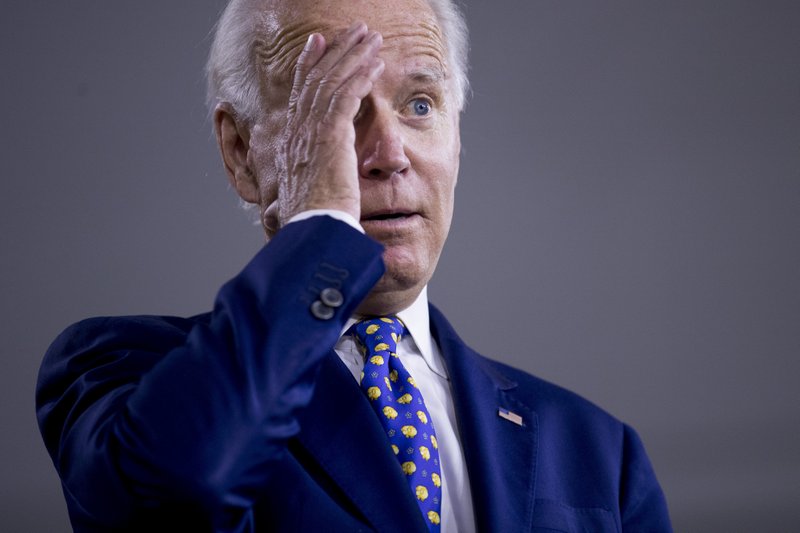
Democratic presidential candidate former Vice President Joe Biden gestures while referencing President Donald Trump at a campaign event at the William “Hicks” Anderson Community Center in Wilmington, Del., Tuesday, July 28, 2020.  (photo: AP Photo/Andrew Harnik)
A look at the women on Joe Biden’s VP short list and their record on the issue of justice for Palestinians.

By Kathryn Shihadah | Israel-Palestine News | Aug 6, 2020

It appears that the only VP candidates to have publicly shown any genuine concern for Palestinians are Elizabeth Warren and, to a lesser degree, Karen Bass. The rest seem focused only on what’s expedient for Israel.

Just a year ago, IAK reported on Candidate Joe Biden and where he stands on Israel/Palestine. In those days, he was one of a slate of 24, and his odds didn’t look great. But he has weathered every storm, and stands now as the presumed Democratic nominee for president.

It would be great if Biden’s running mate – he promised he’d choose a woman – makes up what he lacks in backbone vis-a-vis justice for Palestinians – but does anyone on his short list fit the bill? Let’s take a look.

Continue reading “Where do Biden’s VP candidates stand on Palestine?”

Manchester university divests from firms complicit in Israeli occupation

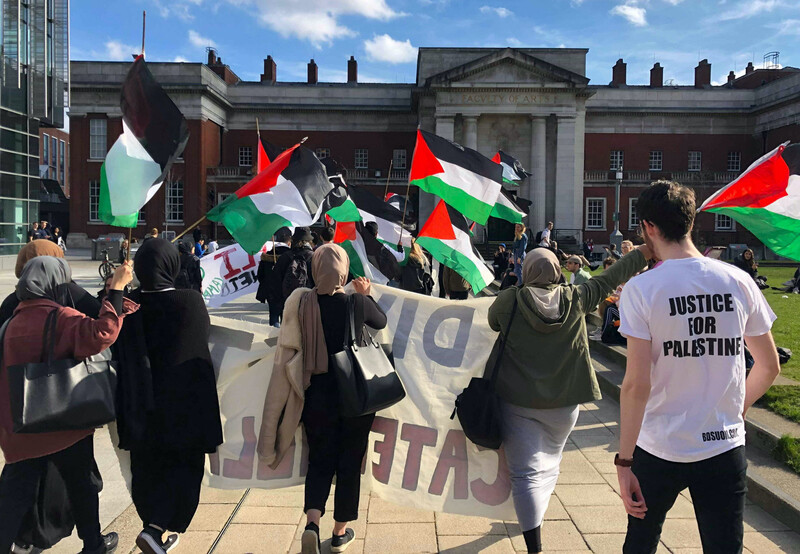
Students campaigning for Manchester to divest from Caterpillar in 2018. (photo: BDS UoM)
BDS efforts to highlight investments contributing to Israel’s apartheid investments claim a victory.

By Asa Winstanley | The Electronic Intifada | Aug 3, 2020

‘University of Manchester divesting from complicit companies shows the power of the grassroots student movement to hold our institutions to account.’
— Huda Ammori, founder of BDS campaign at University of Manchester

The University of Manchester has divested more than $5 million from Caterpillar and the parent company of travel site Booking.com.

Activists on Monday said it was “a colossal win for the Palestine solidarity movement in Britain” and a “watershed moment.”

The university has been a focus for campaigners since 2016 due to its investments in firms complicit in the Israeli occupation of Palestinian land.

Last year students crashed a board meeting to demand divestment from Caterpillar.

Continue reading “Manchester university divests from firms complicit in Israeli occupation”

The Palestinians are caught between ‘waiting’ and ‘the possibility’ of annexation

Israel's Prime Minister Benjamin Netanyahu (L) and EU foreign policy chief, Federica Mogherini shake hands during a press conference at the European Council in Brussels on December 11, 2017 [EMMANUEL DUNAND/AFP via Getty Images]
Israel’s Prime Minister Benjamin Netanyahu (L) and EU foreign policy chief, Federica Mogherini shake hands during a press conference at the European Council in Brussels on December 11, 2017 (photo: Emmanuel Dunand / AFP via Getty Images)
International diplomacy has normalized delays to the detriment of populations concerned with accessing and implementing their legitimate political and legal rights.

By Ramona Wadi | Middle East Monitor |  Aug 4, 2020

‘While the international community is concerned with the ‘possibility’ of annexation…Israel is implementing its annexation scheme on the ground without any deterrence.’
— Hanan Ashrawi, PLO Executive Committee Member

While the Palestine Liberation Organisation has been calling upon the EU to step up from rhetoric to action regarding Israel’s forthcoming annexation of occupied West Bank territory, Europe’s Foreign Affairs Chief Josep Borrell invited Israeli Defence Minister Gabi Ashkenazi to Brussels to meet with the bloc’s foreign ministers.

“While the international community is concerned with the ‘possibility’ of annexation,” said PLO Executive Committee Member Hanan Ashrawi, “Israel is implementing its annexation scheme on the ground without any deterrence.” Israeli plans for further construction in East Jerusalem prompted Ashrawi’s comments, as EU politicians adopt activist tactics by abandoning their power to act both morally and politically and opting instead to write a “protest letter” to Israel’s Foreign Ministry.

Continue reading “The Palestinians are caught between ‘waiting’ and ‘the possibility’ of annexation”