One-State, Two-State

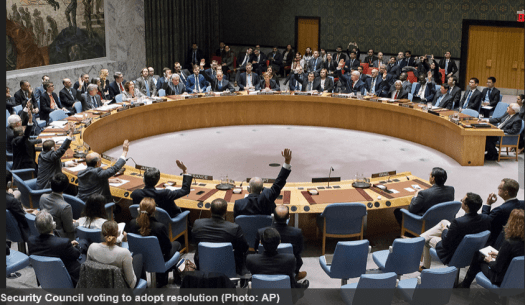
un-resolution2334-vote

By Sarah Robinson
December 31, 2016

[Sarah Robinson is a volunteer with the World Council of Churches who has written about Israel-Palestine since 2012. On Oct 17, 2016, she was refused entry to Israel at Ben Gurion International Airport in Tel Aviv and deported . — Ed.]


In my opinion, [no] solutions are viable without visionary leadership and the willingness to compromise. Recalling the experience of South Africa, bold leadership and compromise brought apartheid to an end, and I believe the same is needed in Israel and Palestine. . . . I believe the appetite of both populations indicates that they are willing to start these talks but the lack of real leadership is restraining any progress.


This week, the Israel-Palestine conflict was nudged into the international spotlight. Last Friday, the United Nations Security Council (UNSC) voted in favor of Resolution 2334 condemning the proliferation of settlement development and expansion in the occupied West Bank and East Jerusalem. Usually, the United States (US) vetoes such resolutions but on Friday they abstained from voting thereby allowing the resolution to pass. Israel was quick to respond with damning language, threatening rhetoric, and victimized aggression. Originally, Egypt put the resolution forward to the UNSC, but after receiving pressure from president-elect Donald Trump, withdrew the application. Thus, a random mix of countries, including New Zealand and Venezuela, resubmitted the resolution which went to a vote. Israel has since accused New Zealand of declaring war in their action to present Resolution 2334 to the UNSC.

On Wednesday, US Secretary of State John Kerry, gave a 1 hour 13-minute speech in Washington DC justifying the US choice to abstain, summarizing the history of US-Israel relations, UN resolutions, and peace negotiations, and outlining five principles to a solution and lasting peace. It was a good speech and it elicited swift condemnation from Israeli Prime Minister Benjamin Netanyahu, however, the speech was about twenty years too late. It rehashed positions and policies that have been ignored or bypassed for decades and although it sounded good, with less than three weeks remaining in the White House, the Obama administration is grasping at proverbial straws. Secretary Kerry pleaded with Israel to not execute the two-state solution but, in my opinion, the death of the two-state solution took place years ago, and this latest activity will not resuscitate it.
Continue reading “One-State, Two-State”

Ralph Nader: An Open Letter To President Obama

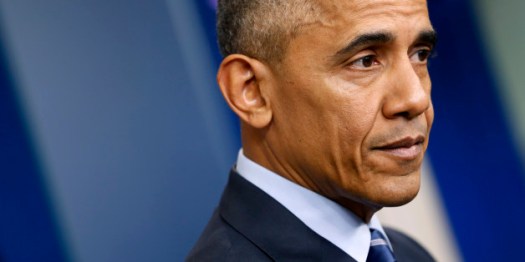
U.S. President Barack Obama participates in his last news conference of the year at the White House in Washington
(photo: Jonathan Ernst / Reuters)

Decision time for Israeli-Palestinian peace

By Ralph Nader / The Huffington Post
December 19, 2016


“[Recognizing Palestine]  is the best — now, perhaps, the only — means of countering the one-state reality that Israel is imposing on itself and the Palestinian people [and] that could destroy Israeli democracy and will result in intensifying international condemnation of Israel.
— Former U.S. President Jimmy Carter


Dear President Obama:

On November 28, 2016, Jimmy Carter, the President who negotiated the peace agreement between Israel and Egypt in 1978, wrote an op ed for the New York Times titled, “America Must Recognize Palestine.” His urgent plea was directed to you to take “the vital step . . . to grant American diplomatic recognition to the state of Palestine, as 137 countries have already done, and help it achieve full United Nations membership,” before you leave office on January 20, 2017.

Mr. Carter referenced your reaffirmation in 2009 of the Camp David agreement between Israel and Egypt and United Nations Resolution 242 when you called “for a complete freeze on settlement expansion on Palestinian territory that is illegal under international law.” He noted that in 2011 you made clear that, in your words, “the borders of Israel and Palestine should be based on the 1967 lines” and that “negotiations should result in two states, with permanent Palestinian borders with Israel, Jordan and Egypt, and permanent Israeli borders with Palestine.”

Former President Carter sees that the “combined weight of United States recognition, United Nations membership [for Palestine] and a UN Security Council resolution solidly grounded in international law would lay the foundation for future diplomacy.” Continue reading “Ralph Nader: An Open Letter To President Obama”

Encountering Peace: Encountering Peace?

showimage
Demonstrators hold Palestinian flags during a rally in Nabi Saleh. (photo: Reuters)

Most of the world, including the Arab world does not really care about the Palestinian people and their cause.

By Gershon Baskin / The Jerusalem Post
December 7, 2016


And while everyone is busy talking about BDS, Israel is continuing to build settlements and confiscating more land from the Palestinians. But to what cause? That is what troubles me. There will be no imposed solution to the Israeli Palestinian conflict. No one can force the Israelis and the Palestinians to act against their own interests, nor will any world power apply effective pressure on Israel and the Palestinians to do what they are not prepared to do.


I don’t know what Prime Minister Benyamin Netanyahu thinks, what his plans are, his grand strategy for the future of Israel. I know that he is an intelligent man. I know that he does think strategically. I know that he sees himself and his position in historical terms. I believes that he believes that he is the savior of the Jewish people and the State of Israel. He has told us that he is here to prevent the next Holocaust and that he will never compromise on Israel’s security.

But what’s beyond that? What does he really want to do with Judea and Samaria? Does he really imagine that the creeping annexation, now being advanced by a new law that gives the right to the government to confiscate private Palestinian land and turn it over to Israelis, will continue to go by unnoticed and be unchallenged?

Continue reading “Encountering Peace: Encountering Peace?”

Israel Needs to Decide Its Own Policy

tzipi-livni
Tzipi Livni, a leader of the opposition in the Israeli parliament, at a 2015 summit in London. (photo: Stefan Wermuth/Reuters)

Q&A with former Israeli peace negotiator Tzipi Livni

By Ruth Eglash and William Booth / The Washington Post
December 6, 2016


We need to understand what we all are facing. This is against foreigners and Jews. Anti-Semitism is raising its ugly head in different parts of the world. All together we should fight terrorism, fight anti-Semitism, fight xenophobia and fight for our values. This is what makes Israel part of the free world. Instead of saying workers of the world unite, moderates of the world should unite.


The government of Prime Minister Benjamin Netanyahu is fretting over what President Obama may or may not do in the waning days of his administration.

Will Obama endorse a U.N. resolution enshrining a rough outline for what a two-state solution to the long-running Israel-Palestinian conflict should look like — regarding future borders, the fate of the Jewish settlements and Palestinian refugees, the sharing of Jerusalem?

Or maybe Obama will give a speech.

Or send Secretary of State John F. Kerry to Paris to mull the “French initiative” to push for an end to Israel’s 50-year military occupation, a conference that appears to be stalled.

Or. Or. Or.

Continue reading “Israel Needs to Decide Its Own Policy”

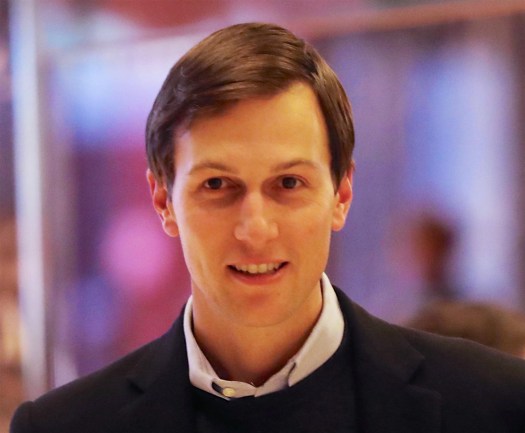
Jared Kushner’s Foundation Donated to Settlements

jared-kushner-1
Jared Kushner, the son-in-law of President-elect Donald Trump, walks through the lobby of Trump Tower. (photo: Spencer Platt/Getty Images)

By Carol Morello / The Washington Post
December 5, 2016


“I imagine this will be the end of State Department statements for 50 years calling settlements illegal to illegitimate, unhelpful or obstacles to peace. American foreign policy is about to be dramatically shifted. . . . It’s not about one check from Jared Kushner, but a broad threat to 50 years of bipartisan support for the proposition that settlements are an obstacle to peace. Now, that could be declared dead. I’m very alarmed.”
— Jeremy Ben-Ami, President of J Street


Jared Kushner, who may become a Middle East peace envoy in his father-in-law’s administration, is a director of a family foundation that has made charitable donations to West Bank settlements.

The gifts totaled $58,500 between 2011 and 2013, a small portion of the almost $8.5 million the Seryl and Charles Kushner Family Foundation gave away in that period, according to IRS records first reported by the Israeli newspaper Haaretz and reviewed independently by The Washington Post. Kushner and his three siblings are directors, along with their parents, of the foundation.

President-elect Donald Trump has said he may make his son-in-law, who is married to Ivanka Trump, a broker for talks between Israelis and Palestinians, saying Kushner would be “very good” at working with both sides.

Continue reading “Jared Kushner’s Foundation Donated to Settlements”

“Make this my dream as well”

jonathan-kuttab-pic
Photo: King’s University College

In historic appearance, Palestinian offers one-state vision to a N.Y. temple.

By Phillip Weiss / Mondoweiss
November 30, 2016


Our two tribes not only have separate and different narratives, but we also have separate and conflicting ideologies. . . . We cannot find a way to live together if we continue to hang on to the two ideologies that we started with. We must find a new idea that is worth working towards, and change our ideologies in such a way that acknowledges the other as part of us, as who we want to be. . . . It’s a tall order, I know. But you really must move away from what I call the false view of democracy, which says that if I have 51 percent of the population, I can totally destroy negate crush delegitimize disenfranchise the other. That’s not democracy. The tyranny of 51 percent simply does not work.


I can’t remember the last time I’ve cried in a synagogue, but last night was truly extraordinary: a suburban New York temple hosted a Palestinian leader making the argument for one democratic state between the river and the sea. And the Jewish audience did not contest his description of human rights atrocities. And his Jewish hosts thanked him for opening their eyes to new ideas.

If there is a glimmer of hope that the American Jewish community can be redeemed from a tragic course, and that the peoples of Israel and Palestine can be freed from a blind alleyway of history, there it was last night, at Temple Israel in New Rochelle.  Continue reading ““Make this my dream as well””