US quits UN Human Rights Council

US Ambassador to the United Nations Nikki Haley, with Secretary of State Mike Pompeo, speaking at the Department of State in Washington, DC, on Tuesday.
(photo: Andrew Caballero-Reynolds / AFP / Getty Images)

Nikki Haley says council is “protector of human rights abusers” that targets Israel in particular and ignores atrocities elsewhere.

By Julian Borger | The Guardian | Jun 19, 2018


“The UN human rights council has played an important role in such countries as North Korea, Syria, Myanmar and South Sudan, but all Trump seems to care about is defending Israel.”
— Kenneth Roth, executive director of Human Rights Watch


The US is withdrawing from the United Nations human rights council, the Trump administration announced on Tuesday, calling it a “cesspool of political bias” that targets Israel in particular while ignoring atrocities in other countries.

The US ambassador to the UN, Nikki Haley, said she had traveled to the council’s headquarters in Geneva a year ago to call for reforms, to no avail.

“Regrettably it is now clear that our call for reform was not heeded,” Haley told reporters at the state department. “Human rights abusers continue to serve on, and be elected to, the council.”

Continue reading “US quits UN Human Rights Council”

Human rights in Israel

Rabbi Sharon Kleinbaum and others protesting in support of “Dreamer” immigrants, Washington, DC, Jan 2018. (photo: Ralph Alswang / Religious Action Center of Reform Judaism)

The last of the tzaddiks (righteous ones).

By David Shulman | The New York Review of Books | Jun 28, 2018


A Palestinian brought before such a military court, for example in the notorious Ofer Prison north of Jerusalem, has no hope of achieving even the slightest semblance of justice. Conviction rates of Palestinians in these courts are higher than 99 percent. Proceedings take place in Hebrew, which Palestinian defendants often don’t understand, and security specialists routinely give secret testimony to which defendants and their counsel have no access.


In the somewhat exotic Jewish home in Iowa where I grew up, it was axiomatic that there was an intimate link between Judaism and universal human rights. Like nearly all Eastern European Jewish families in America, my parents and grandparents were Roosevelt Democrats, to the point of fanaticism.

They thought that the Jews had invented the very idea, and also the practice, of social justice; that having started our history as slaves in Egypt, we were always on the side of the underdog and the oppressed; that the core of Judaism as a religious culture was precisely this commitment to human rights, and that all the rest — the 613 commandments, the rituals, the theological assertions — was no more than a superstructure built upon a strong ethical foundation.

For me, this comfortable illusion was shattered only when I moved to Israel at the age of eighteen. . . .

Continue reading “Human rights in Israel”

Donald Trump’s new world order

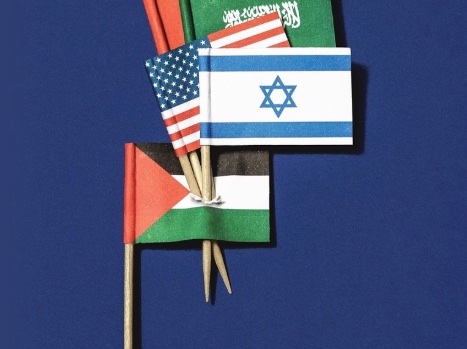
flags
(illustration: Javier Jaén / The New Yorker)

How the President, Israel, and the Gulf states plan to fight Iran — and leave the Palestinians behind.

By Adam Entous | The New Yorker | Jun 18, 2018


In response to the violence in Gaza, the Gulf states issued ritual denunciations and support for the Palestinians, but Israeli officials regarded the language as unmistakably bland, similar to their reactions to the Jerusalem decision. That their emphasis had shifted away from the Palestinians and to the specter of a confrontation with Iran was obvious.


On the afternoon of December 14, 2016, Ron Dermer, Israel’s Ambassador to the United States, rode from his Embassy to the White House to attend a Hanukkah party. The Obama Administration was in its final days, and among the guests were some of the President’s most ardent Jewish supporters, who were there to bid him farewell. But Dermer, like Prime Minister Benjamin Netanyahu, did not share their sense of loss. For the Israeli leadership, the Trump Presidency could not come soon enough.

Netanyahu believed that Barack Obama had “no special feeling” for the Jewish state, as one of his aides once put it, and he resented Obama’s argument that Israel’s treatment of the Palestinians was a violation of basic human rights and an obstacle to security, not least for Israel itself. He also believed that Obama’s attempt to foster a kind of balance of power between Saudi Arabia and Iran in the Middle East was naïve, and that it underestimated the depth of Iran’s malign intentions throughout the region.

Continue reading “Donald Trump’s new world order”

Palestine is not occupied — it is colonized

Israeli troops screened captured Egyptian troops and Palestinians at the start of the war on Jun 5, 1967, in Rafah in the Gaza Strip. (photo: David Rubinger / Israeli Governement / Getty Images)

Israel’s colonization began when the 19th-Century Zionist movement aspired to build an exclusive homeland for Jews in Palestine.

By Ramzy Baroud | Palestine Chronicle | Jun 6, 2018


The Palestinian Occupied Territories have, long ago, crossed the line from being occupied to being colonized. But there are reasons that we are trapped in old definitions, leading amongst them is American political hegemony over the legal and political discourses pertaining to Palestine.


June 5, 2018, marks the 51st anniversary of the Israeli occupation of East Jerusalem, the West Bank and Gaza.

But, unlike the massive popular mobilization that preceded the anniversary of the Nakba — the catastrophic destruction of Palestine in 1948 — on 15 May, the anniversary of the occupation is hardly generating equal mobilization.

The unsurprising death of the “peace process” and the inevitable demise of the “two-state solution” has shifted the focus from ending the occupation per se to the larger, and more encompassing, problem of Israel’s colonialism throughout Palestine.

Grassroots mobilization in Gaza and the West Bank, and among Palestinian Bedouin communities in the Naqab Desert, are, once more, widening the Palestinian people’s sense of national aspirations. Thanks to the limited vision of the Palestinian leadership those aspirations have, for decades, been confined to Gaza and the West Bank.

In some sense, the “Israeli occupation” is no longer an occupation as per international standards and definitions. It is merely a phase of the Zionist colonization of historic Palestine, a process that began over a 100 years ago, and carries on to this day. . . .

Continue reading “Palestine is not occupied — it is colonized”

Young evangelicals waver in support for Israel

evangelicals
US evangelical Christians march in the Sukkot holiday parade in Jerusalem on Octc20, 2016. (photo: Abir Sultan / EPA)

Generational split reflects concern over Palestinians, spurring outreach by some churches and groups.

By Ian Lovett | The Wall Street Journal | Jun 3, 2018


“The New Testament, I think, would be in favor of human rights.”
— Jackie Westeren, a rising senior at the evangelical Wheaton College


Growing up in evangelical Christian churches, Caleb Fitzpatrick learned quickly to be a steadfast supporter of Israel. From a young age, Mr. Fitzpatrick said, he was taught that Benjamin Netanyahu, Israel’s prime minister, “was a hero” and that “Christians are supposed to back Israel on everything.”

But the Tampa, FL, native, who just finished his junior year at Liberty University, an evangelical school, has become critical of Israel for what he says is its mistreatment of Palestinians.

“Human rights is a core issue to me,” Mr. Fitzpatrick, 21, said. “It’s less important to me who has dominion over the northern part of historical Israel.”

Continue reading “Young evangelicals waver in support for Israel”

Confessions of an Israeli traitor

A Palestinian argues with Israeli policemen during clashes in the West Bank city of Hebron, Oct 2015. (photo: Abed al Hashlamoun / EPA)

The internal discussion in Israel is more militant, threatening and intolerant than it has ever been.

By Assaf Gavron | The Washington Post | Oct 23, 2015


No matter how many soldiers we put in the West Bank, or how many houses of terrorists we blow up, or how many stone-throwers we arrest, we don’t have any sense of security; meanwhile, we have become diplomatically isolated, perceived around the world (sometimes correctly) as executioners, liars, racists. As long as the occupation lasts, we are the more powerful side, so we call the shots, and we cannot go on blaming others. For our own sake, for our sanity — we must stop now.


I was an Israel Defense Forces soldier in Gaza 27 years ago, during the first intifada. We patrolled the city and the villages and the refugee camps and encountered angry teenagers throwing stones at us. We responded with tear gas and rubber bullets.

Now those seem like the good old days.

Since then, the conflict between Israelis and Palestinians has seen stones replaced with guns and suicide bombs, then rockets and highly trained militias, and now, in the past month, kitchen knives, screwdrivers and other improvised weapons. Some of these low-tech efforts have been horrifically successful, with victims as young as 13. There is plenty to discuss about the nature and timing of the recent wave of Palestinian attacks — a desperate and humiliated answer to the election of a hostile Israeli government that emboldens extremist settlers to attack Palestinians. But as an Israeli, I am more concerned with the actions of my own society, which are getting scarier and uglier by the moment.

Continue reading “Confessions of an Israeli traitor”

Trump considering downgrading US consulate in East Jerusalem

Israeli Prime Minister Benjamin Netanyahu, left and US Ambassador David Friedman in the Old City of Jerusalem, May 21, 2017. (photo: Abir Sultan / AP)

US Ambassador to Israel David Friedman is advocating for having the embassy in Jerusalem subsume the consulate in East Jerusalem.

By Josh Lederman and Matthew Lee | Associated Press via ArkansasOnline | Jun 2, 2018


For decades, the East Jerusalem consulate has operated differently than almost every other consulate around the world. Rather than reporting to the US Embassy in Israel, it has reported directly to the State Department in Washington, giving the Palestinians an unfiltered channel to engage with the US government.


President Donald Trump is considering giving US Ambassador to Israel David Friedman more authority over the US outpost that handles Palestinian affairs, five US officials said.

Any move to downgrade the autonomy of the US Consulate General in Jerusalem — responsible for relations with the Palestinians — could have potent symbolic resonance, suggesting American recognition of Israeli control over east Jerusalem and the West Bank. And while the change might be technical and bureaucratic, it could have potentially significant policy implications.

As president, Trump has departed from traditional US insistence on a “two-state solution” for the Mideast conflict by leaving open the possibility of just one state. As his administration prepares to unveil a long-awaited peace plan, the Palestinians have all but cut off contact, enraged by Trump’s decision to move the US Embassy to Jerusalem.

Continue reading “Trump considering downgrading US consulate in East Jerusalem”

Israel lets Jews protest the occupation — it doesn’t let Palestinians

Palestinian protesters run for cover from Israeli tear gas during clashes near the border between Israel and Gaza in May. (photo: Mohammed Saber / Epa-Efe / Rex / Shutterstock)

Whether in Gaza or Haifa, in Bethlehem or at Ben Gurion International Airport, the message Israel is sending is the same: It can do whatever it wants, and people need to shut up about it.

By Mairav Zonszein | The Washington Post | May 31, 2018


As a longtime activist and journalist in Israel, including for the grass-roots news and commentary site +972 Magazine, I have been arrested for documenting and trying to prevent human rights violations in the West Bank. I have reported for years on how Israel silences dissent, even among its Jewish citizens, and how it is moving to outlaw human rights organizations it deems traitors.


The images and video of Israeli soldiers shooting live ammunition into masses of mostly unarmed Palestinians on the other side of the Gaza border fence over the past several weeks horrified observers around the world. Starting March 30, Israeli troops suppressing protests in Gaza killed 118 people and wounded more than 13,000, including 1,136 children.

The deaths and injuries, Israel Defense Forces international spokesman Lt. Col. Jonathan Conricus lamented recently, have “done us a tremendous disservice, unfortunately, and it has been very difficult to tell our story.” Now Israel’s government is moving to make sure there are no more videos of mass shootings in the future — not by ordering a stop to the shootings, but by considering a law that would ban anyone from filming or photographing any military operations “with the intention of undermining the spirit of IDF soldiers and Israel’s residents.”

Even if that bill never becomes law, the fact that the Knesset is contemplating it underscores the current state of freedoms in Israel: Maintaining its decades-long occupation depends on systematic suppression of dissent on both sides of the boundary fences. Just as Israel exercises varying levels of control between the Jordan River and the Mediterranean Sea, it also permits varying levels of dissent and criticism depending on who you are, what you are protesting and where.

Continue reading “Israel lets Jews protest the occupation — it doesn’t let Palestinians”

Palestinians ask ICC to investigate alleged crimes by Israel

Palestinian Foreign Minister Riad Malki speaks during a press conference at the International Criminal Court on May 22, 2018. (photo: Mike Corder / Associated Press)

The Palestinian foreign minister asked the International Criminal Court to open an immediate investigation into alleged Israeli crimes committed against the Palestinian people.

By Mike Corder | The Washington Post | May 22, 2018


Although Israel is not an ICC member, its citizens can be charged by the court if they are suspected of committing grave crimes on the territory or against a national of a country that is a member. The ICC has recognized Palestine as a member.


Accusing Israel of systematic crimes, including apartheid in the occupied territories, Palestinians on Tuesday urged the International Criminal Court to open an investigation that could ultimately lead to charges against Israeli leaders.

Israel immediately slammed the Palestinian move as “legally invalid.”

The referral seeks an investigation into Israeli policies in the West Bank, east Jerusalem and Gaza Strip since Palestine accepted the ICC’s jurisdiction in 2014, Palestinian Foreign Minister Riad Malki told reporters in The Hague.

This includes Israeli settlement policies in the West Bank and east Jerusalem, as well as bloodshed in the Gaza Strip. Israel and Gaza’s ruling Hamas militant group fought a 50-day war in 2014, and in recent weeks, Israeli fire has killed over 100 Palestinians during mass protests along the Gaza border since March.

Continue reading “Palestinians ask ICC to investigate alleged crimes by Israel”

Israel cannot fulfill its promise perpetuating apartheid

A Palestinian man falls to the ground after being shot by Israeli troops during a deadly protest at the Gaza Strip’s border with Israel on Monday. (photo: Khalil Hamra / The Associated Press)

As an American Jew, I feel compelled to speak the unspeakable: It is in Jewish best interests, morally and pragmatically, to rethink the notion of Israel as a Jewish state.

By Lauren Goldman Marshall | The Seattle Times | May 18, 2018


Imagine what a new Israel could be, an Israel for all peoples. If all the young lives, Jewish and Arab, cut short by this violence could instead be harnessed to irrigate the desert, desalinate the sea, create music and translate love poems into each other’s (very similar) languages! Now that would be an Israel to inspire the world.


Nineteen years ago, I rehearsed a play with Israeli and Palestinian teenagers at Seeds of Peace International Camp in Maine. Forging a script both sides could stand behind took perseverance. But at our cast party, Arabs and Jews leaned on each other and sang songs. It gave me a glimpse of what could be.

I contrast that hopeful moment with the appalling news coming out of Israel and Gaza. While Ivanka Trump, Jared Kushner and Benjamin Netanyahu celebrated the opening of the U.S. Embassy in Jerusalem, Israeli forces were firing on (mostly unarmed) Palestinian protesters gathered along the fence between Gaza and Israel, killing at least 60, and injuring more than 2,000.

Israel defends its response, claiming that the demonstrators were trying to breach the border. But the absence of any casualties on the Israeli side proves the response was grossly disproportionate. This is not an isolated incident, but an ongoing saga since 2007, when Israel imposed a blockade on Gaza following Hamas’ election victory. Nearly 2 million Gazans are squeezed into a virtual prison one-ninth the size of Rhode Island. Israel and Egypt control the borders and access to water, fuel, medical supplies and electricity. It doesn’t take a leap of logic to see that Gaza has become a concentration camp, and the demonstrations at the border are a desperate response to a humanitarian crisis.

Continue reading “Israel cannot fulfill its promise perpetuating apartheid”