

A conversation with controversial scholar Norman Finkelstein.
By Eric Gordon | Mint Press News | Mar 30, 2018
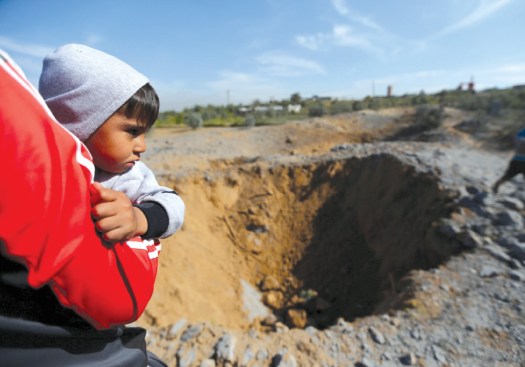
When we think “refugees” from war, disaster or oppression, images of large numbers of people come to mind, crossing borders, departing on the last flights out, fording streams, boarding leaky transport ships, washing ashore. That what’s completely different about Gaza: The borders are sealed and there is no place to flee. The population is trapped in a tiny sliver of land equal in size to twice the District of Columbia. Some have named it “the largest open-air prison in the world,” but others claim that implies guilt on the part of the inmates, preferring bluntly to call it a “concentration camp.”
“The nadir of the Palestinian struggle is now,” says distinguished but controversial scholar Norman G. Finkelstein. He spoke on March 26 at the University of Southern California Annenberg School for Communication and Journalism. “Nothing is happening there in Palestine. There is no mass resistance.”
That explains why worldwide the pro-Palestinian cause is not drawing the crowds it once did. It also explains why the USC auditorium was at most half full. As Finkelstein surveyed the audience, he pointed to one college-age man in the front row, observing that he was by far the youngest person in the room. In Gaza today, 51 percent of the population is under 18 years of age. Half of Gaza’s people would be younger than this young man.
However, if the martyrdom of Gaza seems right now to be sealed in the pages of history, “We don’t know what will come tomorrow,” says the author, on a tour to promote his newest book, Gaza: An Inquest into Its Martyrdom. “So we must keep preparing the ground.”









You must be logged in to post a comment.