

This article inspired by conversations in the UNESCO office in Ramallah.
By Ali Qleibo| This Week in Palestine| Mar 2020
The homes we live in, the neighborhoods, the services rendered, the consumer lifestyle, the values and norms, and the way people interact is a world view in which tangible and intangible cultural expressions interweave to impart Jerusalem its unique character.
The ever-shifting, elusive “character” of Jerusalem is a reflection of the dynamic needs, desires, and wishes of its inhabitants. Intangible culture is not merely the listing of professions and trades; it is the sung parodies that advertise the new seasonal cucumber (asabe’ el bubbu ya khyar), and the variety of recipes that Jerusalamites swap about the best way to prepare artichokes and ‘akkube (a wild form of artichoke) or preserve bitter oranges both as marmalade and sharab, or even how to construct a kite using dough instead of glue, bamboo, and newspaper sheets. It also includes visiting the cemetery to pray for one’s deceased close relatives after the early morning ‘Eid prayers and reciting the fatihah each time one passes by a cemetery, mausoleum, or maqam. It is the marking of the Muslim New Year with green olive twigs on house doors, the special sweets, and the family visits. The homes we live in, the neighborhoods, the services rendered, the consumer lifestyle, the values and norms, and the way people interact is a world view in which tangible and intangible cultural expressions interweave to impart Jerusalem its unique character. It is the human art of making life livable.


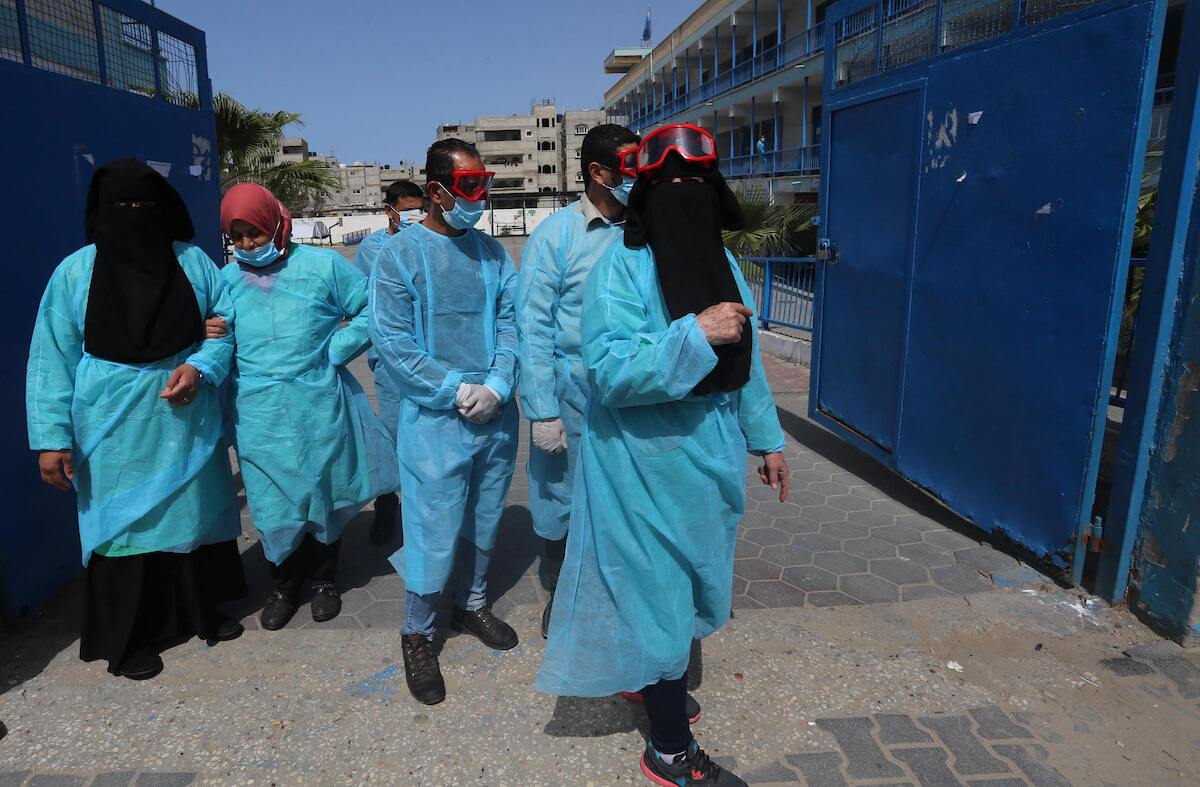

![A worker wearing protective gear sprays disinfectant as a precaution against the coronavirus, in Gaza City [Adel Hana/The Associated Press]](https://www.aljazeera.com/mritems/imagecache/mbdxxlarge/mritems/Images/2020/3/19/90eeefcca68e4b00ab284e19088b8e47_18.jpg)

 HolyLandJustice.org
You must be logged in to post a comment.