Defending activism and the power of boycotts

robertazzi2
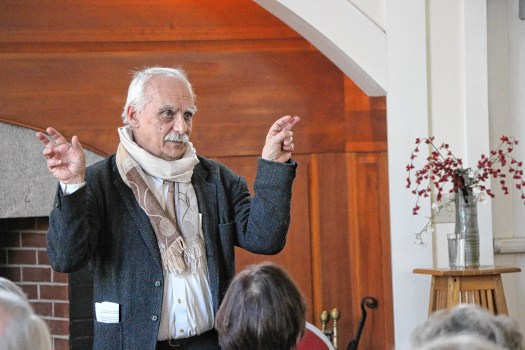
Photojournalist and columnist Robert Azzi. (photo: Kimball Library)

Whether one is for or against a particular boycott, it is important to recognize that boycotts are internationally affirmed and constitutionally protected forms of political expression.

By Robert Azzi | Concord (NH) Monitor | Feb 17, 2018


“A quarter-century ago I barnstormed around the United States encouraging Americans, particularly students, to press for divestment from South Africa. Today, regrettably, the time has come for similar action to force an end to Israel’s long-standing occupation of Palestinian territory and refusal to extend equal rights to Palestinian citizens. . . . This harsh reality endured by millions of Palestinians requires people and organizations of conscience to divest from those companies . . . profiting from the occupation and subjugation of Palestinians.”
— Bishop Desmond Tutu, Nobel Peace Prize Laureate (2012)


In 1947, the American Friends Service Committee (AFSC), together with the British Friends Service Council, accepted the Nobel Peace Prize on behalf of all Quakers. Chairman Gunnar Jahn, in awarding the prize, said, “The Quakers have shown us that it is possible to carry into action something which is deeply rooted in the minds of many; Sympathy with others; the desire to help others; that significant expression of sympathy between men, without regard to nationality or race; feelings which, when carried into deeds, must provide the foundation of a lasting peace. For this reason they are today worthy.”

Today, on the United States Holocaust Memorial website one reads that AFSC “became an important part of a rescue network helping refugees. The group worked in French internment camps, hid Jewish children, and assisted thousands of Jewish and non-Jewish refugees with their immigration and resettlement to the United States.”

Today, to many supporters of Israel, AFSC seems less worthy.

Continue reading “Defending activism and the power of boycotts”

Take down that wall in East Jerusalem

1-5827503-2643718793
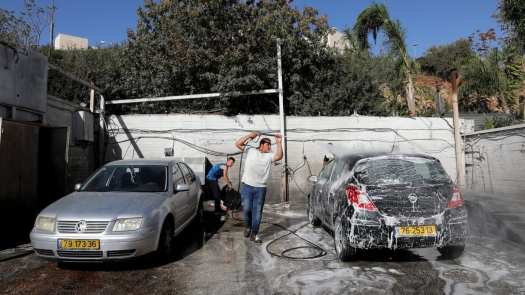
Palestinian teenagers work at a carwash in the East Jerusalem neighborhood of Wadi al-Joz, Nov 17, 2017. (photo: Ammar Awad / Reuters)

The municipality of Jerusalem is considering changing the city’s boundaries to exclude Palestinian refugee camps.

By Moshe Arens | Haaretz | Feb 19, 2018


[Jerusalem officials] are concerned that the influx of Palestinians . . . has substantially changed the demographic balance between Jews and Palestinians in Jerusalem. Some demographic projections indicate that in time Palestinians might even constitute a majority in the city.


In one of the impetuous acts he was known for, Prime Minister Ariel Sharon approved the building of a wall — the separation barrier — within the municipal boundaries of Jerusalem, Israel’s capital, separating the Shoafat refugee camp and the Kafr Aqab neighborhood from the rest of Jerusalem. Like the infamous Berlin Wall, it divided one part of the city from the other.

The result causes great inconvenience to the local people, who must go through checkpoints to enter Jerusalem’s other areas. This includes not only those who work in Jerusalem’s other areas but also children attending schools away from where their families reside.

But that wall brought about another regrettable result. Whereas East Jerusalem’s residential areas have suffered criminal neglect for 50 years, with the wall Shoafat and Kafr Aqab have been completely abandoned by the municipality and the police. They in effect have become a no-man’s-land where drug trafficking and other crime flourish, and anarchy prevails. Neither the government nor the municipality seemed to care about the fate that befell the residents, most of whom are by law recognized as permanent residents of Jerusalem and thereby of Israel, and continue to have the option of applying for Israeli citizenship.

Continue reading “Take down that wall in East Jerusalem”

US will move embassy to Jerusalem in May, to be funded by Sheldon Adelson

merlin_131242068_08808a91-e992-4b82-8ab9-9be6c3801984-master768
Eighty-seven countries have embassies in Israel, none of them are in Jerusalem. (photo: Abir Sultan / European Pressphoto Agency)

The move would coincide with the 70th anniversary of the founding of the State of Israel, as well as the 70th anniversary of the “Nakba,” the expulsion of 750,000 Palestinians from their homes.

By Peter Baker and Gardiner Harris | The New York Times | Feb 23, 2018


“The decision of the US administration to recognize Jerusalem as the capital of Israel and to choose the anniversary of the Nakba of the Palestinian people for carrying out this step expresses a flagrant violation of the law.”
— Saeb Erekat, secretary general of the Palestine Liberation Organization


Sheldon G. Adelson, one of the most hawkish supporters of Israel among American Jews, has offered to help fund the construction of a new American Embassy in Jerusalem, according to the State Department, which on Friday said it was reviewing whether it could legally accept the donation.

The total price tag to build the new embassy to replace the current one in Tel Aviv is estimated at around $500 million, according to one former State Department official. While private donors have previously paid for renovations to American ambassadors’ overseas residences, Mr. Adelson’s contribution would be likely to far surpass those gifts — and could further strain American diplomacy in the Middle East.

Before the embassy is built, the Trump administration plans to open a temporary one in Jerusalem. On Friday, it said that it was accelerating the projected opening in time to mark the 70th anniversary of the creation of the State of Israel on May 14.

Continue reading “US will move embassy to Jerusalem in May, to be funded by Sheldon Adelson”

Why won’t Israel let me mourn my father?

24jarrar-inyt-master768
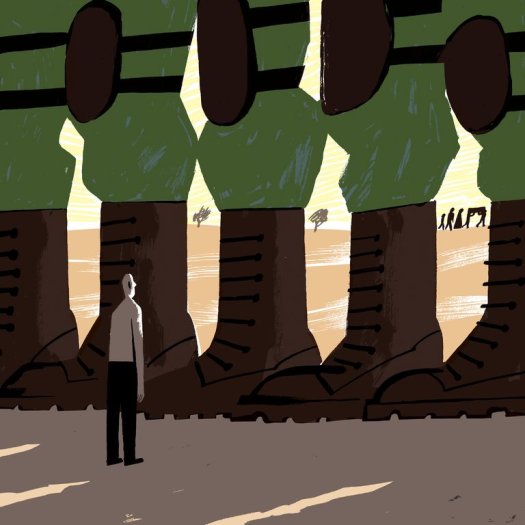
(image: Joao Fazenda)

After my father died in Jordan in October, it was so important for me to visit my extended family in the city of Jenin, to mourn his death with them. Unfortunately, I was prevented from doing so by the Israeli government.

By Raed Jarrar | The New York Times | Nov 23, 2017


Whether or not the Israeli government agrees with my work — and, of course, I know it doesn’t — I still should have been able to take part in those most human of activities: mourning my father and celebrating his life.


My father, Azzam Jarrar, died last month. He was a proud Palestinian, a refugee, a civil engineer, a farmer and an entrepreneur. He was also my friend and mentor. He taught me the multiplication tables on our way to school in Saudi Arabia. He taught me how to question authority when we lived in Iraq. He helped me finish my master’s degree when I lived in Jordan. Above all, though, he was the gateway to my Palestinian roots and identity.

My dad fled his home with his family in 1967, when Israeli soldiers invaded and occupied the West Bank. He went first to Jordan and then to Iraq, where I was born. I was the first Jarrar to be born east of the Jordan River since our family was established on Palestinian land centuries ago.

Continue reading “Why won’t Israel let me mourn my father?”

Tell Congress to oppose anti-BDS legislation

bds_cartoon_800_509_80
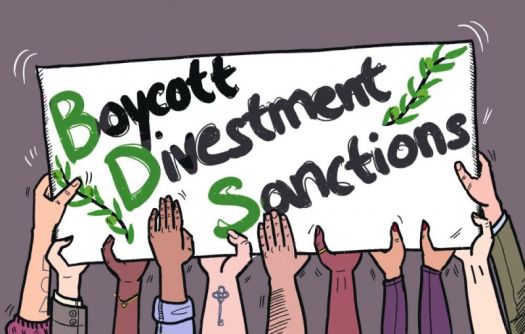
(illustration: Marina Djurdjevic)

It is urgent that members of Congress hear from constituents who oppose these bills.

By Evangelical Lutheran Church of America | Feb 15, 2018


“As churches and church-related organizations, we reject any efforts by the state to curtail these rights. We urge you to oppose the proposed legislation, and thus support the rights of individuals and institutions to spend and invest in accordance with their faith, values, and policies.”


Dangerous bills that could undermine the work of advocates for a just peace for Palestinians and Israelis continue to make their way through Congress. These include the Israel Anti-Boycott Act (H.R. 1697 and S. 720) and the Combating BDS Act of 2017 (H.R. 2856 and S. 170) which are part of a larger effort at the federal and state levels to outlaw or penalize the use of boycotts, divestment and sanctions aimed at Israeli government policies.

It is urgent that members of Congress hear from constituents who oppose these and similar bills. The U.N. Human Rights Office recently released a report outlining progress in developing a database of businesses engaged in certain activities related to Israeli settlements, as mandated earlier by the U.N. Human Rights Council. A new House resolution critical of the council includes a call to support the Israel Anti-Boycott Act. . . .

Continue reading “Tell Congress to oppose anti-BDS legislation”

Unitarian group supports BDS nomination for Nobel Peace Prize

logo-for-web-header_1

Norwegian member of parliament, Bjørnar Moxnes, nominated the BDS movement for Palestinian rights for the Nobel Peace Prize on Feb 2.

By Unitarian Universalists for Justice in the Middle East | Feb 9, 2018


Unitarian Universalists for Justice in the Middle East (UUJME) strongly supports the nomination of the Boycott, Divestment and Sanctions (BDS) movement for Palestinian rights for the Nobel Peace Prize. Justice and human rights have been systematically denied the Palestinian people, and UUJME is convinced that this tragedy is at the heart of the war, violence and turmoil that has characterized the Middle East for 70 years. We are convinced there will not be lasting peace for anyone in the region without justice for the Palestinians, and the BDS movement for Palestinian rights is the world’s best hope for achieving that justice.


A member of the Norwegian parliament, Bjørnar Moxnes, has nominated the BDS movement for Palestinian rights for the Nobel Peace Prize. UULME have been asked by the US Interdenominational Palestine Working Group to support the nomination with a statement on our website. The goal is to persuade the Norwegian public and the Nobel committee that there is broad support for the nomination.

Continue reading “Unitarian group supports BDS nomination for Nobel Peace Prize”

Two anti-BDS bills reintroduced in Washington State legislative session

washington_state_campus

A letter to Washington State legislators.

By Washington Freedom to Boycott | Feb 8, 2018


“The court has rightly recognized the serious First Amendment harms being inflicted by this misguided law. . . . This ruling should serve as a warning to government officials around the country that the First Amendment prohibits the government from suppressing participation in political boycotts.”
— Brian Hauss, ACLU attorney


To the Honorable Representative:

As Washington residents and Washington organizations, we are disturbed at ongoing attacks on our First Amendment right to boycott. In the Washington State Legislature, two measures from 2017, HJM 4004 and HJM 4009, both condemning the Boycott, Divestment and Sanctions (BDS) Movement, have been reintroduced into the House Judiciary Committee during the 2018 legislative session. Though these measures appear not to be moving forward, we are concerned that similar anti-boycott language might be inserted into final legislation during this busy session.

HJM 4004 and 4009 radically mischaracterize the BDS movement. BDS is a grassroots campaign to gain equal rights for Palestinians and to pressure Israel to abide by international humanitarian law. While BDS is modeled after the South African boycott and thus calls for broad boycotts against Israeli institutions, nothing in it calls for discrimination against individuals solely because of their national origin, religion, or ethnicity.

Continue reading “Two anti-BDS bills reintroduced in Washington State legislative session”

Massachusetts activists defeat anti-BDS bill

activestills1403338415jx29t
Graffiti on the Israeli separation wall in the occupied West Bank city of Bethlehem, Jun 2014. (photo: Ryan Rodrick Beiler / ActiveStills)

Anti-BDS measures have passed in more than 20 states, and federal legislation is pending in Congress.

By Nora Barrows-Friedman | Electronic Intifada | Feb 13, 2018


“By asking the state legislature to pass a bill that strikes at free speech, [supporters] forced legislators to choose between supporting Israel’s occupation and supporting free speech.”
— Cole Harrison of Massachusetts Peace Action


Activists in Massachusetts successfully pressured state lawmakers to stop a bill on February 8 that would have classified the boycott, divestment and sanctions (BDS) campaign for Palestinian rights as “discrimination.”

The bill requires anyone who enters into a contract with the state worth more than $10,000 to pledge that they will not refuse to do business with any person based on the person’s “race, color, creed, religion, sex, national origin, gender identity or sexual orientation.”

It has no chance of being passed this session as a key committee declined to advance it.

Continue reading “Massachusetts activists defeat anti-BDS bill”

Israeli police recommend corruption charges for Netanyahu

merlin_133640307_2c6c8e73-a60b-49f8-aa8a-e238dacaa1fd-superjumbo
Prime Minister Benjamin Netanyahu of Israel at the weekly cabinet meeting in Jerusalem, Feb 11, 2018. (photo: Ronen Zvulun)

The police accuse Netanyahu of accepting nearly $300,000 in gifts over 10 years.

By David Halbfinger and Isabel Kershner | The New York Times | Feb 13, 2018


“[The Prime Minister is] up to his neck in investigations. He does not have a public or moral mandate to determine such fateful matters for the state of Israel when there is the fear, and I have to say it is real and not without basis, that he will make decisions based on his personal interest in political survival and not based on the national interest.”
— Benjamin Netanyahu, speaking about former Israeli Prime Minister Ehud Olmert, who was forced to resign in 2008


The Israeli police recommended on Tuesday that Prime Minister Benjamin Netanyahu be charged with bribery, fraud and breach of trust, casting a pall over the future of a tenacious leader who has become almost synonymous with his country. The announcement instantly raised doubts about his ability to stay in office.

Concluding a yearlong graft investigation, the police recommended that Mr. Netanyahu face prosecution in two corruption cases: a gifts-for-favors affair known as Case 1000, and a second scandal, called Case 2000, in which Mr. Netanyahu is suspected of back-room dealings with Arnon Mozes, publisher of the popular newspaper Yediot Aharonot, to ensure more favorable coverage.

Continue reading “Israeli police recommend corruption charges for Netanyahu”

Israel’s decision to put Ahed on trial could backfire

ahedtamimiarrest
Ahed Tamimi at Ofer Military Prison. (photo: Jerusalem Online)

Arrested in December for slapping an Israeli soldier who had entered her yard, 17-year-old Ahed Tamimi was later arrested in the middle of the night, is currently being held in a military prison, and is being tried in a closed military courtroom.

By Loveday Morris | The Washington Post | Feb 13, 2018


“The Israeli military supposes by arresting Ahed Tamimi they can silence their activism. But although painful, it’s definitely put a spotlight on Palestinian children in detention.”
— Fadi Quran, senior campaigner with the activist group Avaaz


Slouching in her chair and mouthing messages to her friends and family from under a cascade of strawberry-blond curls, Ahed Tamimi in many ways appears to be an everyday teenager.

But the tussle of television cameras and photographers that crowded in for a shot of her in the dock of a small Israeli military court in Ofer for a bail hearing last month was a reminder that she is far from it.

Ahed, who recently turned 17, was arrested after a video of her slapping and kicking two Israeli soldiers who had entered her front yard went viral last year. On Tuesday, after nearly two months in detention, she went on trial on 12 charges, including assault of a soldier and incitement.

Continue reading “Israel’s decision to put Ahed on trial could backfire”