Why Palestinians aren’t surprised by the humiliation of Rashida Tlaib

Rep. Rashida Tlaib (D-Mich.). (photo: Brendan Smialowski / AFP / Getty Images)
While Palestinians might have gotten used to constant Israeli discrimination and humiliation, these only increase the Palestinian resolve for an independent state or a shared state with equal rights.

By Daoud Kuttab | The Washington Post | Aug 17, 2019

Travel to Palestine, a country recognized by 140 members of the United Nations, shouldn’t need Israeli approval. If anyone still had any doubts that Palestine is a country under occupation, what the Israeli government did to the US representatives proves precisely the point that the Trump administration has been trying to deny.

Whenever my Palestinian American cousins come to visit us, in Jerusalem, they always come prepared. In addition to the family-size package of Dunkin’ Donuts coffee, they bring books and an all-important set of playing cards. From past experience, they know that at the Israeli-controlled terminal of the King Hussein (Allenby) Bridge they will be subjected to a long wait before getting the approval to enter. Instead of allowing this Israeli humiliation to consume them, my relatives play cards as they wait for hours.

Unlike most American visitors, Americans of Palestinian origin are routinely discriminated against. They are forced to wait long hours and to undergo rigorous and humiliating searches and questioning.

Of course, not all Palestinian Americans are allowed in, as we have seen with the case of Rep. Rashida Tlaib (D-Mich.). The humiliating letter she was forced to sign, where she asks for “humanitarian” consideration to visit her 90-year-old grandmother in order to get the Israelis to allow her to visit, is par for the course for Palestinians who have experienced the travel blues for more than half a century. Small wonder that she has now rethought her decision by deciding to withdraw from the trip.

Continue reading “Why Palestinians aren’t surprised by the humiliation of Rashida Tlaib”

If you think Trump is helping Israel, you’re a fool

Prime Minister Benjamin Netanyahu of Israel and President Trump at the White House in March.
Doug Mills / The New York Times)
By barring Representatives Omar and Tlaib, Netanyahu has poisoned relations with America.

By Thomas Friedman | The New York Times | Aug 16, 2019

Excuse me, but when did powerful Israel — a noisy, boisterous democracy where Israeli Arabs in its Parliament say all kinds of wild and crazy things — get so frightened by what a couple of visiting freshman American congresswomen might see or say?

I am going to say this as simply and clearly as I can: If you’re an American Jew and you’re planning on voting for Donald Trump because you think he is pro-Israel, you’re a damn fool.

Oh, don’t get me wrong. Trump has said and done many things that are in the interests of the current Israeli government — and have been widely appreciated by the Israeli public. To deny that would be to deny the obvious. But here’s what’s also obvious. Trump’s way of — and motivation for — expressing his affection for Israel is guided by his political desire to improve his re-election chances by depicting the entire Republican Party as pro-Israel and the entire Democratic Party as anti-Israel.

As a result, Trump — with the knowing help of Israel’s current prime minister, Benjamin Netanyahu — is doing something no American president and Israeli prime minister have done before: They’re making support for Israel a wedge issue in American politics.

Continue reading “If you think Trump is helping Israel, you’re a fool”

Netanyahu banned Omar and Tlaib because the occupation must be hidden to survive

Because Tlaib and Omar cannot serve as witnesses, the responsibility falls even more heavily on us.

By Peter Beinart | Forward | Aug 15, 2019

[Netanyahu is] not a fool. He may have barred Omar and Tlaib partly because Donald Trump asked him to. He may have felt the stunt would appeal to right-wing voters in Israel’s upcoming elections. But he likely also understood that if Omar and Tlaib brought the American media with them to the West Bank, they might begin to puncture the cocoon that he and his American Jewish allies have worked so hard to build.

Most establishment American Jewish leaders think Israel’s decision to bar Representatives Rashida Tlaib and Ilhan Omar from visiting the West Bank was, in the words of The Democratic Majority for Israel, “unwise.”

Benjamin Netanyahu, the American Jewish Committee argued, should have realized that “visiting Israel is essential to gaining a better understanding of this… open, democratic society.”

AIPAC said “every member of Congress should be able to visit and experience our democratic ally Israel firsthand.”

Of course they think that. Most officials of mainstream American Jewish organizations have never been to the places Tlaib and Omar planned to go. They’ve never talked to Palestinians whose homes are about to be bulldozed because they lack the building permits that, as non-citizens under military rule, they can’t get. They’ve never heard Palestinian parents explain the terror they feel when Israeli soldiers come in the middle of the night to take their children to be interrogated, often for days, in the absence of a lawyer.

Continue reading “Netanyahu banned Omar and Tlaib because the occupation must be hidden to survive”

Trump has enabled Israel’s anti-democratic tendencies at every turn

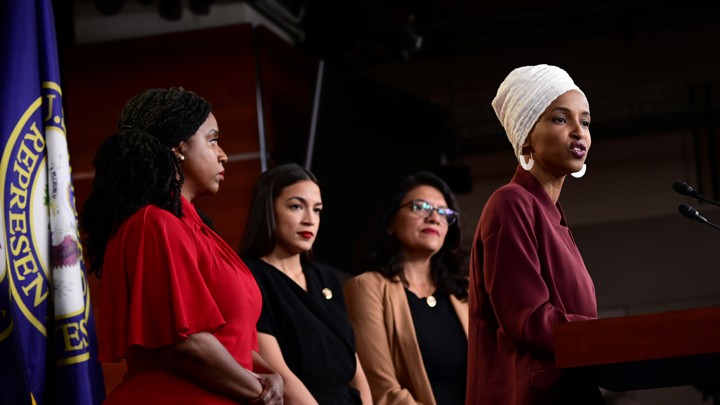
Representatives Ilhan Omar, Rashida Tlaib, Alexandria Ocasio-Cortez, and Ayana Pressley speak at a press conference. (photo: Erin Scott / Reuters)
This reflects Israeli’s intense fear of the BDS movement, and its growing intolerance for dissent from within or outside of the country.

By Emma Green | The Atlantic | Aug 15, 2019

I’m calling this like I see it: bigoted, short sighted and cruel. Any leader committed to advancing democracy would welcome with open arms two democratically elected United States Congresswomen. And every single member of Congress should be calling this out.
— Rep. Ayanna Pressley (D-Mass.)

The trip was always going to be bad PR for Israel. Representatives Rashida Tlaib of Michigan and Ilhan Omar of Minnesota planned to lead a visit to Israel and the Palestinian territories, meeting with “people in the refugee camps,” “people at checkpoints,” and “people who lost their lands and had their homes demolished,” as James Zogby, the head of the Arab American Institute, told the website Jewish Insider. No matter what, these kinds of photo ops from two of the U.S.’s most outspoken and visible critics of Israel would have provided powerful ammunition to the country’s opponents.

This morning, Israel handed its critics even more powerful material. According to Reuters, the government has barred Tlaib and Omar from entering the country.

This move is not unprecedented. In recent years, Israel has routinely detained, and in some cases refused entry to, foreign visitors associated with the Boycott, Divestment, and Sanctions movement, which calls on governments and companies to put economic pressure on Israel. This policy reflects the current Israeli government’s intense fear of the BDS movement, and its growing intolerance for dissent from within or outside of the country. But in the past few years, the Israeli government has had a new ally encouraging and enabling its antidemocratic instincts: President Donald Trump. At every turn, the tight alliance between the Trump administration and the Netanyahu government has facilitated Israel’s drift to the right, further widening the gap between Israel and many of its Jewish allies in the United States. . . .

Continue reading “Trump has enabled Israel’s anti-democratic tendencies at every turn”

Israel’s ban of Omar and Tlaib is a grave misstep

Rather than trying to broaden the perspective of Israel’s critics, Netanyahu is pushing them into an evermore radical position.

By Jennifer Rubin | The Washington Post | Aug 15, 2019

The decision to exclude them likely will, American Jewish leaders recognize, incite the boycott, divestment and sanctions (BDS) movement and create a further schism with Democrats in Congress. It will continue the process, exacerbated by Trump and Netanyahu, of making support for Israel a partisan issue, something both sides have long tried to avoid.

The Post reports, “Caught between the opposing views of President Trump and Democratic leaders, Israeli Prime Minister Benjamin Netanyahu reversed himself on Thursday and decided to prohibit Reps. Ilhan Omar (D-Minn.) and Rashida Tlaib (D-Mich.) from visiting Israel during a trip scheduled to start Sunday.” While the government originally announced it would admit the pair, the call from Trump to exclude American lawmakers, an outrageous and unprecedented step, “immediately opened up a new battle between Netanyahu and Democrats, who had privately warned that such a decision would be unprecedented and inconsistent with Israel’s claims of tolerance and openness.”

The problem arises from a recently passed law that would bar foreign nationals who support any boycott of Israel from receiving entry visas. This in and of itself was an infringement on the Israeli tradition of vigorous public debate, but with elections upcoming in September, Netanyahu is scrambling to ingratiate himself further with the far right. Before Wednesday, however, “Israeli Ambassador Ron Dermer said the two congresswomen would be allowed to visit Israel ‘out of respect for the U.S. Congress and the great alliance between Israel and America.’” So much for that “respect.” (The Israeli embassy did not respond to a request for comment.)

Continue reading “Israel’s ban of Omar and Tlaib is a grave misstep”

This article could be illegal in Arkansas

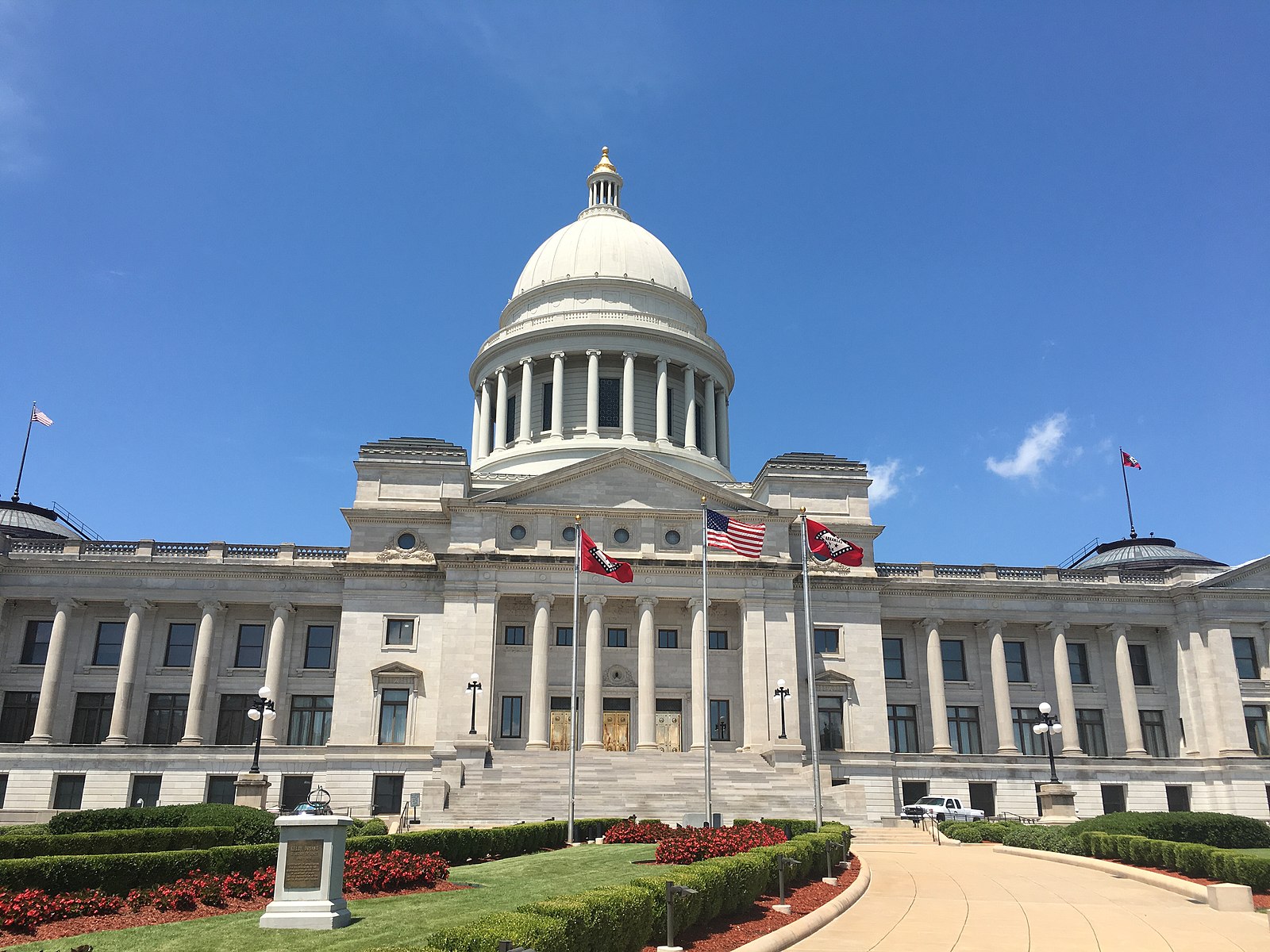
The Arkansas state capitol building. (photo: Wikimedia Commons)
It should go without saying that no editorial, op-ed or news article should be “illegal,” particularly one talking about core constitutional protections for free speech and our free press.

By Gabe Rottman | Reporters Committee for Freedom of the Press | Jul 2, 2019

Not only does [the Arkansas law] put a thumb on the scale of public debate — a newspaper that signs the certification is free to publish editorials or any other content opposing an Israel boycott — but it also forces newspapers that might otherwise remain silent on a public controversy to take a side.

In August 2017, the Arkansas legislature passed a law requiring any state contractor to sign a form pledging it will not participate in a boycott of Israel. The only options for a contractor that does not want to sign are to give up contracting with the state or to discount prices by 20 percent. The law is so broad it could outlaw the publication of this article in the state. Here’s why.

The Arkansas Times, an alternative newsweekly in Little Rock, has for years contracted to run advertisements for Pulaski Technical College, a state school. The Times has never commented on an Israeli boycott, but it refused to sign the certification for fear it would interfere with its perceived editorial independence. Pulaski Technical College withdrew its advertising.

The Arkansas Times sued, arguing the law violates the First Amendment, particularly because the Arkansas legislature passed the law not because of any rash of Israeli boycotts in the state, but to target one particular global boycott movement, the “Boycott, Divestment, Sanctions” campaign, or “BDS.”

Continue reading “This article could be illegal in Arkansas”

Jared Kushner’s plan for Palestine is even crazier than you thought

Kevin Lamarque /Reuters)
Kushner’s “economic peace” plan repeatedly claims that occupied Palestine can model itself after Singapore, South Korea, Japan, and Taiwan. That’s certainly ambitious — but also ignorant, absurd and even dangerous.

By Teresita Cruz-del Rosario and Victor Kattan | Haaretz | Jul 4, 2019

The lessons of these Asian economic success stories is fairly straightforward: sovereignty was key to transforming these states into Asian economic power houses embedded in strong states that could drive development policies.

Jared Kushner’s glossy “economic peace” plan has been widely, although not universally, panned.

Critics have attacked the plan from innumerable angles: from the photographs used to promote it, culled from USAID programs whose funding had been ended by the Trump administration, to the recycling of old, largely discredited ideas, associated with previous Israeli and US plans that promoted economic development before a political plan.

None of these peace plans, including those that prioritized economic development ahead of a political program, have worked.

One key claim of the plan, largely overlooked by critics, are Kushner’s case studies, which are repeatedly referenced throughout the document: Singapore, South Korea, Japan, and Taiwan.

Continue reading “Jared Kushner’s plan for Palestine is even crazier than you thought”

What “Holy Land” tours miss

(photo: SJ Travel Photo and Video / Shutterstock)
Congratulations, I want to say. You have managed to visit the Holy Land without meeting an Arab.

By Jessica Moore | Sojourners | Jun 27, 2019

This tourist avoids seeing a checkpoint in action, with lines of Palestinian men, women, and children standing on the side, legs spread, waiting for a soldier to check them. Avoids facing the miles of thick concrete security wall, snaking in between crumbling Arab villages and gleaming Jewish settlements. Avoids seeing the barb-wired watch towers, with teenagers — who have lived their whole lives behind the wall — kick a soccer ball below.

As a Palestinian Christian who grew up in Jerusalem, I have a hard time knowing where, if anywhere, my narrative fits among the pictures evangelical Christians paint of Israel. I was reminded of this recently when an acquaintance of mine did a “holy land tour,” and posted travel updates that showed up on my social media stream.

Seeing others post pictures in the same spots where I walked home from school, went on a field trip, or stopped for bread on the way back from church, is like watching someone’s first-date encounter with your old friend. But as the pictures roll by, something else begins to gather in my chest. Rage.

One more person visiting my homeland and also not visiting my homeland.

Continue reading “What “Holy Land” tours miss”

Trump should scrap his Israeli-Palestinian peace plan and focus on Gaza

Palestinians in Gaza City protest against the US-sponsored Middle East economic conference in Bahrain on Jun 26. (photo: Mohammed Abed / AFP / Getty Images)
The White House’s fantasy proposal is bound to fail.

By Hady Amr, Ilan Goldenberg and Natan Sachs | Foreign Policy | Jun 28, 2019

If the Trump administration wants to help Palestinians and Israelis, it should shelve its fantasy plan, which the Palestinian leadership has already rejected, and instead focus on something much more tangible — addressing the ongoing Gaza-Israel conflict.

Over the weekend, the White House released its multibillion-dollar plan for the Palestinian economy as part of President Donald Trump’s “deal of the century,” which his administration has billed as a broader program for Middle East peace. Jared Kushner — Trump’s son-in-law, senior advisor, and point person on Israeli-Palestinian issues — spent two days in Bahrain this week at a White House-led conference trying to generate international support for this approach.

The conference faced tremendous challenges: With the United States and Iran on the brink of a potential conflict, convening in Bahrain, which hosts a major US naval base, cast the event in the shadow of US-Iran tensions. No Palestinian government officials attended, and nearly all Palestinian businesspeople skipped the event as well because the Trump administration has alienated them. And the Israeli government was largely absorbed with a new round of elections set for September. The event did not seem to generate much interest in Trump’s plan or bring the sides even an inch closer to anything resembling a deal.

Continue reading “Trump should scrap his Israeli-Palestinian peace plan and focus on Gaza”

“Some suburb of hell” — America’s new concentration camps

Children’s shoes and a cuddly toy left at the Tornillo Port of Entry after a protest by several US mayors against the Trump adminstration’s family separation policy, near El Paso, Texas, Jun 21, 2018. (photo: Brendan Smialowski / AFP / Getty Images)
Every country thinks it can do detention better when it starts these projects. But no good way to conduct mass indefinite detention has yet been devised; the system always degrades.

By Andrew Pitzer | The New York Review of Books | Jun 21, 2019

Concentration camps . . . don’t typically result from the theft of land, as happened with Native Americans, or owning human beings in a system of forced labor, as in the slave trade. Exile, theft, and forced labor can come later, but in the beginning, detention itself is usually the point of concentration camps. By the end of the Nineteenth Century, the mass production of barbed wire and machines guns made this kind of detention possible and practical in ways it never had been before.

On Monday, New York Congresswoman Alexandria Ocasio-Cortez referred to US border detention facilities as “concentration camps,” spurring a backlash in which critics accused her of demeaning the memory of those who died in the Holocaust. Debates raged over a label for what is happening along the southern border and grew louder as the week rolled on. But even this back-and-forth over naming the camps has been a recurrent feature in the mass detention of civilians ever since its inception, a history that long predates the Holocaust.

At the heart of such policy is a question: What does a country owe desperate people whom it does not consider to be its citizens? The twentieth century posed this question to the world just as the shadow of global conflict threatened for the second time in less than three decades. The dominant response was silence, and the doctrine of absolute national sovereignty meant that what a state did to people under its control, within its borders, was nobody else’s business. After the harrowing toll of the Holocaust with the murder of millions, the world revisited its answer, deciding that perhaps something was owed to those in mortal danger. From the Fourth Geneva Convention protecting civilians in 1949 to the 1989 Convention on the Rights of the Child, the international community established humanitarian obligations toward the most vulnerable that apply, at least in theory, to all nations.

Continue reading ““Some suburb of hell” — America’s new concentration camps”