A Significant Resolution on Israel

avishai-un-vote-netanyahu-1200
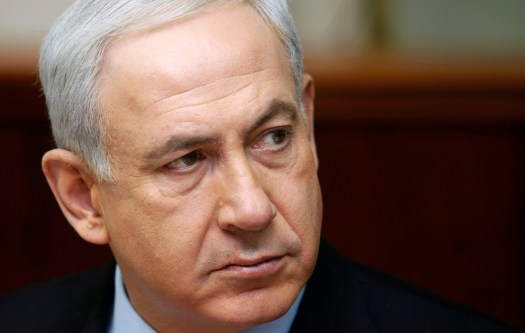
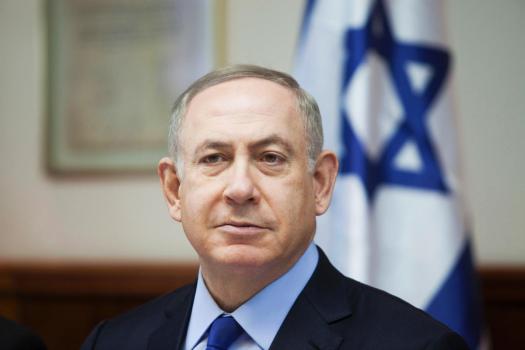
Prime Minister Benjamin Netanyahu accused the Obama Administration of carrying out an “underhanded, anti-Israel maneuver” in its failure to veto a U.N. resolution targeting Israeli settlements. (photo: Dan Balilty / AFP / Getty)

By Bernard Avishai / The New Yorker
December 27, 2016


“Secretary Kerry averaged roughly one phone call a week to the Israeli Prime Minister over the last four years — almost four hundred — to plead, to warn, against the path his government was on. Not only did settlement-construction activities continue apace, they were accelerated.”
— Robert Malley, the special assistant to the President on the National Security Council, the senior adviser for the campaign against isis, and the White House coördinator for the Middle East, North Africa, and the Gulf


Last Friday, the United Nations Security Council unanimously passed Resolution 2334, with a dramatic abstention by the Obama Administration. The resolution called on Palestinian leaders to take “immediate steps to prevent all acts of violence against civilians, including acts of terror,” and refrain from “incitement and inflammatory rhetoric.” Its real target, though, was Israel’s settlement project, which, the resolution sharply claimed, has “no legal validity and constitutes a flagrant violation under international law and a major obstacle to the achievement of the two-State solution and a just, lasting and comprehensive peace.”

Later in the day on Friday, I spoke to Robert Malley, the special assistant to the President on the National Security Council, the senior adviser for the campaign against isis, and the White House coördinator for the Middle East, North Africa, and the Gulf. In February, 2011, the Obama Administration vetoed a similar U.N. condemnation of settlements—opposing fourteen other members of the Security Council and a hundred and twenty co-sponsors from the General Assembly. Why abstain now, I asked Malley, and not then? “A real difference is that efforts to advance negotiations were ongoing in 2011,” Malley told me. “We were concerned not to interfere with a process that had some prospect of progressing. That’s not the case since Secretary Kerry’s efforts in 2014. We are at an impasse. There is no prospect of resumption of serious meaningful talks between the sides, so the argument that a U.N. resolution would interfere with negotiations doesn’t hold much water.”
Continue reading “A Significant Resolution on Israel”

12 Big Takeaways from John Kerry’s Speech

kerry
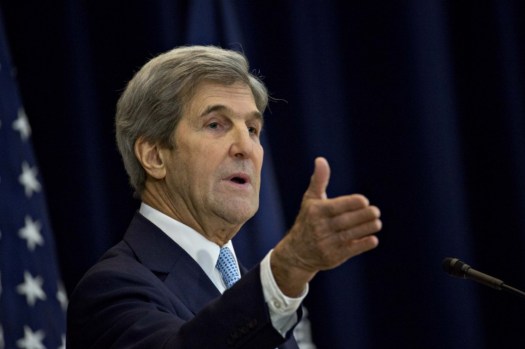
Secretary of State John F. Kerry delivering remarks at the State Department on Dec 28, 2016. (Andrew Harrer / Bloomberg News)

By Tiffany Harness and Julie Vitkovskaya / The Washington Post
December 28, 2016


“Let’s be clear: Settlement expansion has nothing to do with Israel’s security; many settlements actually increase the security burden on the IDF [Israel Defense Forces]. And leaders of the settler movement are motivated by ideological imperatives that entirely ignore legitimate Palestinian aspirations.”


Secretary of State John F. Kerry delivered frank remarks on the Middle East peace process at the State Department on Wednesday. Here are excerpts from his speech:

On “trends on the ground”:

“The truth is that trends on the ground — violence, terrorism, incitement, settlement expansion and the seemingly endless occupation — are destroying hopes for peace on both sides and increasingly cementing an irreversible one-state reality that most people do not actually want.”

On accusations that the United States was conspiring against Israel:

“We also strongly reject the notion that somehow the United States was the driving force behind this resolution” — a reference to a U.N. Security Council resolution condemning Israeli settlement activity that the United States declined to veto.

On Israeli Prime Minister Benjamin Netanyahu:

“In literally hundreds of conversations with Prime Minister Netanyahu, I have made clear that continued settlement activity would only increase pressure for an international response.”

Continue reading “12 Big Takeaways from John Kerry’s Speech”

Jerusalem’s Status Won’t Be as Easy to Settle as Other Real Estate Deals. (Here’s Why.)

israeli-flag
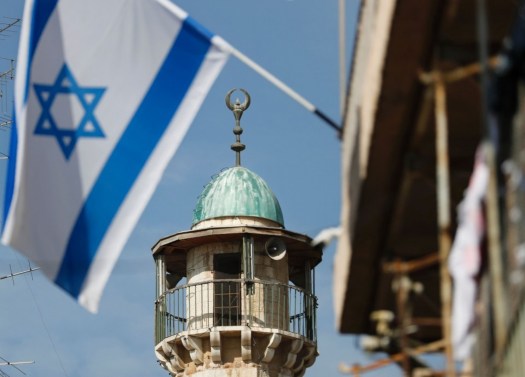
An Israeli flag waves in front of the minaret of a mosque in the Arab quarter of Jerusalem’s Old City on Nov. 14, 2016. (photo: Thomas Coex / AFP)

By Brent E. Sasley / The Washington Post
December 25, 2016


The “let’s make a deal” approach assumes that each negotiating party has a series of material things that can be traded off. In this approach, both sides understand they will be better off with more than they currently have. But that doesn’t apply to a place like Jerusalem, or to conflicts like it.


President-elect Donald Trump has set the foreign policymaking world on edge with his and his team’s repeated insistence that as president he will move the U.S. Embassy from Tel Aviv to Jerusalem. The goal: support Israel’s claim to the city as its “undivided, eternal capital.” By nominating David Friedman — who agrees with that position — to be ambassador to Israel, Trump apparently emphasizes this commitment.

The Israeli-Palestinian conflict has resisted resolution for decades. But Trump has insisted that “a deal is a deal” and that because he is “a negotiator,” he will be successful where others were not. In this case, presumably Trump plans to offer the Palestinians compensation to accept Israel’s claims to Jerusalem.

But it is not that simple.

Continue reading “Jerusalem’s Status Won’t Be as Easy to Settle as Other Real Estate Deals. (Here’s Why.)”

Israel Needs Its Arab Friends More Than U.S. Embassy Move

jerusalem-1712855_1280
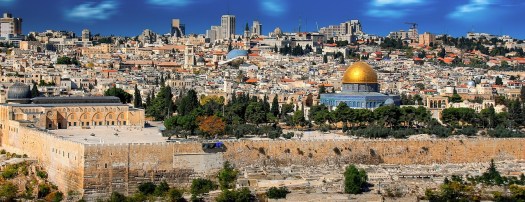
Haram esh-Sharif, Jerusalem. (photo: Lubomir Mihalik)

By Eli Lake / BloombergView
December 21, 2016


It’s fair to ask how much worse things could get on the Palestinian street. Still, the Israelis have a lot to lose behind the scenes. Part of this is because of the rise of Iran. Israel and Saudi Arabia, who were bitter enemies for the first half-century of the Jewish State’s existence, today are quiet partners in trying to check Iran’s rise. The same is true with the United Arab Emirates. With Egypt and Jordan, Israel has peace treaties, which explicitly state that the status of Jerusalem should be determined through negotiations.


For the last eight years the American president has approached the Jewish state the way a do-gooder deals with an alcoholic friend. You know the pose: Because we care so much about your long-term survival, we want to help you end your addiction to apartment construction in East Jerusalem.

To put it mildly, Donald Trump has a different perspective. It’s not just that he has nominated his bankruptcy lawyer David Friedman, an enthusiast of greater Israel, to be his ambassador there. Nor is it the elimination of language about a “two-state solution” in the Republican Party’s platform for 2016. It’s that the incoming president’s administration is promising to move the U.S. embassy to Jerusalem after the election.

It’s been the other way since the 1980’s. Usually presidents promise to move the embassy in the campaign and break that promise while in office. Trump looks like he is going to keep his word. As Friedman said in a statement last week, he looks forward to conducting his official diplomatic business “from the U.S. embassy in Israel’s eternal capital, Jerusalem.”

Continue reading “Israel Needs Its Arab Friends More Than U.S. Embassy Move”

Israeli Settlers Harass Hebron Videographer

A Palestinian holds a poster of Israeli Sergeant Elor Azaria that reads
A Palestinian holds a poster of Israeli Sergeant Elor Azaria, who killed the Abdel Fattah al-Sharif, that reads “wanted,” during a protest in the West Bank city of Hebron on Jan 4, 2017. (photo: Wisam Hashlamoun)

Harassment and death threats attempt to “silence documentation and resistance.”

By Sheren Khalel / Mondoweiss
January 9, 2017


“Of course the Israeli settlers target him. The people who are activists, or the people who try to document Israeli violations, are being targeted by the Israelis all the time, because they don’t want to allow people to see the reality of how life is here.”
— Hebron resident Ayman Samir


Emad Abu Shamsiyah first started receiving death threats in March, after a video he filmed for Israeli rights group B’Tselem, which captured Israeli soldier Elor Azaria shooting dead Abed al-Fattah al-Sharif, 21, was released to the public. The video sparked a media frenzy surrounding the incident, and directly led to the initial indictment of Azaria. Shamsiyah has not had a good night’s rest since.

Shamsiyah lives in the city-center of Hebron — arguably the most contentious city in all of the occupied West Bank — and the only city-center where Palestinians and Israeli settlers live side-by-side.

During the case, Shamsiyah was frequently accosted by Israeli settlers near his home, who demanded he change his testimony. After last week’s ruling, which found Azaria guilty of manslaughter, the threats against Shamsiyah have reached a new level, as 67 percent of the general Israeli population supports a full pardon for Azaria.

The lack of support for the manslaughter ruling has translated into anger among Israeli settlers, who have a neighbor directly responsible for the main evidence in the case. As a result, Shamsiyah cannot walk the streets of his neighborhood without fearing for his life.

Continue reading “Israeli Settlers Harass Hebron Videographer”

Netanyahu Makes Trump His Chump

28wed1web-superjumbo
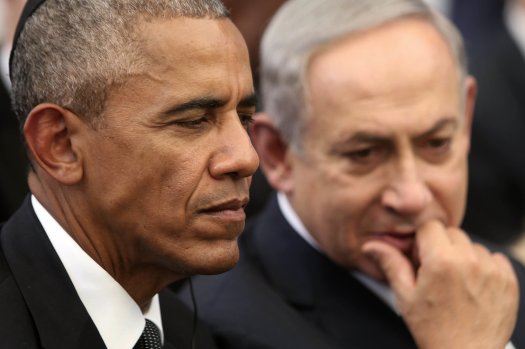
President Obama, left, and Prime Minister Benjamin Netanyahu in Israel in September 2016. (photo: Menahem Kahana)

Friends don’t let friends drive drunk, and right now Obama and Kerry rightly believe that Israel is driving drunk.

By Thomas Friedman / The New York Times
December 28, 2016


Israel is driving drunk toward annexing the West Bank and becoming either a bi-national Arab-Jewish state or some Middle Eastern version of 1960’s South Africa, where Israel has to systematically deprive large elements of its population of democratic rights to preserve the state’s Jewish character.


For those of you confused over the latest fight between President Obama and Prime Minister Bibi Netanyahu of Israel, let me make it simple: Barack Obama and John Kerry admire and want to preserve Israel as a Jewish and democratic state in the Land of Israel. I have covered this issue my entire adult life and have never met two U.S. leaders more committed to Israel as a Jewish democracy.

But they are convinced — rightly — that Netanyahu is a leader who is forever dog paddling in the middle of the Rubicon, never ready to cross it. He is unwilling to make any big, hard decision to advance or preserve a two-state solution if that decision in any way risks his leadership of Israel’s right-wing coalition or forces him to confront the Jewish settlers, who relentlessly push Israel deeper and deeper into the West Bank.

Continue reading “Netanyahu Makes Trump His Chump”

Samantha Power’s Speech Regarding Israeli Settlements

Barack Obama, Samantha Power
Samantha Power, U.S. Permanent Representative to the United Nations, speaks at the Rose Garden, June 5, 2013. (photo: AP)

Explanation of Vote at the Adoption of UN Security Council Resolution 2334 on the Situation in the Middle East

Ambassador Samantha Power, U.S. Permanent Representative to the United Nations
December 23, 2017


“The United States will not support the use of any additional land for the purpose of settlements. . . . Indeed, the immediate adoption of a settlement freeze by Israel, more than any other action, could create the confidence needed for wider participation in [peace] talks. Further settlement activity is in no way necessary for the security of Israel and only diminishes the confidence of the Arabs that a final outcome can be freely and fairly negotiated.”
— President Ronald Reagan, 1982


Thank you, Mr. President.

Let me begin with a quote: “The United States will not support the use of any additional land for the purpose of settlements during the transitional period. Indeed, the immediate adoption of a settlement freeze by Israel, more than any other action, could create the confidence needed for wider participation in these talks. Further settlement activity is in no way necessary for the security of Israel and only diminishes the confidence of the Arabs that a final outcome can be freely and fairly negotiated.”

This was said in 1982 by President Ronald Reagan. He was speaking about a new proposal that he was launching to end the Israeli-Palestinian conflict. While ultimately, of course, President Reagan’s proposal was not realized, his words are still illuminating in at least two respects.

First, because they underscore the United States’ deep and long-standing commitment to achieving a comprehensive and lasting peace between the Israelis and Palestinians. That has been the policy of every administration, Republican and Democrat, since before President Reagan and all the way through to the present day.

Second, because President Reagan’s words highlight the United States’ long-standing position that Israeli settlement activity in territories occupied in 1967 undermines Israel’s security, harms the viability of a negotiated two-state outcome, and erodes prospects for peace and stability in the region. Today, the Security Council reaffirmed its established consensus that settlements have no legal validity. The United States has been sending the message that the settlements must stop — privately and publicly — for nearly five decades, through the administrations of Presidents Lyndon B. Johnson, Richard Nixon, Gerald Ford, Jimmy Carter, Ronald Reagan, George H.W. Bush, Bill Clinton, George W. Bush, and now Barack Obama. Indeed, since 1967, the only president who had not had at least one Israeli-Palestinian-related Security Council resolution pass during his tenure is Barack Obama. So our vote today is fully in line with the bipartisan history of how American Presidents have approached both the issue — and the role of this body.

Continue reading “Samantha Power’s Speech Regarding Israeli Settlements”

How an Historic Site Became a Children’s Library

after-1
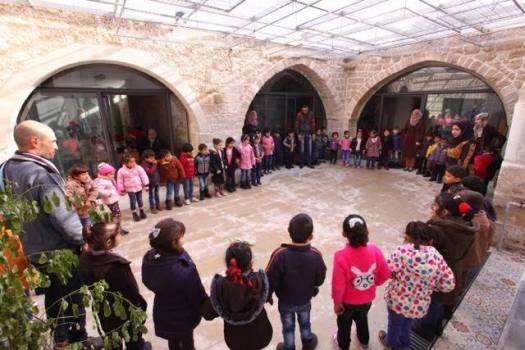
Children participate in psychosocial support activities at Maqam Al-Khidir, also know as the Saint George Monastery, in the Gaza Strip. (photo: Palestine Square)

Palestine Square
January 4, 2017


“Some people feel that their stories, suffering, and lives are being exploited. I wanted them to feel that they own and would benefit from the project through their own contributions. I was overwhelmed by the support.”
— Reem Abu Jaber, Executive Director of NAWA for Culture and Arts


After decades of neglect, archaeological sites in the Gaza Strip are finally receiving needed attention. The ancient Saint George Monastery, locally known as Maqam Al-Khidir (sometimes Al-Khudr), is now open to the public following extensive restoration by a local NGO in Deir Al-Balah, NAWA for Culture and Arts, an organization that provides pyschosocial support for children.

While historical information about the site are scarce, the Survey of Western Palestine, carried out by the British Corps of Royal Engineers in 1872, suggests that the ancient Greek inscriptions found at the monastery reveal it was built during the late sixth century. The site has long been revered for spiritual and meditation purposes by both Muslims and Christians. Over the centuries, however, it fell into ruins and lost its significance. Situated in the city of Deir Al-Balah, Arabic for “Monastery of the Palms,” the site extends across an area of 200 square meters. Three domes top the monastery, which is surrounded by stonewalls. The main chapel is located underground, ten paces down a small flight of stairs to an area that houses three apses, where an historic water well was once used for drinking and baptism. In addition to two ancient Greek inscriptions, a stone tomb has also been found.

Reem Abu Jaber, Executive Director of NAWA, said the site restoration idea came about almost unintentionally. Her organization, which was founded in the Spring of 2014 by a group of young people, 80% of whom are female, works to provide psychosocial support for the city’s children through a wide range of cultural activities. Once the organization received proper accreditation, “I shared a post on Facebook inviting people to donate books to establish a small reading place in the area,” Abu Jaber explained. At the height of school vacation season, NAWA received 200 children within the first week.

Continue reading “How an Historic Site Became a Children’s Library”

The Annexation of Palestine Could Be Closer Than you Think

.
Members of Knesset from the Likud and Jewish Home parties, including Deputy Foreign Minister Tzipi Hotovely (R), take part in an event demanding the annexation of West Bank settlement Ma’ale Adumim, Jerusalem, October 31, 2016. (photo: Yonatan Sindel / Flash90)

A perfect storm of domestic Israeli politics combined with the changing of the guard in Washington could create an opportunity for those advocating annexation to finally make their move.

By Michael Schaeffer Omer-Man / +972 Magazine
January 1, 2017


Since his election, President-elect Trump has been sending clear signals that his administration’s policy toward Israel, and especially the settlements, will be markedly different from that of Barack Obama, John Kerry, and, one would conclude, the previous eight American presidents since Israel occupied the Palestinian territories in 1967. The president-elect has not minced words, tweeting in response to John Kerry’s 75-minute admonition of Israel’s settlement policy: “Stay strong Israel, January 20th is fast approaching!”


Senior Israeli government minister Naftali Bennett announced on Sunday that he will introduce legislation to effectively annex Israel’s third-largest settlement in the West Bank, Ma’ale Adumim, by the end of January. It is safe to assume, that when Bennett says “by the end of January,” he means after the January 20 inauguration of Donald Trump.

Bennett’s desire to incrementally annex parts of the West Bank are neither new nor secret. The chairman of the Jewish Home party has run on a platform of annexation since he first ran for office in 2013 and in every election since. Through short videos and aggressive sound bites, the Israeli education minister has attempted shift the public discourse, in Israel and around the world, toward his annexationist aims. . . .

Ayelet Shaked, also of Bennett’s Jewish Home party and now Israel’s justice minister, in the past advocated annexing the Gush Etzion settlement bloc. More recently she announced plans to apply Israeli civil law to the occupied territories, which is considered de facto annexation (the West Bank is currently subject to Israeli military law). A few months ago Deputy Foreign Minister Tzipi Hotovely made a direct demand of her government. Similar pleas and plans can be heard on an almost daily basis throughout the Israeli government and ruling coalition, not to mention in right-wing circles and media outside the government. And while demands from within the government to advance annexation have become the new normal in recent years, for a variety of reasons they are often dismissed as fringe or unrealistic.

Continue reading “The Annexation of Palestine Could Be Closer Than you Think”

How Netanyahu’s Dangerously Twisted Words Hide the Truth

Israel's Prime Minister Netanyahu attends the weekly cabinet meeting in Jerusalem
(photo: PBS)

By Peter Beinart / The Forward
January 4, 2017


In the West Bank, Israel is not the “one true democracy in the Middle East.” It is not a democracy at all. It is not a democracy because Palestinians — who comprise the vast majority of the West Bank’s inhabitants — cannot vote for the government that controls their lives: the government of Israel. . . . If Israel really were a democracy in the West Bank, and millions of West Bank Palestinians could vote in Israeli elections, Netanyahu wouldn’t be Israel’s prime minister.


Last month, Prime Minister Benjamin Netanyahu issued two public statements. When the United Nations Security Council passed a resolution criticizing settlements, Netanyahu attacked it for not condemning Syria. When Secretary of State John Kerry defended the Obama administration’s decision to let the resolution pass, Netanyahu attacked him for not sufficiently condemning the Palestinians.

In both responses, the Israeli leader illustrated George Orwell’s famous insight: The abuse of human beings starts with the abuse of language.

“At a time when the Security Council does nothing to stop the slaughter of half a million people in Syria,” Netanyahu declared after the UN vote, “it disgracefully gangs up on the one true democracy in the Middle East, Israel.”

The first clause is a non-sequitur. Yes, Syrians in Aleppo and elsewhere are suffering more than Palestinians in the West Bank. Yes, the UN should be doing more to relieve their plight. But the test of whether Israeli settlement policy deserves international condemnation is whether Israeli settlement policy is morally wrong, not whether other governments deserve condemnation more.

Continue reading “How Netanyahu’s Dangerously Twisted Words Hide the Truth”