Palestine: The End of the Bedouins?

shulman-ayyub
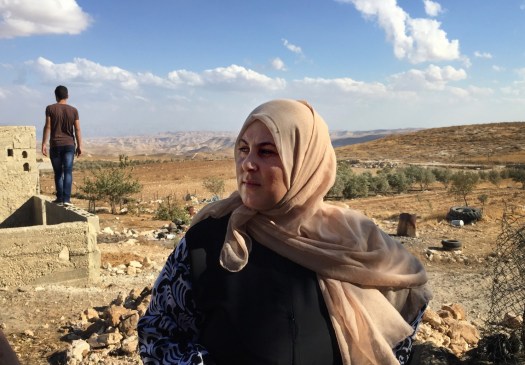
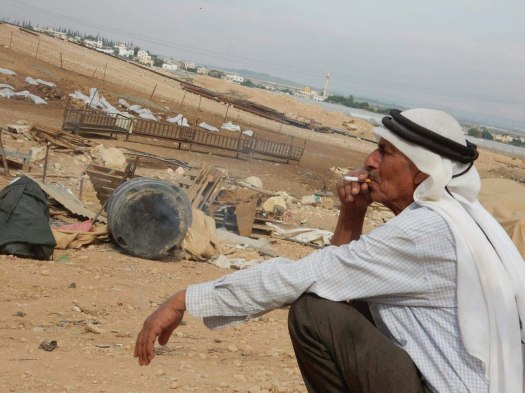
Abu Rasmi Ayyub amid the ruins of his village, al-Hammeh, demolished by the Israeli army on September 27, 2016. (photo: Giy Hircefeld)

By David Shulman / The New York Review of Books
December 7, 2016


We are simple people. We want to graze our sheep, to feed our families, to educate our children. Only that. In the late 1980s, at the time of the Oslo agreements, there was hope, but in the end the disaster became even more terrible. They are doing whatever they can to drive us out. The Israeli Supreme Court ruled that the situation here should be frozen, and no more demolitions take place, but the soldiers pay no attention. When a soldier comes to tear down my house, where is the judge?  . . . My daughter was wounded in front of my eyes by an Israeli girl, a soldier. What am I supposed to feel? How am I supposed to live with the Israeli people, in what they claim is the only democracy in the Middle East?


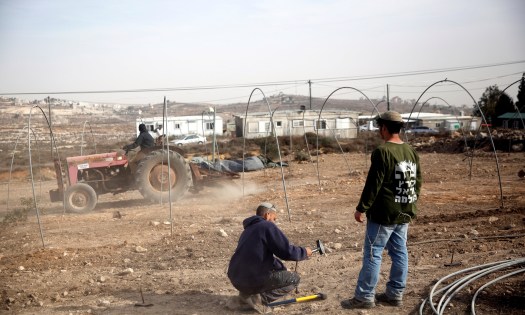
One way to tell the story of the Middle East as a whole is to describe the endemic struggle between peripatetic nomads and settled peasant farmers — a struggle attested already in ancient Mesopotamian documents. For centuries, all the political regimes of the region have tried, with varying success, to get the Bedouin to come to rest on the land. But in Israel and in the occupied territories we see, alongside this familiar policy, persistent attempts to uproot Bedouin populations who have already settled on the land, sometimes generations ago, and who usually have clear claims to ownership of these sites.

Today, most of the Jordan Valley, undoubtedly one of the most ravishing landscapes on the planet, is situated in what is known as Area C of occupied Palestinian territory. This means that, with the exception of the ancient city of Jericho and its surroundings (which are in Area A, under Palestinian rule), the valley is under direct and exclusive Israeli military, legal, and political control, and also that large parts of it are taken up by Israeli settlements or by lands that have been reserved for future Israeli settlement. It also means that a Palestinian population of some 15,000 Bedouins who are settled in the valley is tacitly targeted for expulsion.

According to the Oslo accords, the division of the West Bank into three different zones was intended as a preliminary stage leading eventually to the end of the Israeli occupation and to achieving Palestinian statehood. The policy of the present Israeli government appears to be aimed at eventually annexing to Israel the whole of Area C, which constitutes over half the territory of the West Bank; this goal has been explicitly and repeatedly stated by the minister of education, Naftali Bennett, head of the ultra-nationalist Jewish Home party and a major force in Prime Minister Benjamin Netanyahu’s coalition. As a result, we are now witnessing in the Jordan Valley an accelerated process of what must, I fear, be called ethnic cleansing. It’s not a term I use lightly.


Continue reading “Palestine: The End of the Bedouins?”

“We Are Orphans Here”

04refugee1-superjumbo
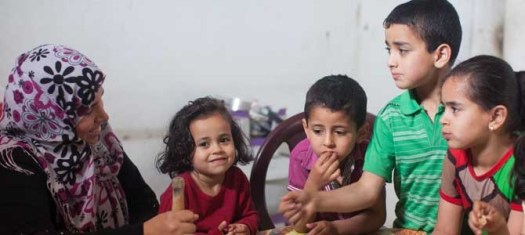
Palestinian children waiting inside the Shuafat Refugee Camp for buses to take them to school. (photo: Luca Locatelli/Institute, for The New York Times)

Life and death in East Jerusalem’s Palestinian refugee camp.

By Rachel Kushner / The New York Times
December 1, 2016


The camp is, according to Israeli law, inside Israel, and the people who live there are Jerusalem residents, but they are refugees in their own city. Residents pay taxes to Israel, but the camp is barely serviced. There is very little legally supplied water, a scarcely functioning sewage system, essentially no garbage pickup, no road building, no mail service (the streets don’t even have names, much less addresses), virtually no infrastructure of any kind. There is no adequate school system. Israeli emergency fire and medical services do not enter the camp. The Israeli police enter only to make arrests; they provide no security for camp residents. There is chaotic land registration. While no one knows how many people really live in the Shuafat camp and its three surrounding neighborhoods, which is roughly one square kilometer, it’s estimated that the population is around 80,000. They live surrounded by a 25-foot concrete wall, a wall interspersed by guard towers and trapdoors that swing open when Israeli forces raid the camp, with reinforcements in the hundreds, or even, as in December 2015, over a thousand troops.


Standing at an intersection in Shuafat Refugee Camp, in East Jerusalem, I watched as a boy, sunk down behind the steering wheel of a beat-up sedan, zoomed through an intersection with his arm out the driver’s-side window, signaling like a Nascar driver pulling in for a pit stop. I was amazed. He looked about 12.

“No one cares here,” my host, Baha Nababta, said, laughing at my astonishment. “Anyone can do anything they want.”

As Baha and I walked around Shuafat this spring, teenagers fell in behind us, forming a kind of retinue. Among them were cool kids who looked like cool kids the world over, tuned in to that teenage frequency, a dog whistle with global reach. I noticed that white was a popular color. White slouchy, pegged jeans, white polo shirts, white high-tops. Maybe white has extra status in a place where many roads are unpaved and turn to mud, where garbage is everywhere, literally, and where water shortages make it exceedingly difficult to keep people and clothing clean.

Continue reading ““We Are Orphans Here””

Jared Kushner’s Foundation Donated to Settlements

jared-kushner-1
Jared Kushner, the son-in-law of President-elect Donald Trump, walks through the lobby of Trump Tower. (photo: Spencer Platt/Getty Images)

By Carol Morello / The Washington Post
December 5, 2016


“I imagine this will be the end of State Department statements for 50 years calling settlements illegal to illegitimate, unhelpful or obstacles to peace. American foreign policy is about to be dramatically shifted. . . . It’s not about one check from Jared Kushner, but a broad threat to 50 years of bipartisan support for the proposition that settlements are an obstacle to peace. Now, that could be declared dead. I’m very alarmed.”
— Jeremy Ben-Ami, President of J Street


Jared Kushner, who may become a Middle East peace envoy in his father-in-law’s administration, is a director of a family foundation that has made charitable donations to West Bank settlements.

The gifts totaled $58,500 between 2011 and 2013, a small portion of the almost $8.5 million the Seryl and Charles Kushner Family Foundation gave away in that period, according to IRS records first reported by the Israeli newspaper Haaretz and reviewed independently by The Washington Post. Kushner and his three siblings are directors, along with their parents, of the foundation.

President-elect Donald Trump has said he may make his son-in-law, who is married to Ivanka Trump, a broker for talks between Israelis and Palestinians, saying Kushner would be “very good” at working with both sides.

Continue reading “Jared Kushner’s Foundation Donated to Settlements”

East Jerusalem Brothers Forced to Demolish Their Own Homes

2016_12_4-palestinian-brothers-from-east-jerusalem-forced-to-demolish-their-own-homes-3
Said Al-Abbasi, Silwan Neighborhood, East Jerusalem. [photo: MA’AN News]
By Middle East Memo
December 5, 2016


Demolitions of Palestinian structures and homes in the occupied West Bank and East Jerusalem have seen an unprecedented surge this year, with the number of structures demolished in the first half of 2016 well exceeding the total number of demolitions carried out in all of 2015. At least 1,569 Palestinians have been displaced since the beginning of 2016 as a result of demolitions in the occupied territory, compared to 688 Palestinians displaced over the entirety of 2015, according to U.N. documentation.


Two Palestinian brothers in the neighborhood of Silwan in occupied East Jerusalem were forced to demolish their own homes on Saturday in compliance with an Israeli court order.

One of the owners, Said Al-Abbasi, told Ma’an that he and his brother Nasser had built their homes in the Karm Al-Sheikh area of Silwan two-and-a-half years ago. However, before construction could be completed, the Jerusalem municipality delivered demolition orders for their homes.

During the court hearings, the Al-Abbasi brothers, who have 12 children between them, were forced to close the construction site with concrete until all legal proceedings had concluded. Said told Ma’an that the Jerusalem municipality threatened to imprison the pair if they tried to resume construction at the site.

Continue reading “East Jerusalem Brothers Forced to Demolish Their Own Homes”

Israel Votes to Authorize Illegal Settler Homes in Palestine

3500
Israeli settlers at Amona, near Ramallah in the West Bank. [photo: Ronen Zvulun / Reuters]

Passage of bill to evacuate one settler site while retroactively recognizing others meets with condemnation from U.N. and U.S.

By Peter Beaumont / The Guardian
December 5, 2016


“Today, the Israeli Knesset shifted from a path to establish a Palestinian state to a path of extending sovereignty to Judea and Samaria [as Israel calls the occupied Palestinian territories]. Let there be no doubt: the regulation bill is what will spearhead the extension of [Israeli] sovereignty.”
— Naftali Bennett, Israeli Minister of Education and Minister of Diaspora Affairs
“[The legislation] has the objective of protecting illegal settlements built on private Palestinian property in the West Bank. It is a very worrying initiative. I encourage Israeli legislators to reconsider such a move, which would have far-reaching legal consequences across the occupied West Bank.”
— Nickolay Mladenov, U.N. Special Coordinator for the Middle East Peace Process


Israel’s parliament has voted to retroactively legalize thousands of illegitimate settler homes in outposts built on private Palestinian land, in a highly controversial move described by critics as a “land grab.” The measure, which passed in a stormy Knesset session late on Monday, has been met with international condemnation, and has already strained relations within Prime Minister Benjamin Netanyahu’s governing rightwing coalition.

It comes in sharp defiance of a call on Sunday by the U.S. Secretary of State, John Kerry, who urged Israel again to rein in the construction of settlements on West Bank land.

Israeli critics and Palestinians have described the legislation as a land grab that would further distance prospects for a two-state solution to end the long Israeli-Palestinian conflict. Some high-profile political supporters, echoing that view, celebrated the vote by saying it opened the way to annexation of the West Bank and the end of any prospect of a Palestinian state.

According to estimates by opponents — including the prominent anti-occupation group Peace Now — the new law, if finally approved, would effectively annex 55 illegal outposts and approximately 4,000 housing units in settlements and illegal outposts.

Continue reading “Israel Votes to Authorize Illegal Settler Homes in Palestine”

Tent of Nations Update

https://coit.smugmug.com/Israel-Palestine/Tent-of-Nations-2014/i-mLHqrxQ/A

From Beth Moore and Bill Plitt / FOTONNA
November 9, 2016


Following a recent refusal by the Military Court in the West Bank to grant permits to the Nassars for building two structures on their farm, one for a cave for volunteers and one for a machine shop, a demolition order was received by Daoud from the Military Court. It could mean that the two buildings would be demolished at any time by the military. Daoud feels he cannot be away from the farm at such a tenuous time.


Dear Friends,

We heard from Daoud Nassar early this morning, that due to urgent developments on the farm, he has decided, with great regret, that he will not be able to be present for the tour in Colorado this next week.

One of the constraints under which Palestinian’s operate is the requirement to obtain permits to build structures on their land. They follow the law and try to obtain the necessary permits, but they are never forthcoming. Daoud and his family have chosen a path of non-violent resistance, and move ahead to build structures on their land — many of them in underground caves. When this is discovered either by the Israeli military, or the occupation government (COGAT) demolition orders for the structures are ordered. There are some 30 demolition orders on structures on the Nassar’s land. Continue reading “Tent of Nations Update”

A Shepherd’s Story

26-09-2016-south-hebron-hills-qawawis-jibrin-moussa-haram-at-home-in-qawawis-eappi-v-steen1
Photo courtesy of V. Steen / EAPPI

“Life has become as small as a ring”

By the South Hebron Hills Team / EAPPI
October 26, 2016


“And the army sees everything but does nothing,” Jibrin says. “A settler can ride a quad bike through a grazing flock and no one cares.” Jibrin still challenges intruders, though. “Why are you here?” he asked one settler who was walking on his land. “I am here for the Israeli Government,” the settler replied. “But you are poor people. You are here for nobody.”


Jibrin sits with quiet dignity and explains the effects of the occupation, “Life has become as small as a ring,” he says.

ibrin was born in Qawawis, a community of shepherds in the South Hebron Hills. His family had fields of wheat and barley, sheep and olive trees. Then, in the mid-1980s, the Susya settlement, illegal under international law, was established by the Israeli government on Palestinian land just across the road. Things started to change. The settlers let their animals into the Palestinian fields and damaged the crops. They threw stones at the shepherds. Jibrin’s family moved nearer to the village for protection.

But the harassment didn’t stop: it got worse. The settlers carried guns. The last twenty years have seen fatalities and serious injuries among the shepherds. Two died after stepping on an improvised explosive device placed on a shepherding path. Jibrin’s neighbour has a plastic stomach as a result of being shot by a settler. Another has a damaged voice box after being shot in the neck and speaks with difficulty.

[Continue reading here . . . ]

Let There Be Light

img_65791476891851
Image courtesy of Anne-Marie O’Connor, for The Washington Post

20 minutes from modern Jerusalem, a Palestinian village is stranded in the past

Anne-Marie O’Connor, The Washington Post
JUBBET ADH DHIB, West Bank
October 22, 2016


“The village is one of 241 Palestinian communities in the Israeli-controlled West Bank — a zone known as Area C — that lack services because ‘Israel practically bans Palestinian construction’ while helping Jewish settlements grow, according to the Israeli human rights group B’Tselem.”


Let there be light.

That is a plea of residents of this Palestinian village who have waited nearly three decades for electricity while well-lit Israeli settlements sprang up around them. Now they are pinning their hopes on a new local women’s committee that is determined to get them on the grid.

Just a 20-minute drive from bustling modern Jerusalem, on the side of a mountain whose name means “Paradise,” Jubbet adh Dhib is like a step back in time.

Without refrigeration, food goes bad. Elderly Palestinians fall down in the dark. Children can’t study at night. With no WiFi and limited television, villagers feel cut off from the world.

“Our children don’t have a good childhood,” said Fadia al-Wahsh, the leader of the women’s committee.

“They see kids everywhere, with iPads and Internet” in more prosperous Palestinian communities, she said. “My son says, ‘Why do you make me live here?’ ”

A few hundred yards from Jubbet adh Dhib are the bright lights of Sde Bar, a small Israeli settlement and a neighborhood of the larger settlement of Nokdim, where Israeli Defense Minister Avigdor Lieberman lives. But the villagers have no access to the schools, cafes, art galleries, garbage collection, tennis courts and public pools at these or other settlements just minutes away.

[Continue reading here . . . ]

World Food Programme in Palestine

World Food Programme Country Brief, State of Palestine
September 2016

eman_gz_6-3
© WFP/Eman Mohammed

The Numbers:

  • 1.6 million food-insecure Palestinians in need of food assistance
  • 745,000 non-refugees in need of food assistance
  • 65,000 internally displaced persons (IDP’s) in Gaza following the 2014 war

Decades of occupation coupled with severe restrictions on the movement of people and goods have undermined the living conditions and reduced access to livelihoods for Palestinians. Food insecurity is mostly due to a lack of economic access: food prices are mainly driven by Israel and out of reach for many poor households — the GDP per capita in Palestine (USD 4,700) is six times less than that of Israel (USD 30,000).

The impact of the 2014 conflict in Gaza continues to be devastating to the Palestinian people and economy. Against this backdrop, more than 27 percent of the population — or 1.6 million people — suffers from food insecurity. In Gaza, one in two is food insecure, and one in three is severely affected.

As poor and vulnerable Palestinians spend more than half of their income on food, WFP’s assistance is critical to meet their food needs. This prevents further deteriorations in food security and livelihood status, and prevents negative coping mechanisms. WFP targets 600,000 of the most vulnerable, food insecure non-refugees in Palestine who have been affected by the ongoing conflict and occupation, a fiscal crisis and a steady decline in living standards. WFP has been present in Palestine since 1991.

[Read more here . . . ]

[Download the country brief here. . . ]


The NY Times “Finally Realizes”

Netanyahu doesn’t care what Obama thinks

By Lisa Goldman, +972 Magazine
October 7, 2016


“For years, liberal American publications have been generally sympathetic to Israel, even when they are criticizing its governments’ policies. Now, in light of an unprecedented New York Times editorial, that attitude might be about to change.”


The New York Times editorial board has realized, about a decade too late, that Prime Minister Benjamin Netanyahu does not care what the Obama administration — or any U.S. administration, for that matter — thinks about his policies regarding the Palestinians.

According to the editorial published Friday, October 7, headlined At the Boiling Point With Israel, the catalyst for this realization was Netanyahu’s decision to approve the building of a new settlement deep in the West Bank, only three weeks after the U.S. finalized a package of military aid for Israel to the tune of an unprecedented $38 billion, spread over 10 years. Israel receives more military aid than any other country, by far: Egypt, which receives $1.31 billion per year, is the second-largest recipient of direct military aid from the United States. [Continue reading here . . . ]