
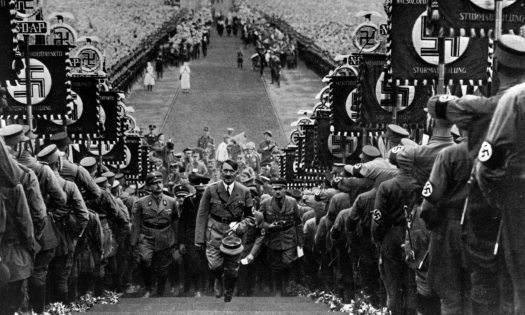
A decade haunted by mass poverty, violent extremism and world war gives us one crucial advantage: the chance to learn the era’s lessons and avoid its mistakes.
By Jonathan Freedland / The Guardian
March 11, 2017
Witness the remarks of Steve Bannon, chief strategist in Donald Trump’s White House and the former chairman of the far-right Breitbart website. In an interview with the Hollywood Reporter, Bannon promised that the Trump era would be “as exciting as the 1930’s.” (In the same interview, he said “Darkness is good” – citing Satan, Darth Vader and Dick Cheney as examples.)
Even to mention the 1930s is to evoke the period when human civilization entered its darkest, bloodiest chapter. No case needs to be argued; just to name the decade is enough. It is a byword for mass poverty, violent extremism and the gathering storm of world war. “The 1930’s” is not so much a label for a period of time than it is rhetorical shorthand — a two-word warning from history.
Witness the impact of an otherwise boilerplate broadcast by the Prince of Wales last December that made headlines: “Prince Charles warns of return to the ‘dark days of the 1930s’ in Thought for the Day message.” Or consider the reflex response to reports that Donald Trump was to maintain his own private security force even once he had reached the White House. The Nobel prize-winning economist Paul Krugman’s tweet was typical: “That 1930s show returns.”
Continue reading “The 1930’s Were Humanity’s Darkest Hour. Are You Paying Attention?”
 HolyLandJustice.org
You must be logged in to post a comment.