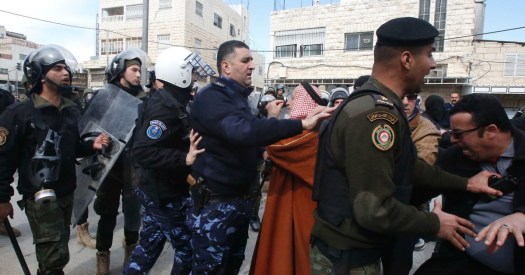
Dangerous Escalation in Attacks on Freedom of Expression in Palestine

242595

By Amnesty International
August 23, 2017


“By rounding up journalists and shutting down opposition websites the Palestinian authorities in the West Bank and the Gaza Strip appear to be using police state tactics to silence critical media and arbitrarily block people’s access to information.”


The Palestinian authorities in the West Bank and their rivals, the de-facto Hamas administration in Gaza, have both tightened the noose on freedom of expression in recent months, launching a repressive clampdown on dissent that has seen journalists from opposition media outlets interrogated and detained in a bid to exert pressure on their political opponents, said Amnesty International.

In the West Bank, the Palestinian authorities have arrested six journalists in August so far, shut down 29 websites and introduced a controversial Electronic Crimes Law imposing tight controls on media freedom and banning online expression and dissent. In the Gaza Strip, Hamas security forces have arrested at least two journalists since June and hampered others from freely carrying out their work. At least 12 Palestinians, including activists, were also detained by Hamas for critical comments posted on Facebook.

“The last few months have seen a sharp escalation in attacks by the Palestinian authorities in the West Bank and Hamas in Gaza, on journalists and the media in a bid to silence dissent. This is a chilling setback for freedom of expression in Palestine,” said Magdalena Mughrabi, Deputy Middle East and North Africa Director at Amnesty International.

Continue reading “Dangerous Escalation in Attacks on Freedom of Expression in Palestine”
A New Peace Plan: Israel and Palestine Should Join the EU

237523105
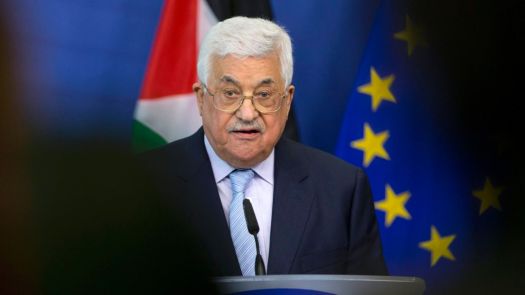
Palestinian President Mahmoud Abbas speaks during a new conference at EU headquarters in Brussels, March 27, 2017. (photo: Virginia Mayo / AP)

What if there were a peace plan that actually offered the people on both sides something that they would truly want?

By Bradley Burston / Haaretz
August 8, 2017

A new peace plan for Israel and Palestine landed literally on my doorstep this morning.

It came in the form of a cautionary feature story in The New York Times, warning of the risks which Brexit poses to the arduously won peace process in Ireland. But it was how the piece began, that got me to thinking that the wisdom in it might benefit the peoples of the Holy Land as well:


Crossing the border between Northern Ireland and the Irish Republic used to involve delays, checkpoints, bureaucratic harassment and the lurking threat of violence. That it’s now virtually seamless — that you can drive across without even knowing it — feels close to miraculous.


For both Israelis and Palestinians, sick to death of bloodletting and disillusionment, one of the few points of common ground is the sense that it would take a miracle to forge a viable peace. At this point, when people on both sides ask, and with good reason, “What’s in it for me?” — bitter experience is scant incentive. It is not for nothing that the Holy Land is where peace initiatives come to die.

But what if there were a peace plan that actually offered the people on both sides something that they truly would want?

An EU passport, for example.

Here’s the hint: When the United Kingdom held its June, 2016 referendum on leaving the European Union, Northern Ireland voted against Brexit by a clear majority. Here’s the plan: Israel and the Palestinian Authority apply for membership in the European Union.

Continue reading “A New Peace Plan: Israel and Palestine Should Join the EU”

BBC Profile: Tent of Nations

75579418_apples-in-hand
Freshly picked apples at the Tent of Nations. (photo: Daniel Silas Adamson)

The Christian family refusing to give up its Bethlehem hill farm.

By Daniel Silas Adamson / BBC News
June 18, 2014

[Ed. note: Although three years old, we thought this article by the BBC might be of interest to our readership.]


“My father always said, ‘We will never achieve peace in Palestine and Israel just by shaking hands — we need to work on people, to start with the grassroots.’ So what we do now, as a family, is fulfilling the dream of my father that people can build bridges, for hope, for understanding, reconciliation, dialogue, to achieve peace. This is the idea.”
— Amal Nassar


On his farm outside Bethlehem, Daher Nassar is picking apples from the ruins of the orchard he planted at least eight years ago. The fruit is scattered across ground freshly opened and imprinted with the tracks of a bulldozer. At the field’s edge, branches reach out from inside a mound of earth, the bark stripped and mangled, unripe almonds still clinging to the trees.

On 19 May [2014] a Palestinian shepherd from the village of Nahalin was out at first light and saw the bulldozer at work in the field, guarded by Israeli soldiers. By the time Nassar arrived the whole orchard — the best part of a decade’s work — was gone. His English is far from fluent, but there’s no mistaking the pain in his voice: “Why you broke the trees?”

A spokesperson for the Israeli military authorities in the West Bank said the trees were planted illegally on state land.

Nassar’s sister, Amal, has a different explanation. The government, together with the Israeli settlers who live around the farm, is “trying to push us to violence or push us to leave,” she says. Amal insists that her family will not move from the land, nor will they abandon their commitment to peaceful resistance.

“Nobody can force us to hate,” she says. “We refuse to be enemies.”

Continue reading “BBC Profile: Tent of Nations”

Mennonite Church Approves Divestment

The Mennonite Church USA approves “withdrawing investments from companies that are profiting from the occupation” of Palestine.

July 6, 2017


“This resolution is a long overdue response to the Palestinian Christian call to the global church. Today we stand in solidarity with their courageous and nonviolent efforts for justice and equality.”
— Joy Lapp, Professor of Religion at Iowa Wesleyan University


The Mennonite Church USA overwhelmingly approved the resolution “Seeking Peace in Israel and Palestine” today at its biennial convention in Orlando, Florida. The resolution garnered approximately 98% of the votes of the 548 delegates.

The resolution declares the denomination’s opposition to Israel’s 50-year-old military rule over Palestinians in the occupied territories and commits to “withdrawing investments from companies that are profiting from the occupation.” The resolution also urges church members to avoid purchase of products associated with the occupation or produced in Israeli settlements built on occupied Palestinian land in violation of international law and longstanding official US policy, and to advocate for an end to U.S. military aid and arms sales in the Middle East.

The Mennonite Church USA joins with the following churches in taking economic action in support of Palestinian Human Rights.

  • Presbyterian Church (USA)
  • United Methodist Church
  • United Church of Christ
  • Quakers
  • Unitarian Universalists
  • Evangelical Lutheran Church in America

The resolution focuses on ways Mennonites have been involved in harms against both Palestinians and Jews, and names concrete steps to address those harms. It addresses the ongoing reality of anti-Semitism around the world, and the extent to which Mennonites in the U.S. are complicit in Jewish suffering historically, currently, and theologically. Church members are encouraged to build relationships with Palestinian-American, Muslim and Jewish communities in the United States.

[Read the full resolution here . . . ]

Israel’s Irrational Rationality

Israeli policemen removing a protester during the eviction of Jewish settlers from the illegal settlement of Amona in the occupied West Bank, February 2017
Israeli policemen removing a protester during the eviction of Jewish settlers from the illegal settlement of Amona in the occupied West Bank, February 2017. (photo: Corinna Kern / NurPhoto / Getty Images)

By David Shulman / The New York Review of Books
June 22, 2017


No amount of coddling and reassuring, no increased bribes in the form of more money or military aid, will have any effect on Israeli policy for the simple reason that Israel considers any sacrifice that would be necessary for peace far worse than maintaining the current situation . . . . The assumption that Israel genuinely wants a peace agreement is simply wrong; the costs of such an agreement are tangible, immediate, and perhaps overwhelming, involving the loss of territory, an end to colonization, and potential political collapse, whereas the costs of maintaining the status quo are for many Israelis, if at times unpleasant, eminently bearable.


This June, Israel is marking the fiftieth anniversary of the Six-Day War. Some Israelis, including most members of the present government, are celebrating the country’s swift victory over Egypt, Jordan, and Syria as the beginning of the permanent annexation of the entire Palestinian West Bank; others, like me, mourn it as the start of a seemingly inexorable process of moral corruption and decline, the result of the continuing occupation of the West Bank, along with Israel’s now indirect but still-crippling control of Gaza. As it happens, my own life in Israel coincides exactly with the occupation. I arrived from the US in 1967, not as an ideological Zionist but as a young student who had fallen madly in love with the Hebrew language. Sometimes I think it is my passion for the language that has kept me here for five decades, although I would now want to add the strong feeling that it is my fate and my good fortune to be able to fight the good fight.

The country I came to live in fifty years ago was utterly unlike the one I live in today. It was no utopia, but its society was broadly moderate and humane, a mildly Mediterranean version of a modern European social democracy. Despite what some would say, it was not a colonial settlers’ society. There was widespread fear and even hatred of Arabs, including Arab citizens of Israel, but it was nothing like the rampant racism one now hears every day on the radio or TV. Shame, sincere or not, had not yet disappeared from public life.

In those early years, most Israelis regarded the occupied territories — which included the Golan Heights and the Sinai Peninsula as well as the West Bank and the Gaza Strip — not as providing an opportunity for enlarging the boundaries of the state through colonization but as bargaining chips in an eventual and hoped-for peace settlement with the Arabs. There were as yet no Israeli settlements in the territories and hence no fanatical, messianic settlers; the Israeli army could still claim, with some justice, to be an army of defense, not a police force sent to ensure that the project of seizing Palestinian land take place without too much resistance from the local population.

Continue reading “Israel’s Irrational Rationality”

Tomorrow at Town Hall Seattle! — Ilan Pappé: Prospects for Peace in Palestine

Ilan Pappe (1)

Please join us for an evening with Ilan Pappé, internationally renown historian, speaking on “Prospects for Peace in Palestine.”

Date: Monday, May 22, 2017
Time: 6:00–7:00 p.m. Reception
7:00–9:00 p.m. Program
Location: Town Hall Seattle (Great Hall)
1119 Eighth Ave
Seattle, WA  98101
Information: Event website
Facebook event
Email with questions
Tickets: $10 general / $5 student
Buy tickets here

Event Details

Dr. Ilan Pappé, internationally known historian and author, will address Prospects for Peace in Palestine, at 6:00 pm on Monday, May 22, at Town Hall, Seattle. A native son of Israel, Dr. Pappé is a former senior lecturer of history and political science at Haifa University. Since 2008 he has been a member of the academic staff at the University of Exeter, U.K. and is presently Director of the European Center for Palestine Studies.

Author of 12 books on related subjects, Dr. Pappé is well known for his scholarship and commentary on Middle East, especially the history of Israel and Palestine. The Modern Middle East: a Social and Cultural History (2014) is a textbook on the urban, rural, cultural, and gender histories that influence current political and economic developments in the region.

Pappe’s meticulous research examines the socio/political outcomes of the creation and nature of the State of Israel. In his groundbreaking and controversial work, The Ethnic Cleansing of Palestine (2006), Pappé traces the roots of the Israeli/Palestinian conflict, and he raises troubling moral issues around the injustice done to the indigenous Palestinians who were forced to migrate or live as an occupied people in their own land. His struggle for academic freedom led him to leave Israel for England in 2007.

Avi Shlaim, respected Israeli author of The Iron Wall states, “Pappé advocates a peaceful humanist and socialist alternative to the Zionist idea in the form of a bi-national state with equal rights for all its citizens.” (The Guardian, 2014)

Sponsored by the Episcopal Bishop’s Committee for Israel/Palestine, Diocese of Olympia, and the Kairos Puget Sound Coalition, Dr. Pappé will also speak to staff and students at Seattle Pacific University and the University of Washington.

Continue reading “Tomorrow at Town Hall Seattle! — Ilan Pappé: Prospects for Peace in Palestine”

Six Days of War, 50 Years of Occupation: Israel Still Occupies Palestinian Land 50 Years After Six-Day War

20170520_srp072_1
(photo: Magnum)

Israel has become powerful and rich, but has not found peace with the Palestinians — nor with itself.

Special Report: Six Days of War, 50 Years of Occupation / The Economist
May 20, 2017


The decades of the “peace process” brought much process and little peace. For Israelis, land for peace became land for suicide-bombs and rockets.


In the beginning they destroyed Egypt’s air force on the ground and knocked out the planes of Jordan, Iraq and Syria. That was Monday. Then they broke Egypt’s massive defenses in Sinai. That was Tuesday. Next, they took the old city of Jerusalem and prayed. That was Wednesday. Then they reached the Suez Canal. That was Thursday. They ascended the Golan Heights. That was Friday. Then they took the peaks overlooking the plain of Damascus. In the evening the world declared a ceasefire. That was Saturday. And on the seventh day the soldiers of Israel rested.

In just six days of fighting in June 1967, Israel created a new Middle East. So swift and sudden was its victory over the encircling Arab armies that some saw the hand of God. Many had feared another Holocaust. Instead Israel became the greatest power in the region. Naomi Shemer’s anthem, “Jerusalem of Gold,” acquired new lines after the war: “We have returned to the cisterns / To the market and to the market-place / A shofar [ram’s horn] calls out on the Temple Mount in the Old City.”

Continue reading “Six Days of War, 50 Years of Occupation: Israel Still Occupies Palestinian Land 50 Years After Six-Day War”

This Monday at Town Hall Seattle — Ilan Pappé: Prospects for Peace in Palestine

Ilan Pappe (1)

Please join us for an evening with Ilan Pappé, internationally renown historian, speaking on “Prospects for Peace in Palestine.”

Date: Monday, May 22, 2017
Time: 6:00–7:00 p.m. Reception
7:00–9:00 p.m. Program
Location: Town Hall Seattle (Great Hall)
1119 Eighth Ave
Seattle, WA  98101
Information: Event website
Facebook event
Email with questions
Tickets: $10 general / $5 student
Buy tickets here

Event Details

Dr. Ilan Pappé, internationally known historian and author, will address Prospects for Peace in Palestine, at 6:00 pm on Monday, May 22, at Town Hall, Seattle. A native son of Israel, Dr. Pappé is a former senior lecturer of history and political science at Haifa University. Since 2008 he has been a member of the academic staff at the University of Exeter, U.K. and is presently Director of the European Center for Palestine Studies.

Author of 12 books on related subjects, Dr. Pappé is well known for his scholarship and commentary on Middle East, especially the history of Israel and Palestine. The Modern Middle East: a Social and Cultural History (2014) is a textbook on the urban, rural, cultural, and gender histories that influence current political and economic developments in the region.

Pappe’s meticulous research examines the socio/political outcomes of the creation and nature of the State of Israel. In his groundbreaking and controversial work, The Ethnic Cleansing of Palestine (2006), Pappé traces the roots of the Israeli/Palestinian conflict, and he raises troubling moral issues around the injustice done to the indigenous Palestinians who were forced to migrate or live as an occupied people in their own land. His struggle for academic freedom led him to leave Israel for England in 2007.

Avi Shlaim, respected Israeli author of The Iron Wall states, “Pappé advocates a peaceful humanist and socialist alternative to the Zionist idea in the form of a bi-national state with equal rights for all its citizens.” (The Guardian, 2014)

Sponsored by the Episcopal Bishop’s Committee for Israel/Palestine, Diocese of Olympia, and the Kairos Puget Sound Coalition, Dr. Pappé will also speak to staff and students at Seattle Pacific University and the University of Washington.

Continue reading “This Monday at Town Hall Seattle — Ilan Pappé: Prospects for Peace in Palestine”

Next Monday: Ilan Pappé — Prospects for Peace in Palestine (Town Hall Seattle)

Ilan Pappe (1)

Please join us for an evening with Ilan Pappé, internationally renown historian, speaking on “Prospects for Peace in Palestine.”

Date: Monday, May 22, 2017
Time: 6:00–7:00 p.m. Reception
7:00–9:00 p.m. Program
Location: Town Hall Seattle (Great Hall)
1119 Eighth Ave
Seattle, WA  98101
Information: Event website
Facebook event
Email with questions
Tickets: $10 general / $5 student
Buy tickets here

Event Details

Dr. Ilan Pappé, internationally known historian and author, will address Prospects for Peace in Palestine, at 6:00 pm on Monday, May 22, at Town Hall, Seattle. A native son of Israel, Dr. Pappé is a former senior lecturer of history and political science at Haifa University. Since 2008 he has been a member of the academic staff at the University of Exeter, U.K. and is presently Director of the European Center for Palestine Studies.

Author of 12 books on related subjects, Dr. Pappé is well known for his scholarship and commentary on Middle East, especially the history of Israel and Palestine. The Modern Middle East: a Social and Cultural History (2014) is a textbook on the urban, rural, cultural, and gender histories that influence current political and economic developments in the region.

Pappe’s meticulous research examines the socio/political outcomes of the creation and nature of the State of Israel. In his groundbreaking and controversial work, The Ethnic Cleansing of Palestine (2006), Pappé traces the roots of the Israeli/Palestinian conflict, and he raises troubling moral issues around the injustice done to the indigenous Palestinians who were forced to migrate or live as an occupied people in their own land. His struggle for academic freedom led him to leave Israel for England in 2007.

Avi Shlaim, respected Israeli author of The Iron Wall states, “Pappé advocates a peaceful humanist and socialist alternative to the Zionist idea in the form of a bi-national state with equal rights for all its citizens.” (The Guardian, 2014)

Sponsored by the Episcopal Bishop’s Committee for Israel/Palestine, Diocese of Olympia, and the Kairos Puget Sound Coalition, Dr. Pappé will also speak to staff and students at Seattle Pacific University and the University of Washington.

Continue reading “Next Monday: Ilan Pappé — Prospects for Peace in Palestine (Town Hall Seattle)”

Tennis Balls and Whittled Bats

baseball
Palestinian women take part in a baseball training session in Khan Younis in the southern Gaza Strip. (photo: Mohammed Salem / Reuters)

Palestine starts a baseball federation with scrounged equipment.

By Marissa Payne / The Washington Post
March 21, 2017


“I used to watch baseball at home while I was a child. I love it because it’s full of freedom and the only thing the player needs to do is run. Girls come and practice and the numbers are increasing. There are lots of girls who’d like to sign up despite their lack of knowledge of the sport.”
— Iman Al-Moghayer


There are no baseballs. The bats aren’t regulation. They don’t even have a baseball diamond, but that hasn’t stopped a group of Palestinian athletes from launching the territory’s first federation of baseball and softball.

“The federation seeks to make baseball well known to Palestinians, help male and female amateurs to become professional baseball players and train local coaches and referees,” the team’s coach, Mahmoud Tafesh, told Al-Monitor earlier this month.

The federation, headquartered in the Gaza Strip, was established in late January. By the following month, the territory had fielded its first team, composed of 20 men and 20 women. The women are the most keen, according to Tafesh, who recruited several members from a specialized sports education college in Gaza.

“We targeted this group because they had permission from their families to play sport as sports students,” Tafesh told the Associated Press. “Through them, we started to spread, attracting girls from other fields such as journalism and accountants.”

Continue reading “Tennis Balls and Whittled Bats”