
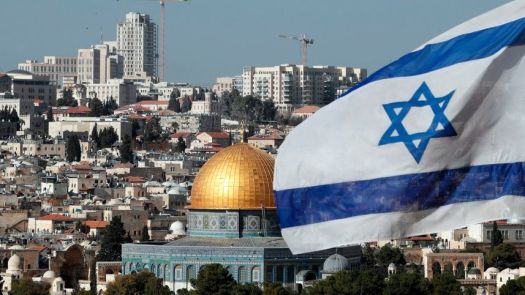
And why the possibility that Trump might do just that, seven decades after Israel’s establishment, is such a source of apprehension worldwide.
By David Green | Haaretz | Dec 7, 2017
As long as the sides cannot decide on a mutually agreeable plan for sharing sovereignty in Jerusalem, . . . [and as long as] the world community [has not] concluded that it must impose a solution on the sides — it would be highly improbable for any individual state to unilaterally give official recognition to Jerusalem as its capital.
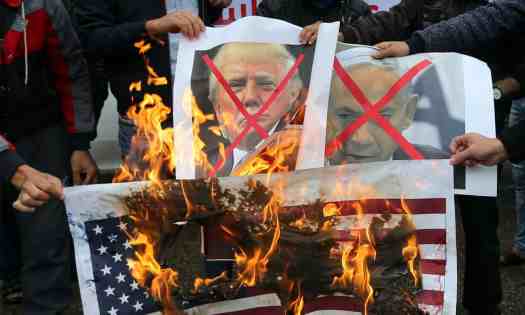
Any individual state, that is, not led by Donald J. Trump.
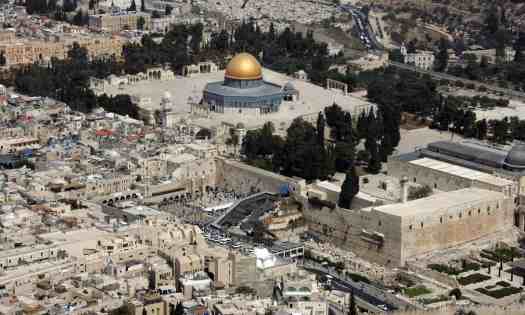
Jerusalem is holy to three religions. Jerusalem is a powder keg, and the smallest wrong move there could set off a religious war. The Arab-Israeli conflict will never be solved until the Jerusalem question is resolved.
Yes, these are all truisms, and you’ve heard them a thousand times or more. But there’s a reason why the root of the word “truism” is “true.” For Jews, Jerusalem is where their Temple — the home of their one god — stood, in its various incarnations. Each time they were exiled from their cultic and political capital in ancient times, they dreamed of returning, and the term “Zion,” the name of one of the city’s hills, became a metonymy not only for the city itself, but for the Land of Israel in general, and the basis of the name of the modern movement calling for establishment of a Jewish state there.
So, why don’t the nearly 160 countries that have diplomatic relations with the State of Israel recognize Jerusalem as its capital, and why is the possibility that the United States may do just that now, nearly seven decades after Israel’s establishment, a source of such apprehension worldwide?


 HolyLandJustice.org
You must be logged in to post a comment.