Defending activism and the power of boycotts

robertazzi2
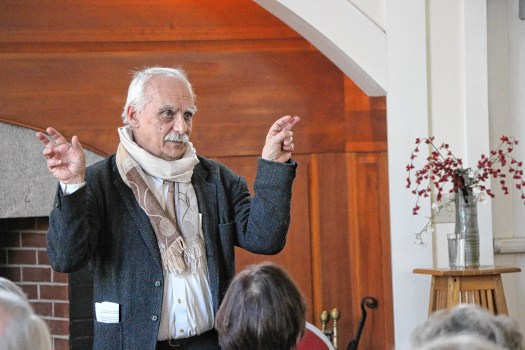
Photojournalist and columnist Robert Azzi. (photo: Kimball Library)

Whether one is for or against a particular boycott, it is important to recognize that boycotts are internationally affirmed and constitutionally protected forms of political expression.

By Robert Azzi | Concord (NH) Monitor | Feb 17, 2018


“A quarter-century ago I barnstormed around the United States encouraging Americans, particularly students, to press for divestment from South Africa. Today, regrettably, the time has come for similar action to force an end to Israel’s long-standing occupation of Palestinian territory and refusal to extend equal rights to Palestinian citizens. . . . This harsh reality endured by millions of Palestinians requires people and organizations of conscience to divest from those companies . . . profiting from the occupation and subjugation of Palestinians.”
— Bishop Desmond Tutu, Nobel Peace Prize Laureate (2012)


In 1947, the American Friends Service Committee (AFSC), together with the British Friends Service Council, accepted the Nobel Peace Prize on behalf of all Quakers. Chairman Gunnar Jahn, in awarding the prize, said, “The Quakers have shown us that it is possible to carry into action something which is deeply rooted in the minds of many; Sympathy with others; the desire to help others; that significant expression of sympathy between men, without regard to nationality or race; feelings which, when carried into deeds, must provide the foundation of a lasting peace. For this reason they are today worthy.”

Today, on the United States Holocaust Memorial website one reads that AFSC “became an important part of a rescue network helping refugees. The group worked in French internment camps, hid Jewish children, and assisted thousands of Jewish and non-Jewish refugees with their immigration and resettlement to the United States.”

Today, to many supporters of Israel, AFSC seems less worthy.

Continue reading “Defending activism and the power of boycotts”

Why won’t Israel let me mourn my father?

24jarrar-inyt-master768
(image: Joao Fazenda)

After my father died in Jordan in October, it was so important for me to visit my extended family in the city of Jenin, to mourn his death with them. Unfortunately, I was prevented from doing so by the Israeli government.

By Raed Jarrar | The New York Times | Nov 23, 2017


Whether or not the Israeli government agrees with my work — and, of course, I know it doesn’t — I still should have been able to take part in those most human of activities: mourning my father and celebrating his life.


My father, Azzam Jarrar, died last month. He was a proud Palestinian, a refugee, a civil engineer, a farmer and an entrepreneur. He was also my friend and mentor. He taught me the multiplication tables on our way to school in Saudi Arabia. He taught me how to question authority when we lived in Iraq. He helped me finish my master’s degree when I lived in Jordan. Above all, though, he was the gateway to my Palestinian roots and identity.

My dad fled his home with his family in 1967, when Israeli soldiers invaded and occupied the West Bank. He went first to Jordan and then to Iraq, where I was born. I was the first Jarrar to be born east of the Jordan River since our family was established on Palestinian land centuries ago.

Continue reading “Why won’t Israel let me mourn my father?”

Tell Congress to oppose anti-BDS legislation

bds_cartoon_800_509_80
(illustration: Marina Djurdjevic)

It is urgent that members of Congress hear from constituents who oppose these bills.

By Evangelical Lutheran Church of America | Feb 15, 2018


“As churches and church-related organizations, we reject any efforts by the state to curtail these rights. We urge you to oppose the proposed legislation, and thus support the rights of individuals and institutions to spend and invest in accordance with their faith, values, and policies.”


Dangerous bills that could undermine the work of advocates for a just peace for Palestinians and Israelis continue to make their way through Congress. These include the Israel Anti-Boycott Act (H.R. 1697 and S. 720) and the Combating BDS Act of 2017 (H.R. 2856 and S. 170) which are part of a larger effort at the federal and state levels to outlaw or penalize the use of boycotts, divestment and sanctions aimed at Israeli government policies.

It is urgent that members of Congress hear from constituents who oppose these and similar bills. The U.N. Human Rights Office recently released a report outlining progress in developing a database of businesses engaged in certain activities related to Israeli settlements, as mandated earlier by the U.N. Human Rights Council. A new House resolution critical of the council includes a call to support the Israel Anti-Boycott Act. . . .

Continue reading “Tell Congress to oppose anti-BDS legislation”

Unitarian group supports BDS nomination for Nobel Peace Prize

logo-for-web-header_1

Norwegian member of parliament, Bjørnar Moxnes, nominated the BDS movement for Palestinian rights for the Nobel Peace Prize on Feb 2.

By Unitarian Universalists for Justice in the Middle East | Feb 9, 2018


Unitarian Universalists for Justice in the Middle East (UUJME) strongly supports the nomination of the Boycott, Divestment and Sanctions (BDS) movement for Palestinian rights for the Nobel Peace Prize. Justice and human rights have been systematically denied the Palestinian people, and UUJME is convinced that this tragedy is at the heart of the war, violence and turmoil that has characterized the Middle East for 70 years. We are convinced there will not be lasting peace for anyone in the region without justice for the Palestinians, and the BDS movement for Palestinian rights is the world’s best hope for achieving that justice.


A member of the Norwegian parliament, Bjørnar Moxnes, has nominated the BDS movement for Palestinian rights for the Nobel Peace Prize. UULME have been asked by the US Interdenominational Palestine Working Group to support the nomination with a statement on our website. The goal is to persuade the Norwegian public and the Nobel committee that there is broad support for the nomination.

Continue reading “Unitarian group supports BDS nomination for Nobel Peace Prize”

Massachusetts activists defeat anti-BDS bill

activestills1403338415jx29t
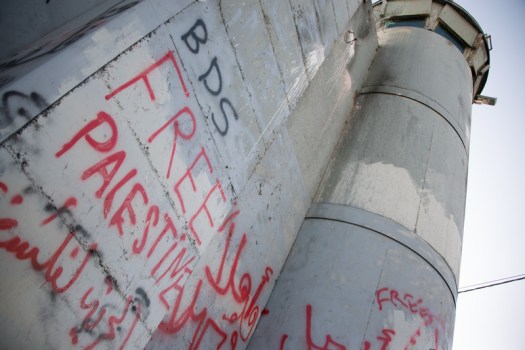
Graffiti on the Israeli separation wall in the occupied West Bank city of Bethlehem, Jun 2014. (photo: Ryan Rodrick Beiler / ActiveStills)

Anti-BDS measures have passed in more than 20 states, and federal legislation is pending in Congress.

By Nora Barrows-Friedman | Electronic Intifada | Feb 13, 2018


“By asking the state legislature to pass a bill that strikes at free speech, [supporters] forced legislators to choose between supporting Israel’s occupation and supporting free speech.”
— Cole Harrison of Massachusetts Peace Action


Activists in Massachusetts successfully pressured state lawmakers to stop a bill on February 8 that would have classified the boycott, divestment and sanctions (BDS) campaign for Palestinian rights as “discrimination.”

The bill requires anyone who enters into a contract with the state worth more than $10,000 to pledge that they will not refuse to do business with any person based on the person’s “race, color, creed, religion, sex, national origin, gender identity or sexual orientation.”

It has no chance of being passed this session as a key committee declined to advance it.

Continue reading “Massachusetts activists defeat anti-BDS bill”

The new anti-Semitism

2_wh
Neve Gordon, Professor of Politics and Government at Ben-Gurion University of the Negev. (photo: ynet.co.il)

How Israel is “weaponizing” anti-Semitism.

By Neve Gordon | London Review of Books | Jan 4, 2018


The Israeli government needs the “new anti-Semitism” to justify its actions and to protect it from international and domestic condemnation. Anti-Semitism is effectively weaponized, not only to stifle speech — “It does not matter if the accusation is true.” . . . [Its] purpose is “to cause pain, to produce shame, and to reduce the accused to silence” — but also to suppress a politics of liberation.


Not long after the eruption of the Second Intifada in September 2000, I became active in a Jewish-Palestinian political movement called Ta’ayush, which conducts non-violent direct action against Israel’s military siege of the West Bank and Gaza. Its objective isn’t merely to protest against Israel’s violation of human rights but to join the Palestinian people in their struggle for self-determination. For a number of years, I spent most weekends with Ta’ayush in the West Bank; during the week I would write about our activities for the local and international press.

My pieces caught the eye of a professor from Haifa University, who wrote a series of articles accusing me first of being a traitor and a supporter of terrorism, then later a “Judenrat wannabe” and an anti-Semite. The charges began to circulate on right-wing websites; I received death threats and scores of hate messages by email; administrators at my university received letters, some from big donors, demanding that I be fired.

I mention this personal experience because although people within Israel and abroad have expressed concern for my wellbeing and offered their support, my feeling is that in their genuine alarm about my safety, they have missed something very important about the charge of the ‘new anti-Semitism’ and whom, ultimately, its target is.

Continue reading “The new anti-Semitism”

Florida tries to cancel Lorde concert, citing anti-BDS law

gettyimages-824432688-1513976494
Grammy-Award-winning New Zealand singer, songwriter, and record producer Lorde. (photo: Getty Images)

In December, Lorde cancelled a planned concert in Tel Aviv in support of BDS.

By Colin Wolf | Orlando Weekly | Feb 8, 2018


“Florida has no tolerance for anti-Semitism and boycotts intended to destroy the State of Israel. Current statutes are clear — local governments cannot do business with companies that participate in anti-Semitic boycotts of Israel. When Lorde joined the boycott in December, she and her companies became subject to that statute.”
— Florida State Representative Randy Fine


Last December, Grammy-award winning pop-singer Lorde canceled a planned concert in Tel Aviv after activists called for her to join what’s called the “Boycott, Divestment and Sanctions Movement,” which campaigns for a global boycott of Israel until it withdraws from Palestinian territories.

“I have had a lot of discussions with people holding many views, and I think the right decision at this time is to cancel the show,” said Lorde in a statement. “I’m not too proud to admit I didn’t make the right call on this one.”

Now, Republican state Rep. Randy Fine is trying to get Miami and Tampa to cancel Lorde’s upcoming shows, citing a state statute that prohibits businesses from conducting business over $1 million with any organization engaged in a boycott of Israel.

Continue reading “Florida tries to cancel Lorde concert, citing anti-BDS law”

No, Kansas, you can’t ban contractors from boycotting Israel

israel
(photo: The Kansas City Star file photo)

The Supreme Court ruled decades ago that boycotts are constitutionally protected speech. Nonetheless, Kansas passed a law requiring all those who contract with the state to certify that they are not boycotting Israel.

By Editorial Board | The Kansas City Star | Jan 31, 2018


“Speech, assembly, and petition . . . to change a social order. . . [are] on the highest rung of the hierarchy of First Amendment values.”
— US Supreme Court

“The Supreme Court has held that the First Amendment protects the right to participate in a boycott like the one punished by the Kansas law.”
— US District Judge Daniel Crabtree


A federal judge in Topeka has ruled that Kansas cannot tell contractors what they can and cannot boycott. That would seem obvious to anyone familiar with free speech protections under the First Amendment.

But last summer, Kansas passed a law requiring all those who contract with the state to certify that they are not boycotting Israel.

Why? Continue reading “No, Kansas, you can’t ban contractors from boycotting Israel”

Israel holds international anti-BDS conference

2-16_4_1-bds-rally24522049300_5d080fac2c_o
BDS rally at McGill University, Toronto, in 2016 (photo: Sonia Ionescu / Creative Commons)

Israeli Ministry of Strategic Affairs leading anti-BDS efforts.

By Middle East Monitor | Feb 6, 2018


Participants were briefed about “effective methods used to pass legislation in 24 states across the US, France, Germany and elsewhere” and “gained tools and best-practices, while streamlining their tactics against efforts to ostracize the Jewish state.”


The Israeli government yesterday held an international legal conference against the Boycott, Divest and Sanctions (BDS) movement, Quds Press reported.

The news site reported Israeli media saying that the Ministry of Strategic Affairs organised the conference in cooperation with the Israeli Bar Association and the International Judicial Institute.

Israeli media said that 200 legal experts from 24 countries were invited to the conference to develop strategies “to contain the growing influence of the movement.”

According to Quds Press, Israeli Strategic Affairs Minister Gilad Erdan, Justice Minister Ayelet Shaked, Supreme Court Chief Justice Esther Hayut, Knesset Speaker Yuli Edelstein and head of the opposition Isaac Herzog were in attendance.

Continue reading “Israel holds international anti-BDS conference”

I was publicly blacklisted by a shadowy website for my views on Israel

canary-mission-blacklist-1517353919
Noa Kattler-Kupetz was publicly blacklisted by the Canary Mission, a shadowy website. (image: Forward)

Canary Mission puts people on a literal blacklist, making it tricky to get jobs or get through customs at Ben Gurion Airport.

By Noa Kattler Kupetz | Forward | Jan 30, 2018


What shocks me about finding myself on Canary Mission is that I am far from being an outspoken activist or organizer on my campus. I am a Jew whose political beliefs differ from the community she grew up in. And because of this, I’ve ended up on a blacklist. . . . I’m not a young Jew with opinions of her own, but a young “radical,” brainwashed Jew.


Earlier this week, I discovered I’d been added to Canary Mission’s database. Canary Mission is a McCarthy-esque blacklist, a website that collects and publishes information about activists who support Palestinian rights. The site claims to document “people and groups that promote hatred of the USA, Israel and Jews on North American college campuses,” with the header, “if you’re racist, the world should know.” When the site launched in 2015, it’s goal was even more explicit: “It is your duty to ensure that today’s radicals are not tomorrow’s employees.”

Apparently, I, a senior at Barnard College, am one of those dangerous radicals.

Continue reading “I was publicly blacklisted by a shadowy website for my views on Israel”