
By Samuel G. Freedman / The New York Times
December 30, 2016
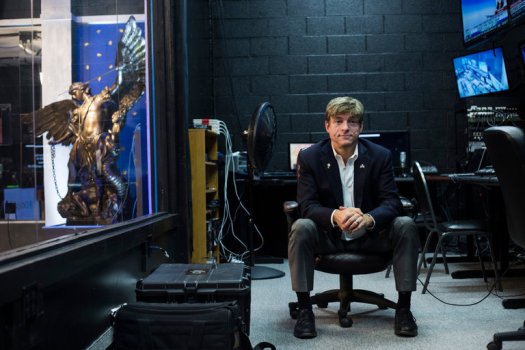
“This is breaking down into forces that believe in God and those that don’t. Largely, I would say this is a war of religion versus non-religion.”
— Michael Voris, senior executive producer of ChurchMilitant.com“[Historically,] when you heard the expression ‘the Church Militant,’ it didn’t bring to mind a call to arms or some kind of mobilized, militant action in the way we understand the term now. A lot of the struggle of the Church Militant is against interior temptations that lead you to greed and all kinds of spiritual pathologies. And it’s about engaging in acts of mercy. Part of the victory of the Church Militant is the victory of love. It didn’t have the triumphalist and militarized connotation that’s been attached to it now.”
— John C. Cavadini, a professor of theology at the University of Notre Dame
A week after Stephen K. Bannon helped engineer the populist revolt that led to Donald J. Trump’s election, Buzzfeed unearthed a recording of him speaking to a Vatican conference of conservative Catholics in 2014.
In his presentation, Mr. Bannon, then the head of the hard-right website Breitbart News and now Mr. Trump’s chief strategist, called on the “church militant” to fight a global war against a “new barbarity” of “Islamic fascism” and international financial elites, with 2,500 years of Western civilization at risk.
While most listeners probably overlooked the term “church militant,” knowledgeable Catholics would have recognized it as a concept deeply embedded in the church’s teaching. Moreover, they would have noticed that Mr. Bannon had taken the term out of context, invoking it in a call for cultural and military conflict rather than for spiritual warfare, particularly within one’s soul, its longstanding connotation.
Continue reading ““Church Militant” Theology Put to New, and Politicized, Use”
 HolyLandJustice.org
You must be logged in to post a comment.