The International Community and Israel: Giving permission to a permanent occupation

Hebron_Israeli_settlement_-_Closed_Palestinian_shop
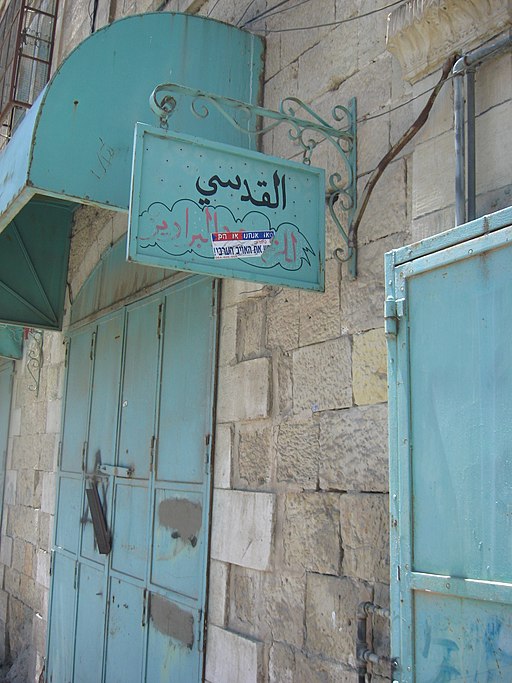
A closed Palestinian shop in the Israeli settlement in Hebron. Note door welded shut. (Public domain, via Wikimedia Commons)
Five foundational criteria that could shape a viable and principled strategy by the international community to end the Israeli occupation and enable Palestinian self-determination.

By Michael Lynk | JustSecurity | Jan 7, 2022

Beyond tut-tutting about settlement expansion and ensuring that the Palestinian Authority’s head is kept above water, the international community has no coherent strategy to actually end the 54-year-old Israeli occupation.

On Nov. 17, 2021, the Ad Hoc Liaison Committee (AHLC) gathered in Oslo for its semi-annual meeting. Created in 1993 shortly after the famous handshake on the White House lawn, the AHLC is the semi-formal organization of international donors to the Palestinian Authority (PA). It promotes a two-State solution through the development of the Palestinian economy and civil institutions. Its membership of 15 leading States and institutions includes the United States, the European Union, Russia, the International Monetary Fund, the World Bank, the Palestinian Authority, Israel, and four Arab countries (Saudi Arabia, Egypt, Jordan, and Tunisia). Norway acts as the chair.

At the Oslo meeting, the AHLC reviewed the progress towards a Palestinian State, assessed the debilitated Palestinian economy, and encouraged donors to provide a new round of funding pledges for the Palestinian Authority. It also received reports from the United Nations Special Coordinator for the Middle East Peace Process (UNSCO) and the World Bank on the current economic and political landscape of the 54 year-old Israeli occupation.

Continue reading “The International Community and Israel: Giving permission to a permanent occupation”

Netherlands ends funding to Palestinian agricultural NGO outlawed by Israel

A man wearing UAWC t-shirt harvest an olive tree in occupied West Bank Facebook
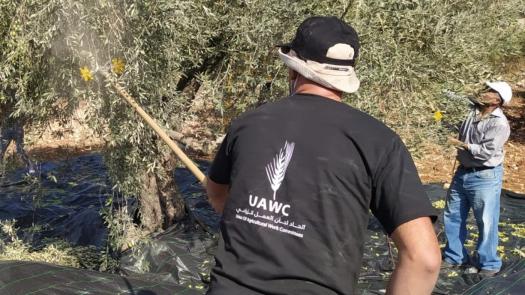
A man wearing a Union of Agricultural Work Committees (UAWC) t-shirt harvest an olive tree in a Palestinian village occupied West Bank, October 2020 (credit: Facebook)
Fallout continues for non-profit groups that Israel has outlawed.

By Mustafa Abu Sneineh | Middle East Eye | Jan 6, 2022

“From the onset, this investigation was politically motivated and responded to pressure of the Israeli government and malign organizations affiliated with it,”
— Union of Agricultural Work Committees

The Dutch government has ended its funding for Palestine’s Union of Agricultural Work Committees (UAWC), one of six non-profit groups recently outlawed by Israel.

In October, Israel designated the Palestinian human rights groups “terrorist organizations,” saying that they acted as “part of a network of organisations operating under cover in the international arena” on behalf of the Popular Front for the Liberation of Palestine (PFLP).

On Wednesday, UAWC said it was “shocked and saddened” by the Netherlands’ decision to stop its funding.

Continue reading “Netherlands ends funding to Palestinian agricultural NGO outlawed by Israel”

Is Donald Trump an Anti-Semite?

1024px-President_Trump_Unveils_a_Plan_for_a_Comprehensive_Peace_Agreement_Between_Israel_and_the_Palestinians_49456368773-640x400
President Donald J. Trump delivers remarks with Israeli Prime Minister Benjamin Netanyahu Tuesday, Jan. 28, 2020, in the East Room of the White House to unveil details of the Trump administration’s Middle East Peace Plan. (Official White House Photo by Shealah Craighead)
A revealing new interview peels back yet another layer.

By David Remnick | The New Yorker | Dec 21, 2021

It’s no surprise that Trump is willing to trash foreign leaders in the most vivid terms. What seems to have shocked some American readers is that he trafficked so fluently in traditional tropes about Jewish power, conspiracy, and disloyalty.

When hundreds of hours of tapes from the Nixon White House became public, two decades ago, the full extent of Nixon’s prejudices, including his contempt for Jews, came into sharp focus. “The Jews are all over the government,” he told his chief of staff H. R. Haldeman, at an Oval Office meeting, in 1971. What’s more, “most Jews are disloyal.” Nixon made allowances for some of his useful advisers, including Henry Kissinger and William Safire, but, he said, “generally speaking, you can’t trust the bastards.”

Continue reading “Is Donald Trump an Anti-Semite?”

What were the top BDS victories of 2021?

zumaamericasthirtyone087885
This year marked significant wins for the right to boycott Israel. (credit: Alain Pitton / ZUMA Press)
A listing of the many efforts that the Boycott, Divest, and Sanction (BDS) Movement managed to score victories on this past year.

By Nora Barrows-Friedman | The Electronic Intifada | Dec 30, 2021

“We’re going to continue to take direct action in order to shut down and undermine Israel’s arms trade,”
—Huda Ammori, Palestine Action co-founder

Despite the ongoing COVID-19 pandemic, 2021 was a year of accelerated boycott, divestment and sanctions (BDS) campaigning, successful grassroots actions and significant legal victories for Palestinian rights.

Pension funds dumped Israeli firms, cultural figures refused to cross the picket line and a major ice cream maker pulled its products from illegal Israeli settlements.

Sustained direct actions in Oakland, California successfully exacted a price on Israel after it carried out a lethal 11-day attack on Gaza during May.

In early June, as part of an international wave of protests under the banner of #BlockTheBoat, activists and longshore workers prevented an Israeli cargo ship from docking at the city’s port for more than two weeks after its scheduled arrival date.

Continue reading “What were the top BDS victories of 2021?”

The hurdles to leaving Gaza for medical care (Or, what can you really hide inside a tube of toothpaste?)

IMG_20190430_133235-770x515
Noor Agha and her aunt in Jerusalem.  (credit: Mondoweiss)
Noor Agha was forced to leave Gaza for life saving surgery on a brain tumor. But before Israel let her leave the besieged territory they made her throw out her toothpaste at the Erez checkpoint.

By Noor Agha | Mondoweiss | Jan 5, 2022

I didn’t want to die on my own.
— Noor Agha

We were aware of the “security” issues the Israelis impose on Palestinians crossing Erez. No food. No water. Lipstick? No. Eyeliner? No. Sunblock? No. And no luggage with wheels. We didn’t want to be sent back after all.

In 2019 doctors had finally figured out the cause behind my migraines, and decided I should immediately undergo an operation which Gaza’s hospitals couldn’t handle. Little did anyone know this “immediately” would take forever. Five whole months!

My mother and I applied for the Israeli permits to travel to the West Bank to seek medication. A few months later, a message was received. Noor, me, yes. Ibtisam, my mom, no.

Continue reading “The hurdles to leaving Gaza for medical care (Or, what can you really hide inside a tube of toothpaste?)”

Desmond Tutu’s lifelong struggle against apartheid

AP_21360326116763_7f79c9961bc25cd6c87b496101c37916
South Africa’s Desmond Tutu, Archbishop and Nobel Peace Prize laureate, reacts to Israel blocking his UN mission to Beit Hanun, during a press conference at the United Nations in Geneva, Switzerland, December 11th, 2006. (credit: Salvatore Di Nolfi / Keystone via AP)
South Africa’s moral leader frequently clashed with Israel and the American Jewish establishment.

By Alex Kane | Jewish Currents | Dec 29, 2021

…Tutu’s repeated denunciations of Israel’s rule over Palestinians and his comparisons between the South African and Israeli versions of apartheid earned him the ire of Jewish leaders in both countries, as well as the United States.

Archbishop Desmond Tutu, who crusaded against apartheid and helped lead South Africa into a new democratic era, died at the age of 90. Leaders around the world, from the Dalai Lama to the mayor of New York, issued tributes to Tutu after news of his death broke.

By contrast, Israeli officials and the American Jewish establishment generally stayed silent. But they weren’t so quiet over the past two decades, as Tutu’s repeated denunciations of Israel’s rule over Palestinians and his comparisons between the South African and Israeli versions of apartheid earned him the ire of Jewish leaders in both countries, as well as the United States. Tutu’s pronouncements sparked a particularly intense reaction; criticism hurts more when it comes from someone widely lionized as a moral beacon.

Continue reading “Desmond Tutu’s lifelong struggle against apartheid”

2021: The year Palestinians entered America’s debate over Israel-Palestine

Peter-Beinart-1024x640
Peter Beinart speaking at Temple De Hirsch Sinai, Seattle, Washington, May 23, 2019 at an event sponsored by J Street (CC by Joe Mabel via Wikimedia)
Shifting media developments are giving Palestinian voices more access to shape the Israel-Palestine conversation.

By Peter Beinart | The Beinart Notebook |  Jan 3, 2022

In recent years, the gulf between traditional and social media has narrowed… And so for Palestinian commentators, social media has become a backdoor into the establishment media from which they were long barred.

For my entire adult lifetime, the mainstream American conversation about Israel-Palestine—the one you watch on cable television and read on the opinion pages—has been a conversation among political Zionists. Its participants have argued over how the Jewish state should behave, not whether it should exist. Last year that began to change. Palestinians entered America’s public discussion in an unprecedented way, and with their entrance, anti-Zionism entered too. In 2021, the terms of US discourse began to shift. The ramifications of that shift will likely be with us for decades to come.

Continue reading “2021: The year Palestinians entered America’s debate over Israel-Palestine”

2021 in review: A year of struggle and victories for the Palestinian cause

101121_GAZA_MN_1_00-1-1024x683
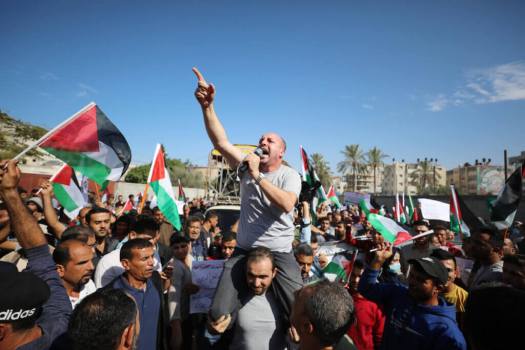
Palestinians take part in a protest against the Israeli decision to declare six Palestinian human rights groups as “terror organizations”, in Gaza City on November 10, 2021. (credit: Mahmoud Nasser / APA Images)
2021 was a watershed year for Palestinians. The struggle for Palestinian freedom and liberation saw unprecedented levels of global solidarity and unity amongst Palestinians despite their forced fragmentation

By Yumna Patel | Mondoweiss | Dec 28, 2021

From the streets to the digital sphere, Palestinians were suppressed and censored at every turn. And yet still, their voices were heard around the world more than ever before.

2021 was a watershed year for Palestinians. The struggle for Palestinian freedom and liberation saw unprecedented levels of global solidarity. From Jerusalem, to the West Bank, Gaza, and Palestinian communities inside Israel, Palestinians rose up together in defiance of the Israeli occupation, and demanded a better future. The fight against forcible expulsion of Palestinians in Sheikh Jarrah and Silwan reached the global stage, and more human rights groups joined the calls to end Israeli Apartheid.

Despite the strides made towards justice and equality this year, 2021 was not without its challenges for Palestinians. Palestinians entered the second year of the coronavirus pandemic, and like much of the global south, struggled to get their hands on the life saving vaccines being hoarded by the world’s richest countries.

Continue reading “2021 in review: A year of struggle and victories for the Palestinian cause”

A most moral violence

23708783750_5027c11340_k-1000x668
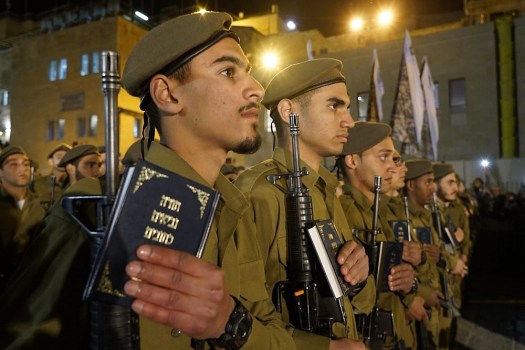
Soldiers from the Kfir Brigade at an IDF swearing-in ceremony at the Western Wall, Jerusalem, December 24, 2015. (credit: Israel Defense Forces / CC BY-NC 2.0)
A new collection of essays explores how the Israeli army justifies its violence against Palestinians — and why Israeli society so readily accepts its abuses.

By Noam Sheizaf | +972 Magazine | Dec 29, 2021

Technically, Israel views the West Bank as “disputed” rather than occupied, and, since the 2005 disengagement, Israelis no longer believe Gaza to be under Israeli occupation. Yet in practice, the Israeli military controls both.

In late August, on the eve of Naftali Bennett’s White House meeting with President Biden, the Israeli prime minister gave an interview to the New York Times in which he outlined his government’s agenda. “This government will neither annex nor form a Palestinian state, everyone gets that,” Bennett said. “I’m prime minister of all Israelis, and what I’m doing now is finding the middle ground — how we can focus on what we agree upon.”

Continue reading “A most moral violence”

Church leaders warn of a ‘systematic attempt’ to drive Christians out of Jerusalem and the Holy Land

61bf2364a353a8001850ae19
Orthodox Christians mark Holy Saturday at the Church of the Holy Sepulchre in East Jerusalem on May 1, 2021. (credit: Mostafa Alkharouf / Anadolu Agency via Getty Images
Church leaders in Jerusalem raise concerns about ongoing assaults and vandalization of holy sites.

By Alia Shoaib |  Insider |  Dec 19, 2021

Church leaders warned that radical groups continue to “acquire strategic property” in the Christian Quarter of Jerusalem with the goal of diminishing the Christian presence.

Church leaders in Jerusalem warned that Christians had become the target of “frequent and sustained attacks by fringe radical groups” across the Holy Land in a strongly-worded statement.

The Patriarchs and Heads of Local Churches in Jerusalem pointed to “countless incidents” of physical and verbal assaults and the vandalizing of holy sites and churches.

In March of this year, the Romanian church monastery in Jerusalem was vandalized and its entrance set on fire. It was the fourth such attack on the monastery in a month, Daily Sabah reported.

Continue reading “Church leaders warn of a ‘systematic attempt’ to drive Christians out of Jerusalem and the Holy Land”