Rejection of ‘Israel’s apartheid’ grows as D.C. Episcopalians affirm their opposition, 3 to 1

meb-2019-lowrez-DSC_6914-700x430-1
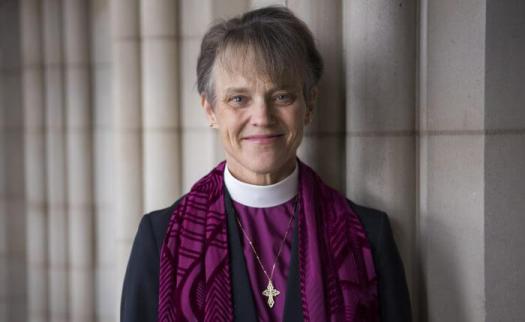
Mariann Edgar Budde, Bishop for Washington Episcopalians said apartheid resolution passed last week. (Credit: Episcopalian Church)
Washington DC Episcopalians’ condemnation of Israeli “apartheid” confirms an awakening to Israel’s long-festering human rights problem within the liberal U.S. “elite,” and growing immunity to smears leveled by Israel’s advocates.

By Steve France | Mondoweiss | Feb 2, 2022

The awakening must spread up to the top leadership of the denominations (in the case of Episcopalians that means the bishops of the Church), and reach down to the millions of regular members.

Episcopalians of the nation’s Capital voted big against Israel’s treatment of Palestinians on January 29, adopting resolutions to “oppose Israel’s apartheid” (by 73%), to “confront Christian Zionism” (by 76%), and to “defend the right to boycott” (by 80%). The right to boycott is under assault from anti-BDS laws enacted in dozens of states and championed in Congress.

The latest church action followed similar emphatic statements by Episcopalians in Chicago, Rochester, Vermont, and Olympia, all aimed at the Christian denomination’s General Convention in Baltimore in June-July, which will be asked to back Palestinian rights with the same force as it did the cause of Black South Africans in the 1970s and 80s. (Full disclosure: I helped urge the Washington diocese to act.)

Continue reading “Rejection of ‘Israel’s apartheid’ grows as D.C. Episcopalians affirm their opposition, 3 to 1”

Tent of Nations

unnamed
The stone which greets every visitor to the Nassar family farm.  (credit: Tent of Nations)
A recent physical attack on the Nassar family highlight the never ending struggle for Palestinian existence on their own land.

By Jonathan Kuttab | Friends of Sabeel North America (FOSNA) | Feb 2, 2022

The family’s persistence in remaining on the land has been one of the most remarkable examples of Palestinian sumud (or steadfastness) I have seen.

I have been associated with Tent of Nations and the Nassar family for many years. In fact, my law office in Jerusalem has been and continues to represent them in their ongoing legal battles to save their land from the Israeli government and the Jewish settlers who have been trying for years to steal it from them. I myself have participated in activities on their land. One time, I even found myself alongside Rev. Alex Awad and a Lutheran German minister alone with Daoud in confronting the settlers who were bulldozing into their land.

While the 100-acre farm has been in their family since their grandfather bought it over a century ago—and they have the documents to prove this!—the Nassar family’s attempts to hold onto their land and prevent the settlers from taking it over has been an ongoing battle. Every time we win a battle in the courts, new obstacles are created and new challenges arise. Because their title to the land is confirmed by law, Israel has been using new tactics, including claims for public expropriation and declarations that the entire area is “state land” and subject to confiscation.

Continue reading “Tent of Nations”

The battle for the world’s most powerful cyberweapon

merlin_197271231_9b3bac48-8bfd-4e3d-be76-39a15f09203f-jumbo
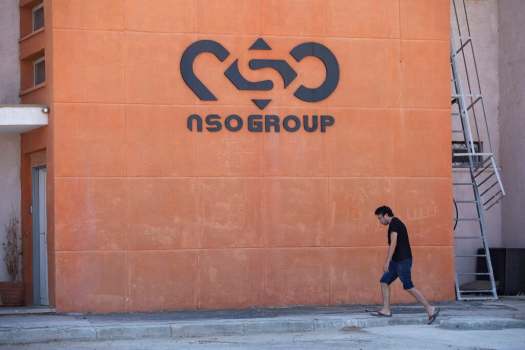
An office of the NSO Group in Sapir, Israel. The company makes surveillance software which can be remotely implanted in smartphones. (Credit: Sebastian Scheiner / Associated Press)
A Times investigation reveals how Israel reaped diplomatic gains around the world from NSO’s Pegasus spyware — a tool America itself purchased but is now trying to ban.

By Ronen Bergman & Mark Mazzetti | The New York Times Magazine | Jan 28, 2022

It was a very public rebuke of a company that had in many ways become the crown jewel of the Israeli defense industry.

In June 2019, three Israeli computer engineers arrived at a New Jersey building used by the F.B.I. They unpacked dozens of computer servers, arranging them on tall racks in an isolated room. As they set up the equipment, the engineers made a series of calls to their bosses in Herzliya, a Tel Aviv suburb, at the headquarters for NSO Group, the world’s most notorious maker of spyware. Then, with their equipment in place, they began testing.

The F.B.I. had bought a version of Pegasus, NSO’s premier spying tool. For nearly a decade, the Israeli firm had been selling its surveillance software on a subscription basis to law-enforcement and intelligence agencies around the world, promising that it could do what no one else — not a private company, not even a state intelligence service — could do: consistently and reliably crack the encrypted communications of any iPhone or Android smartphone.

Continue reading “The battle for the world’s most powerful cyberweapon”

Challenging Israel’s climate apartheid in Palestine

Protest against trees uprooting, As Sawiya, West Bank, 2.5.2020
Palestinian farmers examine their damaged olive trees, which are suspected to have been cut down by Israeli settlers, As-Sawiya village, West Bank, May 02, 2020. The farmers were prevented from tending to their land by Israeli soldiers who declared it a closed military zone. (credit: Ahmad Al-Bazz)
In Palestine, climate change is compounded by political and economic decisions.

By Muna Dajani | Al-Shabaka | Jan 30, 2022

In the case of Palestine, the effects of climate change are influenced and exacerbated by Israeli settler colonialism and theft of natural resources.

Overview

Through its participation in the 2021 UN Climate Change Conference (COP26) and other international forums, the Palestinian Authority (PA) continues to promote a state-centric approach to climate change that ultimately blocks legitimate climate and environmental justice in Palestine. In effect, Palestinian leadership has reduced the Palestinian liberation struggle – inherently a struggle for climate and environmental justice – to a failed state-building project since the 1993 Oslo Accords.

Justice is rarely addressed in these international conventions and forums, leaving Palestinians confined to the logic of international donors who seek to manage the occupation instead of pressuring Israel to end it. The normalization and depoliticization of Israel’s climate apartheid characterize the existing approach to addressing Palestine’s climatic and environmental issues, and they must be countered by Palestinians and international climate justice advocates alike.

Continue reading “Challenging Israel’s climate apartheid in Palestine”

US federal court blocks Texas from enforcing anti-BDS law on contractor

Rasmy Hassouna - Palestinian American engineer
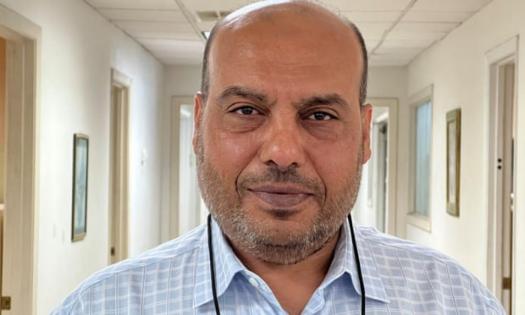
Rasmy Hassouna, executive vice president of the Palestinian-owned A&R Engineering and Testing Inc, said Texas’ anti-BDS law violated his constitutional rights. (credit: Cair / Rasmy Hassouna)
Palestinian American filed the lawsuit after city of Houston required his company to sign a pledge not to boycott Israel.

By Middle East Eye staff | Jan 29, 2022

‘The Court does find that Hassouna authentically holds a pro-Palestinian point of view that is protected by the First Amendment’
US District Judge, Andrew S Hanen

United States federal court has blocked the state of Texas from enforcing its anti-boycott, divestment and sanctions (BDS) law against a Palestinian-American contractor who refused to sign a pledge not to boycott Israel.

Rasmy Hassouna, an engineer and executive vice president of the Palestinian-owned A&R Engineering and Testing Inc, filed the lawsuit in November challenging a Texas law that bars the state from doing business with companies participating in the BDS movement against Israel.

The firm said in its complaint filed in a Houston federal court that the law violates its First Amendment right to participate in economic boycotts as a form of protest.

Continue reading “US federal court blocks Texas from enforcing anti-BDS law on contractor”

The UK welcomed an Israeli arms factory into our town. We shut it down

Elbit-2-1000x668
Activists from Palestine Action hold up a banner on top of Elbit Systems factory in Oldham, northern England, August, 2021. (credit: Palestine Action)
By forcing Elbit Systems to close one of its factories, we showed what direct action can achieve when governments remain indifferent to Israeli apartheid.

By Huda Ammori | +972 Magazine  | Jan 23, 2022

When every attempt to campaign through traditional methods is dismissed, and people’s lives are at stake, it is our duty to take direct action.

Earlier this month, we at Palestine Action received thrilling news: Israel’s largest arms company, Elbit Systems, announced that it had decided to sell its weapons factory in Oldham, a town in the north of England, and leave the area for good.

Through 18 months of sustained direct action, and with the unwavering support of the local community, our #ShutElbitDown campaign made it intolerable for the Israeli arms factory to continue operating on our doorstep. This is a welcome victory for all those who have worked tirelessly to campaign for the rights of Palestinians, and, crucially, for the Palestinian people themselves.

The case against Elbit is clear: its weapons — drones, tanks, bullets and more — are developed and marketed through being “tested” on the captive population of the Gaza Strip, which is besieged under an illegal military blockade. These products are then sold on to other brutal regimes, further violating human rights around the globe — for example, in occupied Kashmir. Yet despite Elbit’s immorality, the British government has been more than happy to assist the company in facilitating such crimes against humanity.

Read the full article here →

A Hebrew teacher called herself an Anti-Zionist. She was fired.

AP_20287688845437_7f79c9961bc25cd6c87b496101c37916
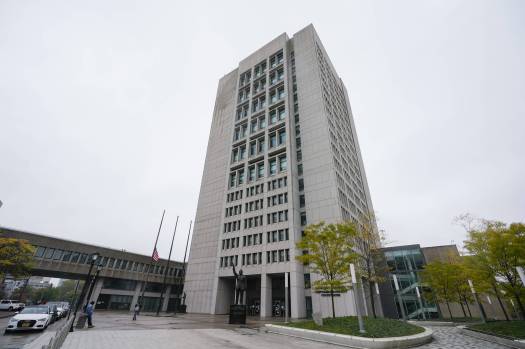
The Westchester county courthouse.  (credit: AP Photo / Frank Franklin II)
A complaint arguing that a Reform synagogue violated New York labor law could point toward a new strategy for Palestinian rights advocates.

By Isaac Scher | Jewish Currents | Jan 25, 2022

The facts of the case show a notable synagogue struggling with whether to recognize anti-Zionism as a legitimate mode of Jewish life.

On July 22nd, Jessie Sander was fired from her job as a Hebrew teacher in the education program of the Westchester Reform Temple, a high-profile congregation in Scarsdale, New York. According to a legal complaint obtained by Jewish Currents, the dismissal—which occurred before Sander, 26, had even met her students—came in response to a blog post Sander co-wrote criticizing Israel.

Sander had been offered the job on May 10th, the same day that Israel initiated an aerial bombardment of Gaza that killed, according to the most recent count, 260 Palestinians over the course of 10 days. On May 20th, the day Israel and Hamas agreed to a cease-fire, Sander and a friend published the blog post, in which they condemned Israeli “settler-colonial violence” and referred to themselves as anti-Zionists. “Being anti-Zionist has made us even more invested in building Jewish community and fighting for justice for all Jews,” they wrote. “Jews in the United States must speak out against genocide in our name and state-sponsored murder disguised as support for Jewish people.”

Continue reading “A Hebrew teacher called herself an Anti-Zionist. She was fired.”

Between a rising tide and apartheid: Environmental justice in Palestine

ActiveStills
The environmental situation in Gaza is dire at the moment. (credi: via ActiveStills.org)
A review of work using graphic representations as applied to Israel/Palestine environmental issues.

By Jim Miles | The Palestine Chronicle | Jan 23, 2022

The most compelling statement made during the discussion on cartography was “…the settler-colonial imperative is to create private land…for profit” – a strong summation.

A recent seminar from the group “Visualizing Palestine” served to present four graphic representations of environmental problems within Israel/Palestine.

The graphics are self-explanatory and need no review here – they are after all graphic, and speak well for themselves. The discussion talked around the graphics, what they emphasized and how they are necessary for a clear understanding of environmental issues in Palestine.

Continue reading “Between a rising tide and apartheid: Environmental justice in Palestine”

‘Two-time refugees’: Israel forcibly expels Palestinian family from Sheikh Jarrah, demolishes their home

salhiya-family-home-1024x682
The rubble of the Salhiya family home in Sheikh Jarrah, occupied East Jerualem. (credit: Twitter / Mohammed El-Kurd)
At around 3:00 am Wednesday morning Israeli forces raided the Salhiya family home in Sheikh Jarrah and forcibly displaced the 15 family members living inside the house before demolishing the family’s home.

By Yumna Patel | Mondoweiss | Jan 19, 2022

The Salhiya family, like the other Palestinian families in Sheikh Jarrah under threat of forced expulsion, were displaced from their homes during the Nakba in 1948, and were settled into Sheikh Jarrah as refugees.

After a standoff that captured global attention, Israel forcibly displaced a Palestinian family from their home and demolished it in the middle of the night on Wednesday, in the occupied East Jerusalem neighborhood of Sheikh Jarrah.

At around 3:00 am Wednesday morning Israeli forces raided the Salhiya family home in Sheikh Jarrah and forcibly removed the 15 family members living inside the house.

Continue reading “‘Two-time refugees’: Israel forcibly expels Palestinian family from Sheikh Jarrah, demolishes their home”

‘In our teens, we dreamed of making peace between Israelis and Palestinians. Then my friend was shot’

652
Aseel Aslih (seated far right) and Roy Cohen (seated third from right) at a Seeds of Peace camp in the 1990s. (credit: Bobbie Gottschalk)
At a summer camp for kids from conflict zones, I met my brave, funny friend Aseel. He was Palestinian. I was Israeli. When he was killed by police, my hope for our future died with him.

By Roy Cohen | The Guardian | Jan 13, 2022

That year, I got a glimpse of the connections that were possible between Palestinians and Israelis. Our relationships would always be complicated, but we had discovered we had a lot in common, and we had a lot to say.

On 11 May 2021, I was sitting with a small group in a cafe in southern Tel Aviv, studying Arabic. Our teacher, a Palestinian citizen of Israel, had been telling us that he and his pregnant Jewish wife kept getting turned down by landlords who would not rent their property to a “mixed” couple. We were almost at the end of the three-hour class when air raid sirens sounded. A few days earlier, missiles had been launched from Gaza into Israel, but this was the first time they had hit Tel Aviv. Beyond the fear of an airstrike, I had a sad, heavy feeling. I had recently returned to live in Israel after 15 years studying and working abroad. I remembered a time, in the mid-1990s, when I had believed that Israel was going to be different, more just and less violent. That belief now felt like a distant memory.

My faith in Israel’s future had been inspired by an experience I shared as a teenager with a group of extraordinary people. As we waited for the rocket fire to stop, I recalled one of those people in vivid detail, a person I have barely been able to talk about in my home country for more than 20 years. His name was Aseel Aslih. Continue reading “‘In our teens, we dreamed of making peace between Israelis and Palestinians. Then my friend was shot’”