Broken Paradigms

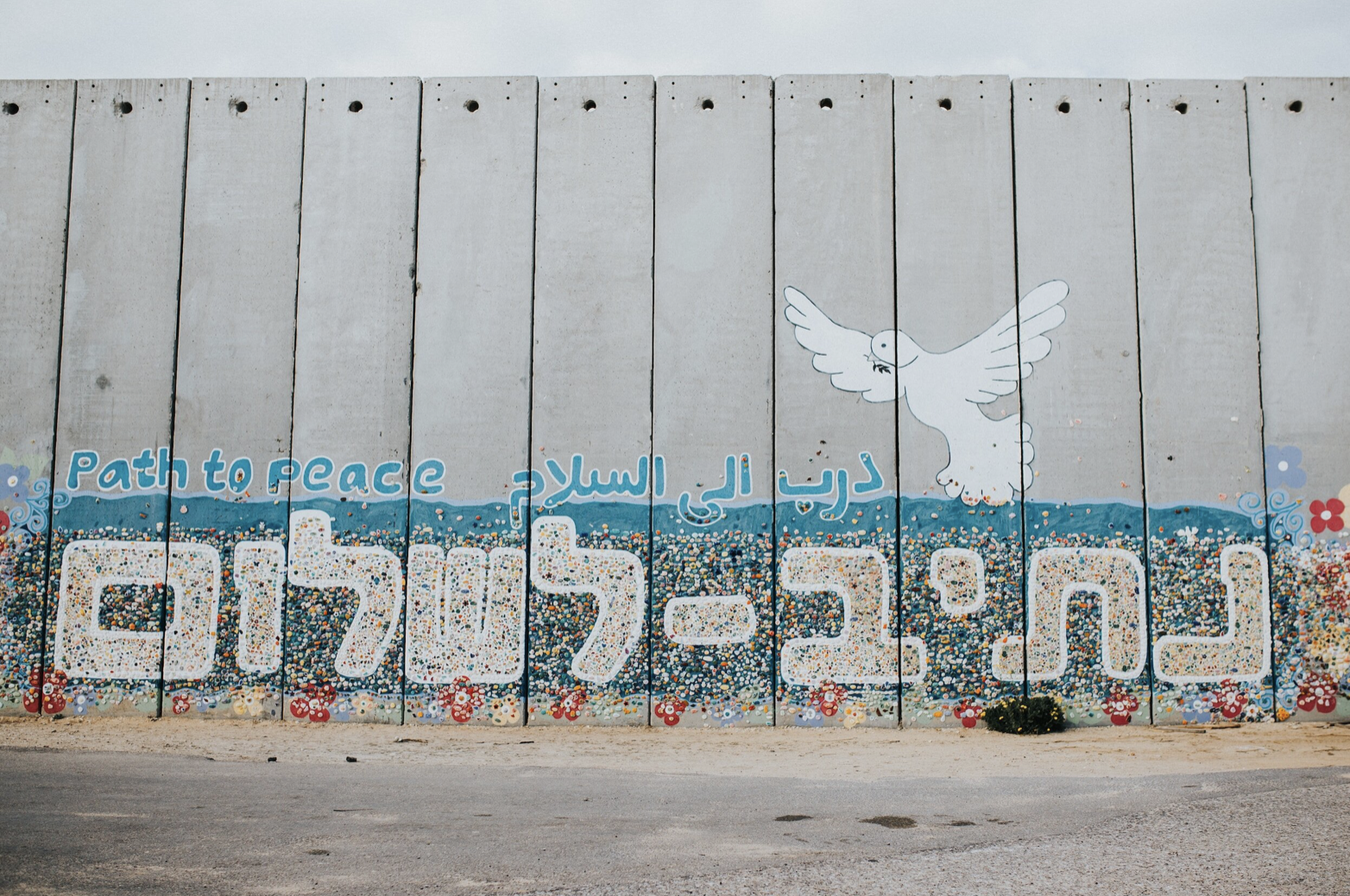
Screenshot 2023-10-15 at 2.23.52 PM

This week’s events do break an unsustainable status quo, challenging everyone to think beyond the current paradigms.

By Jonathan Kuttab | Friends of Sabeel North America| October 12, 2023

The truth is that there is no military solution, and once that becomes clear to one and all, perhaps we can finally decide to give peace a chance.

The events of the last few days in Israel and Gaza have shattered the long-held assumptions of many observers, working to shift many popular paradigms. Amidst the devastation, there does remain reason to hope that these events will shake up the status quo and lead to major changes. Even the taking of captives could serve as a catalyst for the opening of negotiations and contacts between Hamas and Israel. The astonishing and unexpected military success of Hamas in breaching the separation wall and in shifting the battle over the weekend to the enemy’s population could potentially even help reduce the power imbalance and lead to genuine talks.

For one thing, the fighting mostly took place inside sovereign Israeli territory and amongst its civilian population. This has never happened since the creation of the state in 1948, whereby the Israeli army successfully ensured that for all the wars with the Arab World the fighting (and the vast majority of destruction, civilian casualties, and human suffering) occurred within Arab territories and amongst the Arab population. It was Israeli soldiers who entered Arab houses, ordered kids out of their beds, kidnapped them and took them in their jeeps, controlled their lives, and triumphantly returned to their own homes at the end of hostilities.

My heart goes out to the families who lost their dear ones and particularly to those who still do not know the fate of their loved ones, who may be dead, injured, or held captive under the power and mercy of their enemies.

While watching Israeli TV in Hebrew (simultaneously with Palestinian sources in Arabic) I heard the stories of Israeli families who lived in fear under lockdown, without electricity, and who attempted to call for help but no responsible agency would answer or come to their rescue. It seems, those Israelis living a few kilometers from Gaza were given, for a few days, a taste of what Gazans experience all year round.

Continue reading “Broken Paradigms”

How Israel’s Democratic Crisis Affects Palestinians

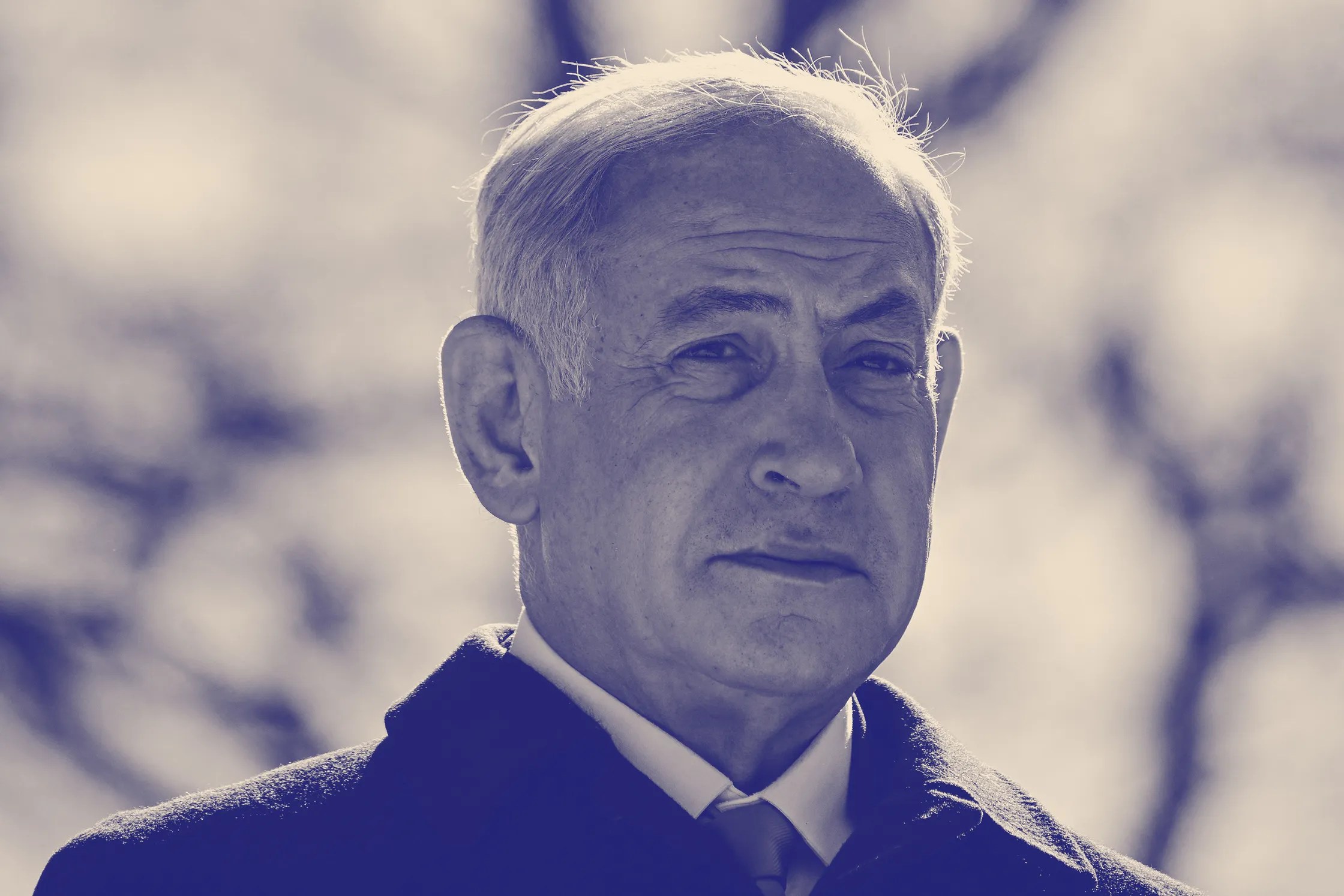
Chotiner-Raja-Shehadeh.jpg
The attack of Benjamin Netanyahu’s government on Israel’s High Court “has to do with the role of the High Court, to some extent, in the occupied territories,” the Palestinian lawyer Raja Shehadeh says.Photograph by Tobias Schwarz / AFP / Getty
Could the widespread protests against Netanyahu’s judicial overhaul change the status quo in the West Bank?

By Isaac Chotiner | New Yorker | August 15, 2023

In January, shortly after Benjamin Netanyahu swore in Israel’s new government, I spoke by phone with Raja Shehadeh, the Palestinian lawyer and activist who co-founded the human-rights organization Al-Haq. Shehadeh was concerned about many of the extremists who had joined Netanyahu’s coalition, but he also predicted that the government’s impact was likely to register more strongly among Israelis than Palestinians, who have been living under occupation for decades. Netanyahu has now overseen parts of a judicial overhaul that opponents characterize as a profound threat to Israeli democracy, as well as an expansion of Israeli settlements. There has also been an increase in violence by settlers, which—combined with the actions of Israeli security forces—has resulted in the deaths of more than a hundred and fifty Palestinians; Palestinian attacks on Israelis have caused more than twenty deaths. Amid this increase in violence, the Palestinian Authority has struggled to maintain order in the West Bank.

Shehadeh and I spoke again recently about what the most right-wing government in Israel’s history has meant for Palestinians, whether the protests in Israel against the Netanyahu government could expand to address the occupation, and Shehadeh’s despair over the impossible choices facing the Palestinian people. Our conversation, edited and condensed for clarity, is below.

Continue reading “How Israel’s Democratic Crisis Affects Palestinians”

Priest from Palestine to Speak at St. Mark’s

FadiDiab
Rev. Dr. Fadi Diab of the Episcopal Diocese of Jerusalem
Everyone is invited to attend:
Date: Sunday, July 16, 2023
Time: 10:00 AM
Location: Bloedel Hall at St. Mark’s Episcopal Cathedral
Information: See below
Tickets: Free
Event Details

Rev. Dr. Fadi Diab is the rector of St. Andrew’s Parish in Ramallah.  He will preach at the 9:00 and 11:00 AM services and participate in a forum between services.  Fr. Diab participated in the writing of Kairos Palestine Document and continues to serve on Kairos Palestine board.

More information here →https://saintmarks.org/calendar/friends-talking-forum/

I Wish I Was Wrong

Credit: Amir Levy / Getty

By Jonathan Kuttab | FOSNA website | June 6, 2023

The current crisis within Zionism and the Israeli state is merely the logical extension of long-held policies and that it is impossible for the result to have been other than what we are witnessing today.

When the current right-wing Israeli government was formed, I wrote that this was predictable, inevitable, and irreversible. I wish I was wrong.

What I meant by this is that the current crisis within Zionism and the Israeli state is merely the logical extension of long-held policies and that it is impossible for the result to have been other than what we are witnessing today. I also predicted that Israel had embarked on a path that necessarily resulted in it being more openly racist, discriminatory, fascist, and brutal, and that there is no way for that not to have happened. The current situation is not an aberration but simply a logical extension, and there is no way to return somehow to a gentler, kinder Israel that is both “Jewish and democratic.” There has never been such an Israel in the experience of Palestinians. All that happened is that the mask has been removed.  The current government no longer feels the need or even has the ability to hide reality. In fact, every week brings us new actions and legislation that both reveal and openly promote such bigotry and fascism. Once the mask has been removed, it can no longer be worn again.

The latest legislation to be proposed speaks clearly of the desire to permit larger and larger communities the ability to openly exclude Arabs, including Israeli citizens, from living in Jewish communities. The law speaks openly of “judaizing the Galilee, the Negev, and Judea and Samaria,” making it abundantly clear that apartheid is practiced not only within the Occupied Territories, where different systems and laws apply to Arabs and Jewish settlers, but also within the boundaries of “Israel proper.” One minister in the new government linked this to the need to appoint new judges “who know that Jews do not want Arabs to live next to them and in their communities.”

Continue reading “I Wish I Was Wrong”

St. Mark’s Mideast Focus Ministry presents


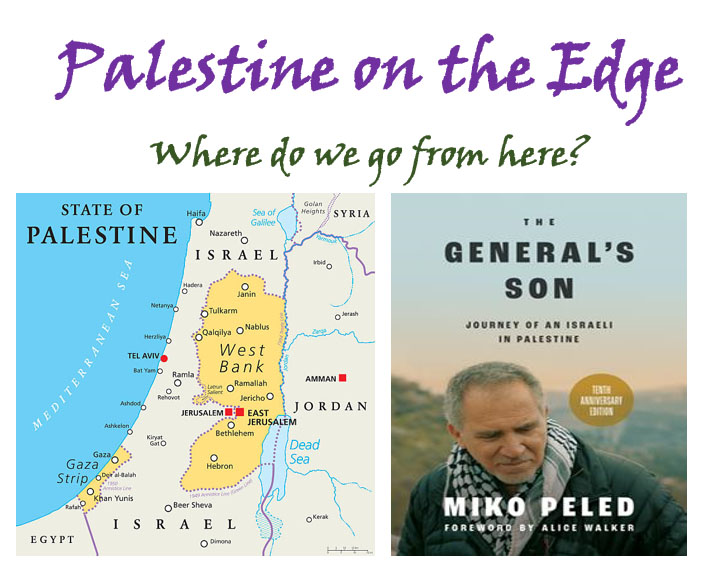
Please join this Saturday afternoon conversation about the current situation in Israel-Palestine.  Speakers will be Miko Peled, Israeli-American activist for justice and author of The General’s Son: Journal of an Israeli in Palestine, and Maya Garner, advocate for justice in Palestine and founder of Friends of Hebron, an American non-profit working with peace and justice advocates in the West Bank.
       
  Date: Saturday, May 20, 2023  
  Time: 2:00 PM  
  Location: Bloedel Hall at St. Mark’s Cathedral  & On-line  
  Information:

No need to register for in-person participation;
to participate online join using this Zoom link.

 
  Tickets: Free  
Event Details

Following the conversation, Peled will sign copies of the new Tenth Anniversary Edition of The General’s Son, and the Saint Mark’s Mideast Focus Ministry will officially open the collection of resources now housed in the Bloedel “Center Stage” meeting room.

Hosted by Amnesty International: Campaign for Palestinian Human Rights [Pacific NW]; co-sponsored by Saint Mark’s Mideast Focus Ministry, The Bishop’s Committee for Justice & Peace in the Holy Land of the Diocese of Olympia, and Kairos Puget Sound Coalition.

Bringing Assistance to Israel in Line With Rights and U.S. Laws

Screen Shot 2023-04-19 at 4.13.21 PM
Credit: Carnegie Endowment for International Peace / Getty

Ensuring that Israel, the largest recipient of U.S. security assistance, complies with federal laws and international human rights standards will require closely tracking and monitoring its weapons use.

By Josh Ruebner, Salih Booker, Zaha Hassan | Carnegie Endowment for International Peace | May 12, 2021

Through FY2020, the United States has provided Israel with $146 billion in military, economic, and missile defense funding. Adjusted for inflation, this amount is equivalent to $236 billion in 2018 dollars, making Israel the largest cumulative recipient of U.S. assistance since World War II.

After many years of increasing U.S. military aid to Israel, members of Congress are beginning to debate the wisdom and morality of writing a blank check for weapons—some of which are used against Palestinians living under military occupation in the West Bank and Gaza Strip in violation of U.S. laws.

A recent exchange between legislators shows the evolving debate. Congresswoman Betty McCollum introduced a bill on April 15—currently co-sponsored by seventeen representatives—to ensure that U.S. funding is not used for Israel’s ill-treatment of Palestinian children in its military judicial system, forced displacement of Palestinians through home demolitions and evictions, and illegal annexations of Palestinian land. In response, Congressman Ted Deutch produced a letter on April 22, signed by more than 300 representatives, arguing against “reducing funding or adding conditions on security assistance”—which essentially means disregarding Israel’s egregious policies and violations of existing U.S. laws aimed at protecting human rights. The fact that a bill restricting aid to Israel drew seventeen sponsors to date and a letter defending that aid was signed by three-quarters of members—as opposed to all of them—shows that the debate is slowly shifting.

Continue reading “Bringing Assistance to Israel in Line With Rights and U.S. Laws”

The sad truth behind Israeli ‘happiness’

F190508HP63-1000x668
People wear Israeli flags as they take part in celebrations marking Israel’s 71st Independence Day in Jerusalem, May 8, 2019. (credit: Hadas Parush/Flash90)
How can a country that administers constant violence and suffers deep inequalities be ranked the fourth happiest in the world?

By Asaf Calderon | +972 Magazine |  Apr 17, 2023

That there is a huge discrepancy between Israeli citizens and occupied Palestinians is no surprise…

Here’s a strange headline: in the 2023 World Happiness Report, Israel is ranked the fourth happiest country on the planet. We are bested only by the Finns, Danes, and Icelanders, and leave the Dutch, Swedes, and Norwegians in the dust. It is an impressive result at any time, and all the more so while hundreds of thousands of Israelis are on the streets showing just how unhappy they are with their current far-right government.

On the surface, it is remarkable that a country whose citizens are constantly exposed to (and administering) violence, suffering from deep economic and racial inequalities, and facing unprecedented instability — a country recently declared by its own president to be “at the edge of the abyss” — made it even into the top half of the list. So how do we explain this?

Continue reading “The sad truth behind Israeli ‘happiness’”

Hundreds protest Bezalel Smotrich visit in DC

JVPDC.Group_.6-1024x683
Jewish Voice for Peace activists protest Israeli Finance Minister Bezalel Smotrich in Washington DC, March 12, 2023.  (photo credit: Jamal Najjab)

Hundreds of protesters greeted Israel’s far-right Finance Minister Bezalel Smotrich outside an Israel Bonds convention in Washington, DC.

By Michael Arria | Mondoweiss | Mar 13, 2023

 “This is a moral emergency… We must name this deep pain that so many of us feel for what’s happening in Israel right now, a place that we love.”
— Sheila Katz, CEO, National Council of Jewish Women

Hundreds of protestors greeted Israeli Finance Minister Bezalel Smotrich at the Grand Hyatt Hotel in Washington, DC on Sunday, where he gave a speech to an Israel Bonds convention.

Last month, amid surging settler violence, Smotrich called for the Palestinian village of Huwwara to be “wiped out.” His remarks have received widespread condemnation. The U.S. State Department called them “disgusting,” but approved Smotrich’s visa.

Continue reading “Hundreds protest Bezalel Smotrich visit in DC”

Shrinking the Conflict: Debunking Israel’s New Strategy

Protest against Israeli settlements in the village of Beit Dajan in Nablus, Palestine - 25 Nov 2022
November 25, 2022, Nablus, West Bank, Palestine: A Palestinian protester holding a flag argues with the Israeli soldier during the demonstration against Israeli settlements in the village of Beit Dajan near the West Bank city of Nablus. (Credit Image: Nasser Ishtayeh/SOPA Images via ZUMA Press Wire/APAimages)

By Walid Habbas | Al-Shabaka: The Palestinian Policy Network | Mar 6, 2023

The “shrinking the conflict” approach falsely assumes that Palestinian resistance is apolitical and unrelated to the struggle for liberation from Israeli apartheid and occupation.

Overview

Since 2021, a growing number of Israeli leaders have proposed new policies to manage their occupation of the West Bank, including East Jerusalem, and Gaza. These policies are rooted in the new concept of “shrinking the conflict” — an approach introduced in 2018 by Israeli historian Micah Goodman recommending the management of “the conflict below the threshold of war, while improving the fabric of life for the Palestinian population.”

The approach, which is a revised version of Benjamin Netanyahu’s “economic peace” model, aims to entrench the Israeli regime’s military occupation in order to prevent the establishment of either a Palestinian state or a one-state reality. Unlike the “economic peace” strategy, the “shrinking the conflict” approach is designed to reduce Palestinian “waves of terror and violent clashes” by purportedly broadening Palestinians’ freedoms within Israel’s system of apartheid.

Continue reading “Shrinking the Conflict: Debunking Israel’s New Strategy”

Why Europe sees Ukrainians as victims, but Palestinians as ‘the other’

plaestine-israel-eu-representative-huwara-2023-reuters
Sven Kuhn von Burgsdorff, ambassador of the European Union in Palestine, speaks during a visit to Palestinian families after an Israeli settlers’ rampage in Huwara on 3 March 2023. (credit: Reuters)

Unlike Ukrainians, who are recognized as belonging to the European ‘self’, Palestinians remain subject to stigmatising representations despite what they suffer at the hands of the Israeli occupation.

By Elena Aoun & Jeremy Dieudonne | Middle East Eye | Mar 6, 2023

There is no questioning here of the legitimacy of the Ukrainian struggle or the relevance of the support given to this besieged country, but rather, a questioning of European attitudes towards the Palestinians.

The conflict between Israel and the Palestinians in the occupied territories has been sliding back into a new cycle of heightened tension and violence in the last few months, and more so since the beginning of 2023.

Whereas this development hardly comes as a surprise to most observers, what is striking is the increasingly unbalanced attitude of Western states, and especially the usually more “equidistant” Europeans. Though many examples can be derived from recent events, one instance is particularly illustrative of this trend.

Continue reading “Why Europe sees Ukrainians as victims, but Palestinians as ‘the other’”