State Department Condemns Israeli Settlements

October 5, 2016
Mark C. Toner, Deputy State Department Spokesperson


“Proceeding with this new settlement is another step towards cementing a one-state reality of perpetual occupation that is fundamentally inconsistent with Israel’s future as a Jewish and democratic state.”


We strongly condemn the Israeli government’s recent decision to advance a plan that would create a significant new settlement deep in the West Bank.

Proceeding with this new settlement, which could include up to 300 units, would further damage the prospects for a two state solution. The retroactive authorization of nearby illegal outposts, or redrawing of local settlement boundaries, does not change the fact that this approval contradicts previous public statements by the Government of Israel that it had no intention of creating new settlements. And this settlement’s location deep in the West Bank, far closer to Jordan than Israel, would link a string of outposts that effectively divide the West Bank and make the possibility of a viable Palestinian state more remote.

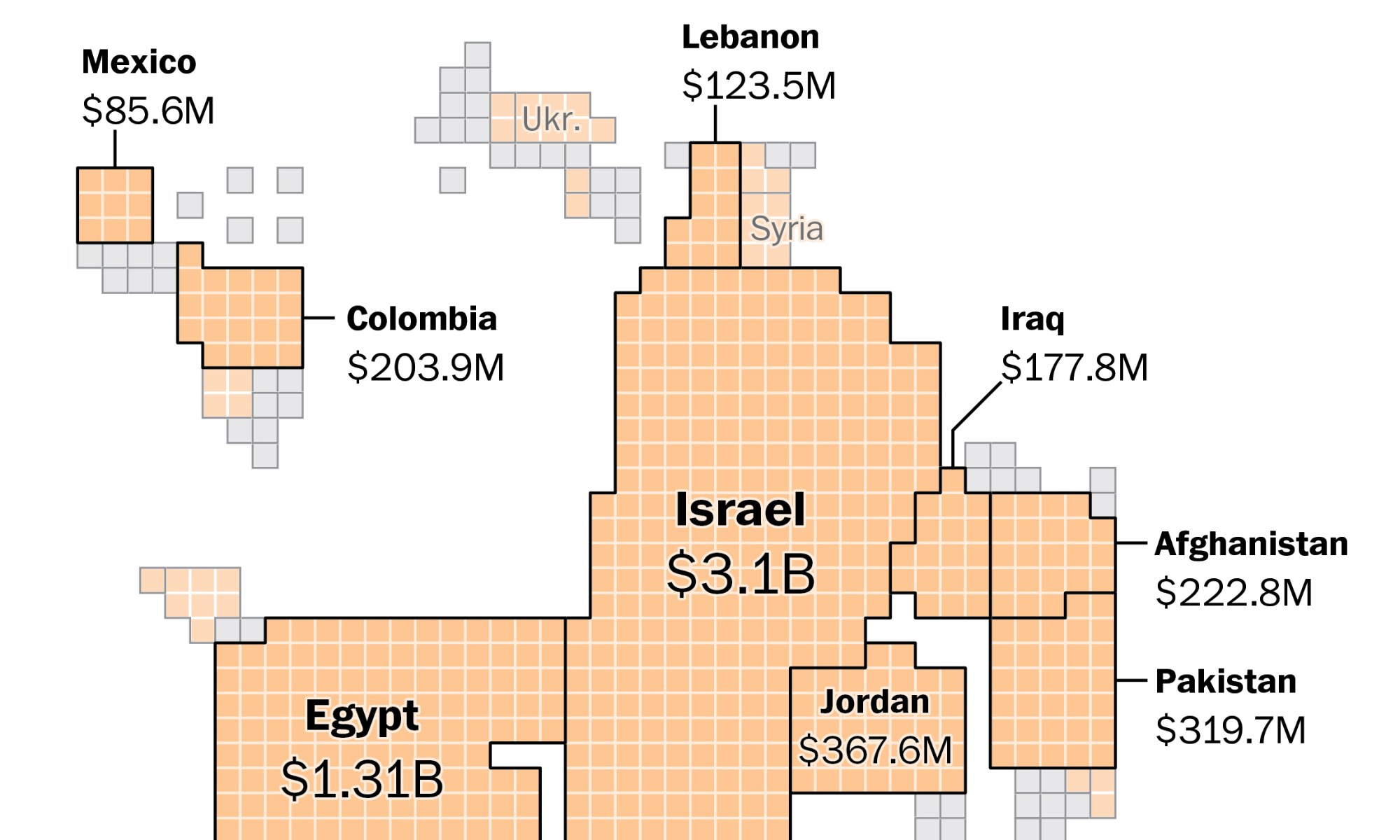
It is deeply troubling, in the wake of Israel and the U.S. concluding an unprecedented agreement on military assistance designed to further strengthen Israel’s security, that Israel would take a decision so contrary to its long term security interest in a peaceful resolution of its conflict with the Palestinians. Furthermore, it is disheartening that while Israel and the world mourned the passing of President Shimon Peres, and leaders from the U.S. and other nations prepared to honor one of the great champions of peace, plans were advanced that would seriously undermine the prospects for the two state solution that he so passionately supported.

Israelis must ultimately decide between expanding settlements and preserving the possibility of a peaceful two state solution. Since the recent Quartet report called on both sides to take affirmative steps to reverse current trends and advance the two state solution on the ground, we have unfortunately seen just the opposite. Proceeding with this new settlement is another step towards cementing a one-state reality of perpetual occupation that is fundamentally inconsistent with Israel’s future as a Jewish and democratic state. Such moves will only draw condemnation from the international community, distance Israel from many of its partners, and further call into question Israel’s commitment to achieving a negotiated peace.

[Read the statement here. . . ]

The Land That Remains: Photographing Nostalgia and Existence

Source: Palestine Square | ميدان فلسطين

The land has been swept away, her history has been broken by another’s reality.


Italian photographer Federico Busonero recalls an allegorical moment: Traveling along the West Bank’s Route 60, he came across a Palestinian man sitting on a cement block on the side of the road apparently waiting for a ride. Next to him were three bags; from one protruded an old-fashioned black wall clock. The man spoke neither Italian nor English, and Busonero speaks no Arabic. The photographer signaled to the man that he would like to photograph him by pointing to his camera. The man agreed to Busonero’s request. For 15 minutes, Busonero relayed, the man sat there with “his hands crossed on his legs, pensive eyes looking at me. Everything was halted (…). The man did not move.” Neither, of course, did the clock. [Continue reading here . . . ]

Shepherding under Occupation

By the Jordan Valley team, Ecumenical Accompaniment Programme in Palestine and Israel (EAPPI)

“We have been living next to the settlement for many years and we don’t do any harm to anyone, we just want to live and to be able to walk with our sheep and have access to the land”


We arrived early, just after sunrise. We met with Abu Sami [pseudonym] and his family along with members of Ta’yush, an joint Israeli and Palestinian organization. Abu Sami lives close to a settlement in the North of Jordan Valley and his family looked very afraid of the consequences of the land action that was about to take place. Abu Sami and his family were preparing to graze their sheep on land that the settlers have taken control of in Khirbet Tell el Himma. The land is privately owned by a Palestinian family and Abu Sami rents it from them to graze his sheep, however, because of frequent harassment from settlers, the family are no longer able to use it. Today was going to be different. [Continue reading . . .]

USAid in Palestine

“It’s not about solving the world’s problems but people’s daily ones.”

Former USAid Mission Director in Palestine, Dave Harden, talks about the challenges of achieving effective development in the West Bank and Gaza over his long career with USAid. (The Guardian, Oct 3, 2016)


Looking back on the decade he spent supporting development in Palestine, Dave Harden says the challenge was “getting people past the psychological barrier.”

Harden joined USAid’s West Bank and Gaza mission in 2006 as its deputy head, before becoming its leader in 2013. It was a time of particular tension — in 2005, the Israelis had pulled out of occupying the Gaza strip, withdrawing their troops along with 10,000 settlers. Power was meant to be left to a united Palestinian Authority, governed by the moderate Fatah party in the West Bank.

But in 2006, in a surprise twist, the militant organization Hamas was democratically elected to power. Their refusal to recognize Israel as a state, and a civil war with the Fatah party, led to Hamas governing Gaza and Fatah controlling the West Bank. A blockade of Gaza by Israel soon followed, as did three conflicts, three new peace envoys and Congress freezing USAid funding temporarily in 2011, reportedly because of the Palestinians’ appeal to the United Nations for statehood.

All of this only intensified a longstanding political and humanitarian crisis [pdf] across the Palestinian territories. Today 80% of Gaza’s residents and more than 50% of the West Bank are reliant on humanitarian aid.

[Continue reading here. . . ]

California AB2844

We received this letter from our friends at JVP Los Angeles.


September 26, 2016

Friends,

As you have likely heard, over the weekend Gov. Jerry Brown signed California anti-BDS bill AB 2844 into law. As our coalition looks at next steps, it would be good to know if any church groups here in California have chosen to boycott or divest believe they will/might be affected by this legislation which bars persons (but legally includes entities) from applying or renewing contracts for over $100,000 if they have a “policy” “against any sovereign nation or peoples recognized by the government of the United States, including, but not limited to, the nation and people of Israel.”

Thank you to all who engaged in the long and collaborative effort to block this bill from becoming law. My personal frustration with our governor’s decision does not overwhelm my gratitude to all of you and those in our broad coalition for the hours, days, weeks and months we joined together to fight this good fight.

I believe legislators should pay attention to the growing number of constituents who actively work to raise Palestinian rights as we do the rights of all oppressed people and minority groups. All who voted to support this misguided and dishonest legislation will find themselves on the wrong side of history.

Let’s stay focused and steadfast as Palestinians are. The arc of the moral universe is long.

— Estee Chandler
JVP-LA Organizer

“Our ambitions must be broad enough to include the aspirations and needs of others, for their sakes and for our own.” — Cesar Chavez