Jimmy Carter: America Must Recognize Palestine

29carter-master768-v2
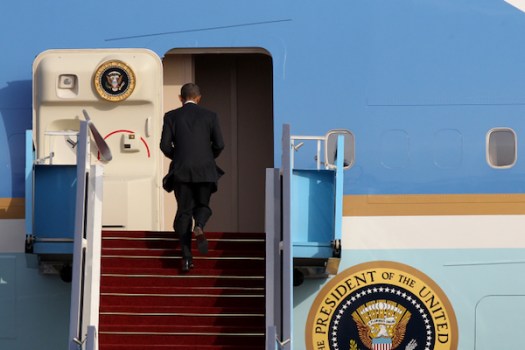
Image: Vahram Muradyan / The New York Times

By Jimmy Carter / The New York Times
November 28, 2016


The Security Council should pass a resolution laying out the parameters for resolving the conflict. It should reaffirm the illegality of all Israeli settlements beyond the 1967 borders, while leaving open the possibility that the parties could negotiate modifications. Security guarantees for both Israel and Palestine are imperative, and the resolution must acknowledge the right of both the states of Israel and Palestine to live in peace and security. Further measures should include the demilitarization of the Palestinian state, and a possible peacekeeping force under the auspices of the United Nations.


We do not yet know the policy of the next administration toward Israel and Palestine, but we do know the policy of this administration. It has been President Obama’s aim to support a negotiated end to the conflict based on two states, living side by side in peace.

That prospect is now in grave doubt. I am convinced that the United States can still shape the future of the Israeli-Palestinian conflict before a change in presidents, but time is very short. The simple but vital step this administration must take before its term expires on Jan. 20 is to grant American diplomatic recognition to the state of Palestine, as 137 countries have already done, and help it achieve full United Nations membership. . . .

The primary foreign policy goal of my life has been to help bring peace to Israel and its neighbors. That September in 1978, I was proud to say to a joint session of Congress, “Blessed are the peacemakers, for they shall be called the children of God.” As Mr. Begin and Mr. Sadat sat in the balcony above us, the members of Congress stood and applauded the two heroic peacemakers.

I fear for the spirit of Camp David. We must not squander this chance.

[Continue reading here . . . ]

Israel to build 500 new settler homes in East Jerusalem

44f22246134e48ff99130bcab38f6c48_18
Photo: Al Jazeera

Palestinian leaders say Israel’s settlement movement is emboldened by the election of Donald Trump in the US.

By Al Jazeera News
November 24, 2016


“The real policy of the Israeli government is to destroy the very last opportunity to build a Palestinian state and kill the so-called two state solution.”


Israel has announced plans to move forward with the construction of 500 homes for Jewish settlers in occupied East Jerusalem, the first such move since the US presidential election.

“This morning, the local planning and building committee made the decision to advance [plans]… for 500 units in Ramat Shlomo,” the Ir Amim anti-settlement NGO said, referring to an ultra-Orthodox Jewish settlement near the Palestinian neighborhood of Shuafat.

More than 200,000 Israeli settlers now live in communities in East Jerusalem, which Israel has occupied along with the rest of the West Bank, the Gaza Strip and parts of Egypt and Syria since the 1967 war. More than half-a-million Israelis live in Jewish-only settlements throughout the West Bank, including East Jerusalem. They are considered illegal by international law.

[Continue reading here . . . ]


Obama’s only Israel-Palestine option

.
Photo: Miriam Alster / Flash90

When everyone believed Clinton was going to be the next president, Obama was rumored to be considering several last-minute options to advance Israeli-Palestinian peace. All that went out the window on November 8.

By Noam Sheizaf / +972 Magazine
November 11, 2016


The old peace process is officially toast. The people who led it won’t be part of the next administration. The policies they pursued are the furthest possible from a Trump administration’s agenda — be it isolationist or neo-con/interventionist. A final push on parameters would be a waste of political capital, and might actually cause more harm than good.


The Obama administration is probably trying to figure out how to protect its two signature achievements — Obamacare and the Iranian nuclear deal — for the next two years, when the White House and both chambers of Congress will be under Republican control. But it will also need to revisit other issues, such as a widely discussed final move on the Israeli-Palestinian issue. Specifically, the idea of laying out parameters for a final status agreement — either in the form of a major policy speech or via a UN Security Council resolution — might seem out of touch with the new political reality in Washington.

It is extremely difficult to predict what Donald Trump’s actual policies will be — common wisdom is that a weak and poorly informed president depends on the people around and below him — but it’s a pretty safe guess that Trump won’t continue efforts to broker a final agreement on a two-state solution. The GOP removed the very idea of Palestinian statehood from its platform ahead of the elections. Those around Trump have taken positions in favor of West Bank settlements and against previous efforts to push the Israeli government towards a deal with the Palestinians. Others in the president-elect’s circle — probably including Trump himself — have strong isolationist tendencies.

All that should cause the outgoing Obama administration to change its calculations. Much of its thinking on a final push on the peace process was clearly predicated on the assumption that Hillary Clinton would be the next president. The idea was not that a major policy speech or a UN Security Council resolution on parameters would generate an immediately response on the ground. It might, however, have laid solid groundwork for future negotiations, all while creating options for the next administration that relieved it of the need to spend actual political capital on the issue.

[Continue reading here . . . ]

Trump Strives to Undo 70 Years of Bipartisan U.S. Mideast Consensus

rs-photo-seattle-times-1
Photo: Erika Schultz / The Seattle Times

By Richard Silverstein / Tikun Olam תיקון עולם
November 27, 2016


With the Trump administration working to finalize its choices for who will run the Pentagon and State Department, it’s becoming clear that getting top national security posts in the new White House requires two qualifications: intense personal loyalty to Donald Trump himself and an almost obsessive fixation on the potential threats posed by radical Islamic terrorism.


There are alarming news reports about upcoming Trump cabinet appointments to fill key slots in the national security and foreign policy apparatus. They raise the specter of undoing nearly 70 years of carefully-constructed consensus in U.S. policy toward the Middle East. Presidents hearkening back to Lyndon Johnson have opposed Israeli settlements, and since George HW Bush they’ve supported a two-state solution. More recently, President Obama adopted an anti-interventionist course in the quagmire that is Syria. He and Pres. Bush also rejected an Israeli offer to jointly attack Iran.

Despite Trump’s avowed inclination to stay out of overseas conflicts, it’s quite possible key advisors and allies in the region like Benjamin Netanyahu could inveigle him into such military adventurism.

[Continue reading here . . . ]

A 12-Step Program for Making a Difference

17kristofweb-master768
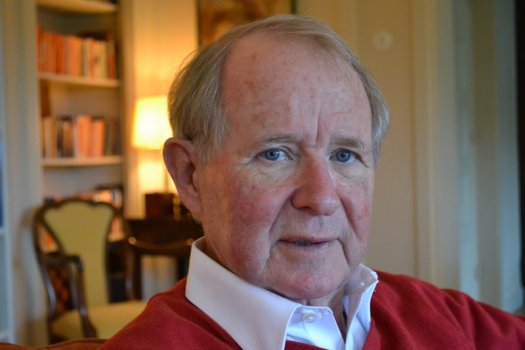
Photo: Jim Wilson / The New York Times

Here are steps that any of us can take that can make a difference at the margins

By Nicholas Kristof / The New York Times
November 17, 2016


12. I WILL not lose hope. I will keep reminding myself that politics zigs and zags, and that I can do more than shout in the wind. I can fight for my values even between elections, and even at the micro level I can mitigate the damage to my neighbors and attempt to heal a social fabric that has been rent.


Traumatized by the election results, many Americans are asking: What now? Here are steps that any of us can take that can make a difference at the margins. Onward!

1. I WILL accept that my side lost, but I won’t acquiesce in injustice and I will gird for battle on issues I care about. I will call or write my member of Congress and express my opposition to mass deportation, to cutting 22 million people off health insurance, to nominations of people who are unqualified or bigoted, to reduced access to contraception and cancer screenings. Better yet, I’ll attend my representative’s town meeting and put him or her on the spot.

2. I WILL try to do small things in my own life, recognizing that they are inadequate but at least a start: I will sign up on the Council on American-Islamic Relations website, volunteering to fight Islamophobia. I’ll call a local mosque to offer support, or join an interfaith event. I will sign up for an “accompany my neighbor” list if one exists for my area, to be an escort for anyone who is now in fear.

3. I WILL avoid demonizing people who don’t agree with me about this election, recognizing that it’s as wrong to stereotype Trump supporters as anybody else. I will avoid Hitler metaphors, recognizing that they stop conversations and rarely persuade. I’ll remind myself that no side has a monopoly on truth and that many Trump supporters are good people who want the best for the country. The left already has gotten into trouble for condescending to working-class people, and insulting all Trump supporters as racists simply magnifies that problem.

[Continue reading here . . . ]

Life, Apartheid, and Palestine

john-dugard
Photo: Green Planet Monitor

An Interview with John Dugard, South Africa’s “Father Of Human Rights”

By Michael Brull / New Matilda
November 23, 2016


“I would like to see a two-state solution materialize, because I do think that’s the best way to secure peace in the region. I really don’t see a single state being a peaceful state, because initially there will be a Jewish minority that controls the state, and that will lead to the kind of tension that we had in apartheid South Africa. And later I suspect that when the Palestinian Arab majority becomes the government, they will be discriminating against the Jewish minority.

So I think those who believe that a single state will be a peaceful democratic state in which Jews and Arabs will live peacefully together are being very naïve. I do think that a two state solution offers the best solution for a peaceful resolution of the dispute. But as I’ve indicated, I think that Israel is making a two-state solution virtually impossible, so we have to come to terms with the possibility of a single state.”


One of the leading opponents to South African apartheid, and later a prominent critic of Israel, John Dugard spoke with New Matilda’s Michael Brull recently.

In legal circles in South Africa, Dugard’s contributions are widely known, and are treated with something approaching reverence. From the early 1970’s, Dugard wrote scathing critiques of judges and legal academics in apartheid South Africa. He argued that whilst judges claimed to be merely impartial upholders of the law, in fact they were actively making choices to defend infringements on civil liberties and injustice.

Dugard also acted as lawyer, or legal consultant, in numerous cases challenging apartheid law and practices. In 1978, Dugard was the founding director of the University of Witwatersrand’s Centre for Applied Legal Studies. This innocuous name masked its agenda: it was a human rights center.

For voicing his critiques, Dugard “faced opprobrium and even prosecution (for quoting Dr. Nthatho Motlana, a banned person), but he did not waver,” [wrote Edwin Cameron in the South African Journal on Human Rights.] “The clear voice of Dugard’s denunciation of apartheid collusion by lawyers and judges deserves credit as one of the reasons why today we have a law-based constitutional order whose legitimacy is politically unquestioned.”

[Read the full intverview here . . . ]

white-area
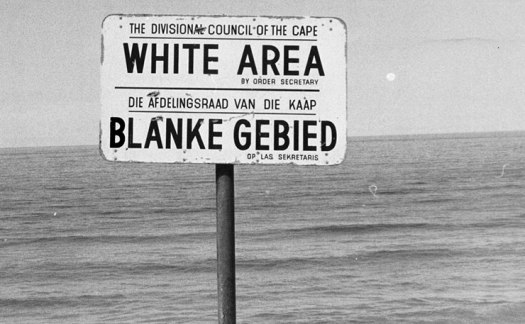
Photo: AP

Trump has “every intention” of recognizing Jerusalem as Israel’s capital

1280
Photo: Kobi Gideon / GPO / EPA

Benjamin Netanyahu and other Israeli leaders hail election of Donald Trump, whose campaign promises would overturn decades of US foreign policy

By Peter Beaumont / The Guardian
November 9, 2016


“Trump’s victory is an opportunity for Israel to immediately retract the notion of a Palestinian state in the center of the country. This is the position of the president-elect: the era of a Palestinian state is over.”
— Naftali Bennett, Israeli Education Minister


Israeli government ministers and political figures are pushing the U.S. president-elect, Donald Trump, to quickly fulfill his campaign promise to overturn decades of US foreign policy and recognize Jerusalem as Israel’s capital and to move the U.S. embassy from Tel Aviv.

Their calls came as one of Trump’s advisers on Israel and the Middle East, David Friedman, told the Jerusalem Post that Trump would follow through on his promise.

“It was a campaign promise and there is every intention to keep it,” Friedman said. “We are going to see a very different relationship between America and Israel in a positive way.”

Other political figures — including Israel’s controversial far-right education minister, Naftali Bennett — went further, suggesting that Trump’s election should signal the end of the two-state solution and aspirations for a Palestinian state.

[Continue reading here . . . ]

Trump presidency bodes ill for Israel-Palestine peace process

4096
Photo: Jim Hollander / EPA

With president-elect likely to be either maximalist pro-Israel or isolationist, the question is whether stagnant process can survive

By Peter Beaumont / The Guardian
November 17, 2016


What is clear, for all the muddle, is that the centre of gravity in US thinking is lurching from the two-state solution as it has been understood by US politicians and diplomats for more than 20 years seemingly towards one of two extremes: a maximalist pro-Israel administration or, equally risky, a minimalist and disconnected isolationist position.


As Donald Trump continues to ponder his choice for secretary of state, and other key foreign policy positions, one thing seems clear: the impact on the peace process between Israelis and Palestinians is likely to be serious and retrograde.

The question now is whether the moribund process, which has weathered presidents both Republican and Democrat since it was sealed in 1993 with the aim of securing a two-state solution, can survive the Trump era at all.

The signs are not encouraging. Israel’s far right has greeted Trump’s success with ecstasy, hailing his promises to recognize Jerusalem as the country’s capital and move the US embassy to the city, as well as suggestions from his team he would not stand in the way of Israeli settlement construction.

The frontrunners for the secretary of state nomination — Rudy Giuliani and John Bolton — have both been vocal opponents of the idea of a Palestinian state.

Trump’s own pronouncements have swerved wildly between suggesting he would be “neutral” on the question, promising to be Israel’s “best friend,” and even suggesting he could secure the best peace deal ever.

Meanwhile his advisers have fueled a sense of deep confusion by making a series of highly contradictory statements.

[Continue reading here . . . ]

Call to Prayer from Jerusalem Rooftops

https://youtu.be/7io4UkwpR80

Jerusalemites recite call to prayer from their rooftops

By Middle East Monitor
November 18, 2016


“Israel is a state that respects the freedom of worship for all believers and it is committed to protecting those who suffer from noise which is caused by the loudspeakers.”
— Israeli Prime Minister Benjamin Netanyahu


In response to the Israeli government’s plan to prohibit the call to prayer in the city, Jerusalemites climbed onto the roofs of their houses and recited the call to prayer all together.

Over the past two weeks, Israel has been working to ban the Muslim call to prayer, the athan. Israeli Prime Minister Benjamin Netanyahu has supported the a bill to outlaw the religious calling, saying: “Israel is a state that respects the freedom of worship for all believers and it is committed to protecting those who suffer from noise which is caused by the loudspeakers.”

In video footage which is circulating on social media, residents can clearly be heard reciting the call to prayer in protest of the law to ban it in Jerusalem.

Churches in Nazareth showed solidarity by broadcasting the call to the night prayer in response to attempts to prohibit the call of prayer being broadcasted from Al-Aqsa Mosque.

In defiance to the actions of the Israeli Knesset, Arab Israeli Knesset members Ahmed El-Tibi and Teleb Abu Arar performed the call to prayer, independent of each other, in the Israeli parliament (Knesset).

[Continue reading here . . . ]

Israeli Imam Fined for Call to Prayer

ebepi_005_illus
The Muezzin’s Call to Prayer, from Ebers, Georg, “Egypt: Descriptive, Historical, and Picturesque,” 1878.

Israel-Palestine Conflict: Imam Fined For Using Loudspeakers For Islamic Call To Prayer In Lod City

By Vishakha Sonawane / International Business Times
November 23, 2016


“We shall not be deterred by threats and fines. We have always said that everything can be solved at the negotiating table, and through dialogue and mutual respect rather than by force.”


Law enforcement authorities in Israel’s Lod city, located 9.3 miles southeast of Tel Aviv, fined a Palestinian imam for making an Islamic call to prayer through a loudspeaker at a local mosque, according to reports. Authorities said that the action violated the anti-noise law in the Shnir area of the mixed Arab-Jewish city.

Mahmoud Alfar, the spiritual leader of the mosque, said he did not get any formal notice related to the fine but officials told him that it will be mailed to him, according to a Haaretz report on Monday. He will have to pay 750 shekels (US$ 194) as fine. Alfar’s brother Sheikh Adel Alfar told the Israeli newspaper that this was the first time the city fined an imam for noise caused by the call to prayer.

The Israeli parliament is mulling a controversial anti-noise legislation, dubbed the “muezzin law.” Muezzin refers to man who calls Muslims to prayer from the minaret of mosque, mostly using loudspeakers. Knesset proposed the bill on November 13 and said that it would restrict the use of loudspeakers at mosques in the country to tackle noise. Israeli Prime Minister Benjamin Netanyahu supported the bill, which was criticized by Muslims, Jewish and Christian communities.

[Continue reading here . . . ]