Abbas Calls Oslo Accords Dead

15abbas-master768
President Mahmoud Abbas of the Palestinian Authority, second from right, addressing the Palestinian Central Council in the West Bank city of Ramallah on Sunday. (photo: Majdi Mohammed / Associated Press)

Palestinian Authority leader vows to reject any American role in peace talks.

By David Halbfiner | The New York Times | Jan 14, 2018


“The deal of the century is the slap of the century.”
— Palestinian Authority president Mahmoud Abbas


President Mahmoud Abbas of the Palestinian Authority said on Sunday that Israel had killed the Oslo Accords and angrily assailed the Trump administration over its handling of the conflict. He vowed to reject American leadership of any peace talks and urged Palestinians to reconsider their signed agreements with Israel.

“We will not accept for the U.S. to be a mediator, because after what they have done to us — a believer shall not be stung twice in the same place,” Mr. Abbas said.

“The deal of the century is the slap of the century,” he added, mocking the still-undefined peace initiative that the Trump administration has been working on and promoting in the region. “However, we’ll get back at them.”

Mr. Abbas, 82, stopped well short of embracing an alternative to a two-state solution, the project around which he has built his career. The number of Israelis and Palestinians who hold out hope that such a solution can be achieved is dwindling, but Mr. Abbas said nothing about abandoning it.

Continue reading “Abbas Calls Oslo Accords Dead”

Emboldened by Trump, Israelis try redrawing Jerusalem’s boundaries

israel_likud_party_53721-6c7b5
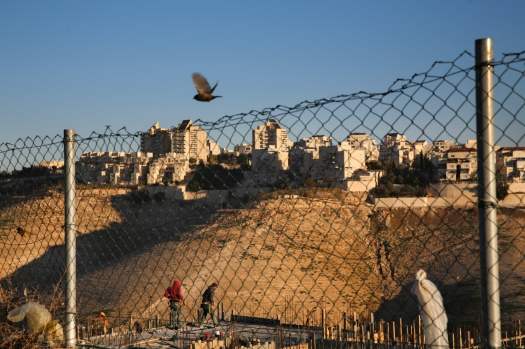
Palestinian laborers work at a construction site in a new housing project in the Israeli settlement of Maale Adumim, near Jerusalem, in Feb 2017. (photo: Oded Balilty / AP)

Israeli leaders are re-engineering Jerusalem’s demographic balance by redrawing the city’s map to exclude Arab neighborhoods and include Israeli settlements.

By Loveday Morris and Ruth Eglash | The Washington Post | Jan 12, 2018


The director of Israeli human rights group B’Tselem [says] there is a battle underway between those who want to continue “smart occupation,” which manages to “fly two inches below international outrage” while incrementally shifting facts on the ground, and those who advocate “dumb occupation” — moving forward with formal annexation.


Since becoming mayor of Maale Adumim more than 20 years ago, Benny Kashriel has doggedly campaigned for his community to be recognized as part of Israel.

Now, with President Trump in the White House, Kashriel thinks it may just happen.

His settlement is around four miles east of Jerusalem in the occupied West Bank. Most of the international community, including the United States, considers its construction to be illegal, built on land captured during the 1967 war.

Still, it has steadily grown from what began as a cluster of prefabricated buildings erected by 23 families in the 1970s into a burgeoning satellite city of Jerusalem. Palm trees line the wide roads of what looks like a Florida suburb. Red-roofed houses and high-rises are home to 42,000 people, who are served by all of the accoutrements of a modern city: schools, restaurants, cafes and a shopping mall.

Continue reading “Emboldened by Trump, Israelis try redrawing Jerusalem’s boundaries”

Palestinian national dish fuels Al-Aqsa protests

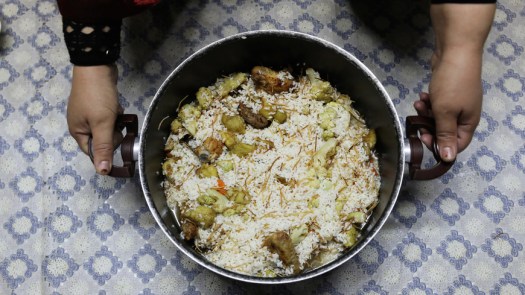
A Palestinian woman prepares maqlouba at her home in the East Jerusalem neighborhood of Jabel Mukaber
A Palestinian woman prepares maqluba at her home in the East Jerusalem neighborhood of Jabel Mukaber, Aug 21, 2017. (photo: Ammar Awad / Reuters)

Maqluba, the beloved traditional Palestinian dish, has become a tradition of the protests in Jerusalem and elsewhere, reinforcing Palestinian community and solidarity.

By Ahmad Melhem | Al-Monitor | Jan 11, 2018


“During the sit-in against Trump’s decision at the Damascus Gate, I made sure to serve maqluba, a popular Palestinian national dish, to the young protesters as a way to underline that Jerusalem is the capital of Palestine, with all its people, food and culture. People are now keen to have maqluba every week with their families in Al-Aqsa’s squares as a kind of tradition and custom to guard the mosque. . . . The true maqluba is not made with rice, chicken and vegetables but with steadfastness, persistence and perseverance and with shouts and cheers when flipped upside down.”


While hundreds of demonstrators shouted slogans on Dec 11 against US President Donald Trump in front of the Damascus Gate, one of the main entrances to Al-Aqsa, Khadija Khweis and her friend Hanadi al-Halawani were flipping pots of maqluba to serve to the protesters. In the last 12 months, this traditional food, also called the “dish of victory,” has become a part of the Palestinian protests.

Every Sunday throughout December, when people of Jerusalem held demonstrations to protest Trump’s decision to recognize Jerusalem as the capital of Israel, they would bring large pots of maqluba, which literally means “upside down” in Arabic, and eat it under the eyes of the Israeli police. The flipping of the pots as the cooks shouted “Allahu Akbar” became a ritual, and the dish also came to be called by both the Palestinians and the Israelis as the “dish of spite.”

Halawani told Al-Monitor, “During the sit-in against Trump’s decision at the Damascus Gate, I made sure to serve maqluba, a popular Palestinian national dish, to the young protesters as a way to underline that Jerusalem is the capital of Palestine, with all its people, food and culture. People are now keen to have maqluba every week with their families in Al-Aqsa’s squares as a kind of tradition and custom to guard the mosque.”

Continue reading “Palestinian national dish fuels Al-Aqsa protests”

Trump’s cut to funding for Palestinian refugees could lead to disaster

3504
Palestinian children during a summer camp activity sponsored by UNRWA in Khan Yunis town, in the southern Gaza Strip. (photo: Said Khatib / AFP / Getty)

The loss of UN money would have a catastrophic affect on Middle East security in both the short and long term.

By Mick Dumper | The Guardian | Jan 12, 2018


Has the US, and Israel for that matter, thought this through? Do they really want 270,000 children in Gaza attending Hamas-run schools? Does Washington really know what it is doing?


Having survived the recent cabinet reshuffle the international development secretary, Penny Mordaunt, is confronted with the biggest headache of her short ministerial career: the fallout of the US intention to cut funding to UNRWA, which constitutes one of the most serious challenges to UK policies in the Middle East.

Donald Trump’s threat to cut financial assistance to the UN agency specifically responsible for Palestinian refugees will be a disaster not only for the refugees but also for Israel and neighboring countries. It does not advance US interests either. Provoked by the Palestinian rejection of Trump’s decision to recognize Jerusalem as the capital of the state of Israel, it takes the notion cutting off one’s nose to spite one’s face to a completely new diplomatic level. Although a final decision by the US is still pending, the loss of the regular subvention of $350m for UNRWA would be catastrophic for the region, with immense military and strategic implications for the US and its allies, including the UK.

If UNRWA were defunded by the US in this dramatic, sudden, and unplanned way, it would be forced to suspend within a few months most of its services to nearly 5 million Palestinian refugees. Half a million children in the Gaza Strip, West Bank, Jordan, Syria and Lebanon would be without schools, consigning them to the already volatile streets at a time when extremists are in full recruitment mode.

Continue reading “Trump’s cut to funding for Palestinian refugees could lead to disaster”

Quakers, Jews and Israel’s BDS Blacklist

rs11675_evanjonesgaza1949-5812013620
AFSC volunteer Evan Jones meeting with Palestinian refugees, 1949. (photo: AFSC)

[subhead]

By Brant Rosen | Shalom Rav | Jan 11, 2018


“The AFSC helped thousands of people in the United States transfer small amounts of money to loved ones in French concentration camps, [and helped] hundreds of children, including Jewish refugees and the children of Spanish Republicans, come to the United States under the care of the US Committee for the Care of European Children in 1941–42.”
— US Holocaust Memorial Museum


Last Sunday, Israel revealed their list of 20 social justice groups from around the world it was henceforth banning from the country because of their support for the Boycott, Divestment and Sanctions (BDS) movement. For me, the list represented more than just another news item of the day. As staff person for one organization included on the list — the American Friends Service Committee (AFSC) — this news struck home personally as well as professionally

As a rabbi who works for AFSC, I’m proud of the important historical connections between Jewish community and this venerable Quaker organization. As the US Holocaust Memorial Museum itself has noted, AFSC was at the forefront of efforts to help and rescue Jewish refugees after 1938, “assisting individuals and families in need . . . helping people flee Nazi Europe, communicate with loved ones, and adjust to life in the United States.”

Continue reading “Quakers, Jews and Israel’s BDS Blacklist”

Israel’s BDS blacklist is straight out of apartheid

2200
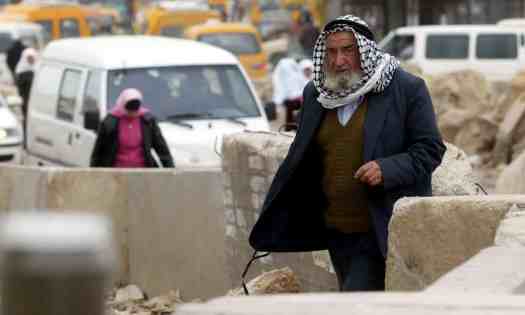
A Palestinian navigates cement blocks at an Israeli checkpoint. Travel bans, evictions, and home demolitions have become part of daily life for Palestinian families. (photo: Abbas Momani / AFP / Getty Images)

Banning NGO’s that support the BDS movement is a desperate attempt to silence human rights defenders.

By Asad Rehman | The Guardian | Jan 9, 2018


The bans and blacklists that we face today are only a shadow of what Palestinians endure every single day. This year we remember that it is 70 years since more than 800,000 Palestinians were forcibly displaced from their homes; they are still denied their right to return by Israel.

Over these seven decades, Israel has imposed travel bans, evictions, and home demolitions that have become part of daily life for Palestinian families. So are arbitrary arrest and detention without trial, collective punishment, violence, and torture without redress.


Israel’s “BDS blacklist,” published in the Israeli media on Sunday, bans 20 charities and human rights groups from entering the country, because they support the Palestinian-led boycott, divestment and sanctions (BDS) movement — a campaign that holds Israel to account over violations of Palestinian rights and international law.

This repressive move is borrowed straight from the playbook of South Africa’s apartheid regime, which had the same aim of silencing critics. Ultimately, Israel’s blacklist will fail, just as South Africa’s did. But first and foremost, the ban calls for a robust condemnation from people of conscience around the world — and the UK government, which continues to conduct “business as usual” with Israel. [As does the US government.]

As one of the blacklisted organizations, War on Want is in good company, alongside groups such as the US Campaign for Palestinian Rights, Jewish Voice for Peace and the American Friends Service Committee — a US Quaker group awarded a Nobel peace prize in 1947 for assisting people persecuted by the Nazis.

Continue reading “Israel’s BDS blacklist is straight out of apartheid”

Israel made itself a pariah by barring me and my fellow activists

gettyimages-452932550-1515362884
(photo: Getty Images)

The author with roots in Palestine speaks to her exile from her family’s homeland.

By Ariel Gold | The Forward | Jan 7, 2018


As BDS grows, builds and succeeds, Israel becomes more and more desperate to contain it. The latest effort is this blacklist. . . . By blacklisting organizations and banning even Jews and Quakers who take principled stances to support Palestinian human rights, Israel is isolating itself even further.


As a Jewish mother, one of the most important things to me is to instill in my children a sense of Jewish identity and values. For my now 15- and 16-year-old children, this has over the years included Tot-Shabbat at our synagogue, Hebrew school, Jewish summer camp and even Jewish youth group trips to Israel.

As a family, our history dates back to Rabbi Joseph Karo of 14th-Century Palestine, writer of the Shulchan Aruch (the codification of Jewish religious law). In 2015, I took my children to visit Karo’s grave, in the holy Jewish city of Safed. It was the most prominent grave in the cemetery. My son, daughter and I placed stones at the gravesite of the ancient rabbi our family descends from and said a short prayer.

But our identity as a Jewish family manifests in another way, too: in the responsibility to think critically and act as effectively and morally as possible. This means a commitment to ending the human rights abuses Israel commits against Palestinians.

Continue reading “Israel made itself a pariah by barring me and my fellow activists”

AFSC among human rights organizations barred from Israel

pb_59854_img_0818-lpr
(photo: AFSC)

Statement by the Nobel Peace Prize-winning peace organization on being blacklisted by Israel.

By American Friends Service Committee | Jan 8, 2018


“May we look upon our treasures, and the furniture of our houses, and the garments in which we array ourselves, and try whether the seeds of war have nourishment in these our possessions.”
— 17th-Century Quaker abolitionist John Woolman


Yesterday the American Friends Service Committee (AFSC) was included on a list of 20 organizations whose staff may be denied entry to Israel because of their support for the Palestinian-led boycott, divestment, and sanctions (BDS) movement.

Motivated by Quaker belief in the worth and dignity of all people, AFSC has supported and joined in nonviolent resistance for over 100 years. We answered the call for divestment from apartheid in South Africa, and we have done the same with the call for BDS from Palestinians who have faced decades of human rights violations.

Throughout our history, we have stood with communities facing oppression and violence around the world. In 1947 we were awarded the Nobel Peace Prize in part for our support for Jewish refugees fleeing the Holocaust. We will continue our legacy of speaking truth to power and standing for peace and justice without exception in Israel, occupied Palestine, and around the world.

Continue reading “AFSC among human rights organizations barred from Israel”

Jared Kushner’s diplomatic role complicated by his financial ties

07kushnerisrael1-superjumbo
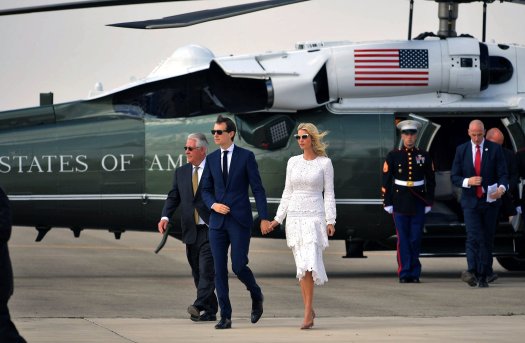
Jared Kushner and his wife, Ivanka Trump, at the end of a diplomatic trip to Israel in May. Shortly before, Kushner Companies received a $30 million investment from one of Israel’s largest financial institutions, Menora Mivtachim. (photo: Mandel Ngan / Agence France-Presse / Getty Images)

Kushner continues to do business with major Israeli investors, and continues to donate to West Bank settlements.

By Jesse Drucker | The New York Times | Jan 7, 2018


“The ethics laws were not crafted by people who had the foresight to imagine a Donald Trump or a Jared Kushner. No one could ever imagine this scale of ongoing business interests . . . that give the president and his top adviser personal economic stakes in an astounding number of policy interests.”
— Robert Weissman, the president of Public Citizen, a nonprofit government ethics group


Last May, Jared Kushner accompanied President Trump, his father-in-law, on the pair’s first diplomatic trip to Israel, part of Mr. Kushner’s White House assignment to achieve peace in the Middle East.

Shortly before, his family real estate company received a roughly $30 million investment from Menora Mivtachim, an insurer that is one of Israel’s largest financial institutions, according to a Menora executive.

The deal, which was not made public, pumped significant new equity into 10 Maryland apartment complexes controlled by Mr. Kushner’s firm. While Mr. Kushner has sold parts of his business since taking a White House job last year, he still has stakes in most of the family empire — including the apartment buildings in and around Baltimore.

Continue reading “Jared Kushner’s diplomatic role complicated by his financial ties”

As the 2-State solution loses steam, a 1-state plan gains traction

merlin_130961651_7b205757-0f5f-4e40-b83d-1ed666aad56e-superjumbo
Israeli and American flags were projected on the walls of the Old City of Jerusalem last month just before President Trump recognized Jerusalem as Israel’s capital. (photo: Uriel Sinai / The New York Times)

Absorbing the nearly three million Palestinians on the West Bank would either spell the end of a Jewish state or destroy Israeli democracy if Palestinians were denied equal rights.

By David Halbfinger | The New York Times | Jan 5, 2018

“If the two-state solution dies, it will be the responsibility of Israel, not the Palestinians. But if the Israelis kill it, which they’re in the process of doing now, unfortunately with the help of Trump’s administration, then the only option will be for us to fight the apartheid system and bring it down, which means one state with equal rights for everybody.”
— Mustafa Barghouti, a physician who sits on the P.L.O.’s central council


The Israeli right, emboldened by President Trump’s recognition of Jerusalem as Israel’s capital, is not the only faction arguing for a single state between the Jordan River and the Mediterranean Sea.

The Palestine Liberation Organization has also begun to ask whether that might not be such a bad idea, though it has a radically different view of what that state would look like.

As momentum ebbs for a two-state solution to the Israeli-Palestinian conflict, both sides are taking another look at the one-state idea. But that solution has long been problematic for both sides.

For the Israelis, absorbing three million West Bank Palestinians means either giving up on democracy or accepting the end of the Jewish state. The Palestinians, unwilling to live under apartheid-like conditions or military occupation, have also seen two states as their best hope.

Now, for the first time since it declared its support for a Palestinian state side-by-side with Israel in 1988, the P.L.O. is seriously debating whether to embrace fallback options, including the pursuit of a single state.

Continue reading “As the 2-State solution loses steam, a 1-state plan gains traction”