At 31, my first glimpse of life outside Gaza

abier-almasri
Abier Almasri (photo: Human Rights Watch / Reuters)

I try not to think about how, later this month, I will enter the Erez checkpoint from the Israeli side and cross back into Gaza, unsure when, if ever, I will be allowed to leave again.

By Abier Almasri | Reuters | Mar 16, 2018


Friends and family back home keep asking, “How’s life outside Gaza?” I can’t answer. How to tell people who live on four to six hours of electricity daily that high-rise buildings in New York leave their lights on 24 hours a day, simply because it looks nice? How it feels to live without generator noises, the deafening roar of Israeli military drones at night, or the constant fear of imminent conflict? Or that you can hop on a bus, train or plane on a whim, without needing a permit, and travel across the world?


I was born and grew up in Gaza. My father was a soccer coach for many years and his stories about his travels to other countries always made me want to travel too. But Israel imposed a land, air and sea blockade on Gaza in 2007 and has kept Gaza mostly closed ever since. So I never made it out until now, at age 31, I was allowed to leave — for just a little while.

I work for a global human rights organization and spent months seeking the exit permit from the Israeli government that would allow me to leave, to participate in security and research training sessions, to attend key organizational meetings, and to meet colleagues based just a short drive away in Jerusalem or Ramallah — to say nothing of those overseas. But I faced obstacles every step of the way to obtaining the documents and permissions I needed simply to get out of Gaza itself — until I got a phone call on January 28.

Continue reading “At 31, my first glimpse of life outside Gaza”

Palestinians hold day of mourning after 773 shot with live ammunition

5760
A wounded Palestinian is evacuated during the clashes between demonstrators and Israeli troops. (photo: Barcroft Images / Xinhua)

At least 15 killed when Israeli soldiers open fire during mass demonstrations in Gaza.

By Hazem Balousha and Oliver Holmes | The Guardian | Mar 31, 2018


“There is fear that the situation might deteriorate in the coming days.”
— Tayé-Brook Zerihoun, assistant UN secretary general for political affairs


Gaza hospitals, running low on blood and overstretched by the huge number of wounded, were reeling after one of the enclave’s bloodiest days outside of open war, in which Israeli soldiers shot 773 people with live ammunition, according to the ministry of health.

Fifteen of the wounded died, said the ministry spokesperson Dr Ashraf al-Qidra. “Most of the dead were aged between 17 and 35 years old,” he said. “The injuries were on the upper part of the body.” He added that the remainder of the wounded, some of whom were in a critical condition, had been “shot with live ammunition.”

The violence erupted on Friday after mass demonstrations took place demanding the right of return for Palestinian refugees and their descendants to land in Israel.

Continue reading “Palestinians hold day of mourning after 773 shot with live ammunition”

More Arabs than Jews live in Israel and Palestine, according to Israeli Army

1-5940740-2440408184
Palestinian women at the Qalandiyah checkpoint, 2016. (photo: AP)

The Israeli Army presented data to the Knesset showing 6.8 million Palestinians now living in Israel-Palestine, but only 6.5 million Jews.

By Yotam Berger | Haaretz | Mar 26, 2018


“Between the Jordan River and the Mediterranean there is an equal number of Palestinians and Jews, and that’s nothing new. That’s why the crossroads where we presently find ourselves is clear: either two states based on 1967, or one state that is an apartheid state, or one democratic state in which everyone has the right to vote. There is no other option, and at least this simple truth has to be stated clearly.”
— Knesset Member Ayman Odeh, head of the Joint List


The Israeli army presented data on Monday to a Knesset panel which show that more Arabs than Jews live between the Mediterranean and the Jordan River.

According to Civil Administration’s deputy commander Col. Haim Mendes, five million Palestinians live in the West Bank and the Gaza Strip. This figure does not include the hundreds of thousands of Palestinians living in East Jerusalem, or the 1.8 million Israeli Arabs. According to Israel’s Central Bureau of Statistics, as of September 2017 some 6.5 million Jews live in Israel. . . .

Continue reading “More Arabs than Jews live in Israel and Palestine, according to Israeli Army”

Palestinians set to reject US peace plan

rts1miz1-870
A girl holds a Palestinian flag in front of Israeli troops during clashes in Ramallah, Mar 7, 2018. (photo: Mohamad Torokman / Reuters)

The peace plan contemplated by the Trump Administration will offer Palestinians limited sovereignty over limited territory.

By Uri Saver | Al-Monitor | Mar 25, 2018


The plan is much closer to the Israeli position than the Palestinian:

  • Two states
  • Palestine would comprise about half the West Bank
  • Gaza would be included if Hamas disarms
  • Israel would control West Bank security and border crossings
  • East Jerusalem would be part of Palestine, but not the Old City
  • No right of return

Despite growing tensions with the Palestinians, US President Donald Trump still intends to reveal a US peace plan for the Middle East. The plan will apparently be divulged right after the US Embassy moves to Jerusalem and after Trump’s meeting with North Korean leader Kim Jong Un.

According to a senior US diplomat in Tel Aviv, the fact that Palestinian President Mahmoud Abbas refuses any contact on the matter with US officials and that he had bad mouthed David Friedman, the US ambassador to Israel, has not altered Trump’s determination. Actually, messages on the evolving plans are conveyed nowadays to Ramallah by Egypt, Jordan and Saudi Arabia. More so, the March 20 meeting in Washington between Trump and Saudi Crown Prince Mohammed bin Salman was largely dedicated to two major topics: the common front against Iran in the region (including the Iran nuclear deal issue) and Israeli-Palestinian peace.

Continue reading “Palestinians set to reject US peace plan”

Quick facts about the Nakba

nakba-afp
Haganah fighters expelling Palestinians from Haifa, May 12, 1948. (photo: AFP / Getty Images)

Today Palestinians in Gaza will take part in the March of Return to mark the 70th anniversary of the Nakba, when some 750,000 Palestinians were expelled from the newly-created State of Israel.

By Institute for Middle East Understanding | May 13, 2015


  • The “Nakba” (“catastrophe” in Arabic) refers to the mass expulsion of Palestinian Arabs from British Mandate Palestine during Israel’s creation (1947–49).
  • The Nakba was not an unintended result of war. It was a deliberate and systematic act necessary for the creation of a Jewish majority state in historic Palestine, which was overwhelmingly Arab prior to 1948.
  • The Nakba’s roots lay in the emergence of political Zionism in 19th-Century Europe, when some Jews, influenced by the nationalism then sweeping the continent, began emigrating as colonists to the Holy Land, displacing indigenous Palestinians in the process.
  • The Nakba did not end in 1948. It continues today, in the form of Israel’s ongoing appropriation of Palestinian land for Jewish settlements in the West Bank and for Jewish communities inside Israel.

Tomorrow, Palestinians in Gaza will take part in the March of Return to mark the 70th anniversary of the Nakba (“catastrophe” in Arabic), when some 750,000 Palestinians were ethnically cleansed to make way for a Jewish-majority state of Israel. Many of the participants will be Nakba survivors and their descendants, who have been denied their internationally-recognized legal right of return to the lands they were expelled from during Israel’s establishment.

Here are some quick facts about the Nakba.

Continue reading “Quick facts about the Nakba”

Israel is giving Palestinians the Jewish finger

1-5937115-2932469335
US Ambassador to Israel David Friedman at a conference in July 2017. (photo: Moshe Goldstein / Haaretz)

In the name of the Jewish people, Netanyahu is insisting that Palestinians recognize three Jewish political hawks as honest brokers of a non-existent peace agreement.

By Carolina Landsmann | Haaretz | Mar 23, 2018


The Israelis, through US President Trump, are sticking a Jewish finger consisting of Friedman, Jason Greenblatt and Jared Kusher into the Palestinians’ faces, in front of the whole world.


“Is that anti-Semitism or political discourse?” asked U.S. Ambassador to Israel David Friedman with feigned innocence, in response to what Palestinian President Mahmoud Abbas had said about him, as if he were a helpless pogrom victim at the beginning of the last century in Eastern Europe rather than an ambassador of the world’s strongest superpower, which encourages Israel to ride roughshod over the Palestinians.

Abbas attacked Friedman on Monday for saying Jewish settlers were building on their lands in the West Bank. “Son of a dog. Building on their land? Your are a settler and your family are settlers,” Abbas said. . . . Continue reading “Israel is giving Palestinians the Jewish finger”

This Friday, Israel’s tear gas and tanks will confront Palestinian marchers — but brute force isn’t the answer

1-5938306-3562308338
A Palestinian demonstrator hurls stones at Israeli troops during clashes along the border fence near Khan Yunis in Gaza, Mar 23, 2018. (photo: Said Khatib / AFP)

Israel has flagged the drones, tear gas, sniper fire, even tanks it will employ against thousands of Palestinians planning to approach the Gaza border. But confronting a PR campaign with the language of force only invites disaster.

By Peter Lerner | Haaretz | Mar 25, 2018


Israel needs to prepare for the coming celebration and marching season with an extensive public diplomacy effort, not only to celebrate our own independence, but to give those that wish to mourn, the room to do so.


The Palestinians are planning and producing a huge PR event. The stage is set, and the curtain will be drawn this Friday, March 30th. Organizations in Gaza are initiating a series of events that will challenge Israel on the ground, physically and militarily, but their real intended target is the public arena.

As Israel organizes its own public relations opportunities in celebration of its 70-year anniversary, complete with a bonus additional PR event, the opening of the new American embassy in Jerusalem, the Palestinians plan to march.

Palestinians in Gaza intend to kick off their series of events by erecting “return camps,” tent campsites along the area bordering Israel. Some assessments have suggested Hamas is going to rally around 100,000 people along the border area in a huge show of force. . . .

Over the last few days, reports in the Israeli media have multiplied about how the security forces will confront the oncoming demonstrations and riots. Various means of riot dispersal, dropped from drones; tear gas; water cannons; targeted sniper fire against the main instigators; and even reports of tanks being deployed along the Israel-Gaza border. . . .

What appears to be lacking from the Israeli preparation is the response to the political challenge.

Continue reading “This Friday, Israel’s tear gas and tanks will confront Palestinian marchers — but brute force isn’t the answer”

Israel’s role is missing from the conversation on Gaza

417047
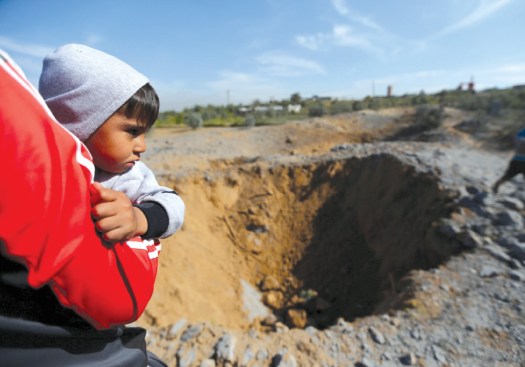
A Palestinian boy is carried as he looks at the scene of an Israeli air strike, south of Gaza City, March 2018. (photo: Ibraheem Abu Mustafa / Reuters)

There are multiple players influencing life in Gaza, but the humanitarian situation there is largely the result of Israel’s restrictive access policy.

By Tania Hary | Jerusalem Post | Mar 21, 2018


Travel permit requests go unanswered for months, even for those seeking urgent medical care or to visit ailing relatives. Hundreds of traders have been blocked and slapped with travel bans that curtail their ability to do business. Absurd new restrictions were introduced, preventing students and aid workers from traveling with laptops.


Over the past few months, many unlikely characters seem to have started to care that Gaza is facing a humanitarian crisis. Except it is not exactly compassion for the people facing the crisis driving the discourse as much as a warning call about the dangers lurking in their desperation.

Israel’s chief of staff, decorated generals, and even its decidedly not-dovish education minister, Naftali Bennett, have said that when Gaza suffers, Israelis are endangered. America is also concerned. In a “brainstorming session” held at the White House last Tuesday with representatives of the international community, US President Donald Trump stated that the worsening conditions in Gaza “require immediate attention.” If it weren’t so tragic, it might be comical considering that these are the same characters pulling the strings and deciding Gaza’s fate.

Continue reading “Israel’s role is missing from the conversation on Gaza”

450 elderly immigrants will be displaced by US embassy move to Jerusalem

9551056-3x2-700x467
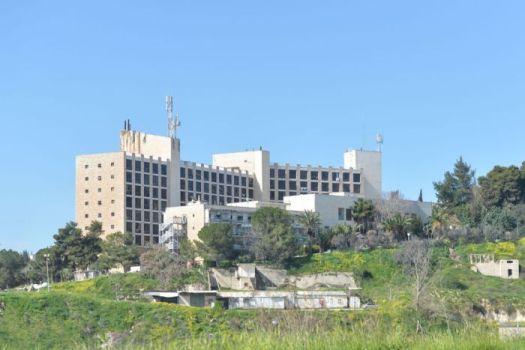
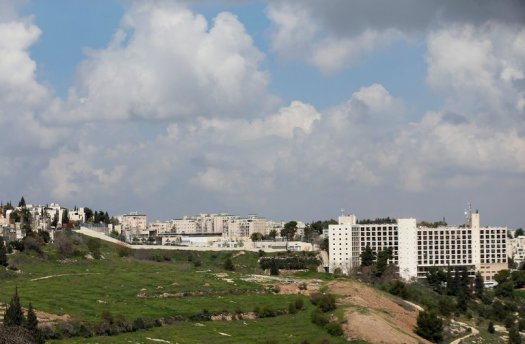
The former Diplomat Hotel, now part of the United States consular compound in Arnona area of Jerusalem, is built on disputed territory. (photo: Artur Widak / NurPhoto via Getty Images)

The US Embassy move to Jerusalem will cause 450 elderly immigrants to lose their homes, and the Knesset doesn’t have a solution yet.

By Avichai Scher | Forward | Mar 21, 2018


“There are only two years left to create a practical and fair solution, and today we hear again from the Ministry of Immigration that they still have no solutions. . . . We have lost too much time, but we will not wait any longer. The issue of Diplomat Hotel and its tenants must be solved immediately.”
— Ksenia Svetlova, Zionist Union member of Knesset


The Diplomat Hotel, which is owned by the US and is located next door to the Jerusalem consulate that will become the embassy in 2020, is being leased as housing for elderly immigrants. But the building is slated to become part of the embassy, forcing the residents to find other housing.

At a heated discussion at the Immigration, Absorption and Diaspora Affairs Committee on Monday, Ksenia Svetlova of the left-wing Zionist Union blasted the committee for not moving quickly enough to find a solution for the residents.

Continue reading “450 elderly immigrants will be displaced by US embassy move to Jerusalem”

Facebook shuts down Palestinian news site

415285
(photo: Dado Ruvic / Reuters)

The Israeli Justice Ministry has asked Facebook to disable 12,351 Palestinian accounts.

By Adam Rasgon | The Jerusalem Post | Mar 25, 2018


“While Facebook is taking action against Palestinian content, it is not even paying attention to inciting posts by Israelis.”
— Iyad Rifai, coordinator of Sada Social, an NGO documenting Facebook’s actions against Palestinian accounts


Over the weekend, Facebook disabled the account of Safa, a Gaza-based Palestinian news site; it had almost 1.3 million followers.

Safa is widely seen as sympathetic to Hamas, but an employee at the news site said in a phone call that the media outlet is “independent” and “has no relationship with Hamas.”

Facebook disabled Safa’s account, along with the accounts of 10 Safa editors, just after 5 pm on Saturday, without issuing a warning or providing an explanation, a manager of Safa’s social media team told The Jerusalem Post.

“We were totally surprised,” said the social media manager, who asked not to be named. “We are now working to restore the account because 60% of [the] website’s traffic comes through Facebook.”

Continue reading “Facebook shuts down Palestinian news site”