UN Human Rights Council set to condemn ‘occupation’ of Golan

U.N. Human Rights Council set to condemn ‘occupation’ of Golan
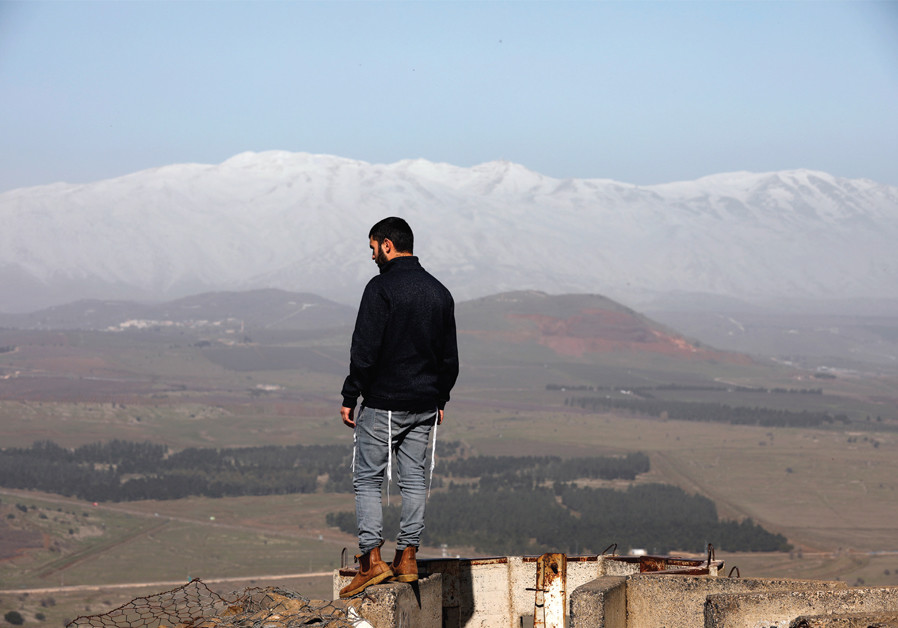
A man stands at Mount Bental, an observation post on the Golan Heights that overlooks the Syrian side of the Quneitra crossing, on January 21. (photo credit: Reuters)
As UNHRC considers condemning Israel’s occupation of the Golan Heights, Netanyahu pushes the US for recognition of annexation.

By Tovah Lazaroff  | The Jerusalem Post | Mar 14, 2019

The US wants to exonerate Israel from its indisputable human rights violations, while deliberately attempting to depict the racist policies and attitudes of the Israeli government as benign, despite the fact that they deny the Palestinian people’s humanity, nationality and narrative.
—PLO Executive Committee member Hanan Ashrawi

The United Nations Human Rights Council is set to condemn Israel’s “occupation” of the Golan Heights next week in Geneva as it wraps up its month-long 40th session.

The resolution was submitted by Pakistan on behalf of the Organization of Islamic Cooperation. It recalled UN Security Council Resolution 497 from 1981, which rejected Israel’s annexation of the Golan.

Israel’s decision “to impose its laws, jurisdiction and administration on the occupied Syrian Golan was null and void and without international legal effect,” and the 1981 resolution “demanded that Israel rescind forthwith its decision,” the new resolution states.

It is one of five anti-Israel resolutions the UNHRC is set to debate on Monday and will vote on toward the end of the week.

The council annually condemns Israel’s annexation of the Golan, which it captured from Syria in 1967 during the Six Day War.
Continue reading “UN Human Rights Council set to condemn ‘occupation’ of Golan”

Palestine solidarity work is most effective when done within an anti-racist framework

Rep. Ilhan Omar (D-MN). (Photo: Ilhan Omar for Congress/Facebook)
Rep. Ilhan Omar (D-MN). (photo: Ilhan Omar for Congress / Facebook)
Palestine solidarity work will be most effective when done within an anti-racist, anti-white supremacist framework.

By Alice Rothchild | Mondoweiss | Mar 12, 2019

This struggle is not about Israel as a Jewish state, but about how Israel behaves as a state in the community of nations.

The recent fury and attacks on Ilhan Omar and her forthright statements exposing and criticizing the role of the Israel lobby and the Congressional requirement of allegiance to the policies of the state of Israel come at time when issues of political framing are roiling Jewish and progressive communities. It is becoming increasingly clear at this political moment that there are major generational divisions within the Democratic Party and within the general population. More people are also willing to say out loud that antisemitism is very different from critical thinking about the continued rightward plunge of Israeli politics.  For me this further clarifies my understanding that working on Israel/Palestine and doing Palestine solidarity work is most effectively accomplished within an anti-racist, anti-white supremacist framework.

So how did that strategic awareness happen for me? I came from a traditional Jewish family where our love of Israel was as uncomplicated as lighting candles on Shabbat or our pride in our roots in the tenements and sweat shops of the Lower East Side of New York. It wasn’t until the 1990s that I began to face the contradictions between my adult political self, working on issues of women’s rights, civil rights, health care justice, and my growing discomfort with Israel. At first I understood that this debate was really only of interest to Jews and Palestinians, although I quickly expanded that to some of the progressive Christian community. For us, the problem started in 1967 and our work was ending the occupation and supporting the radical notion of a two-state solution.

Continue reading “Palestine solidarity work is most effective when done within an anti-racist framework”

Anti-Semitism versus legitimate criticism of the state of Israel

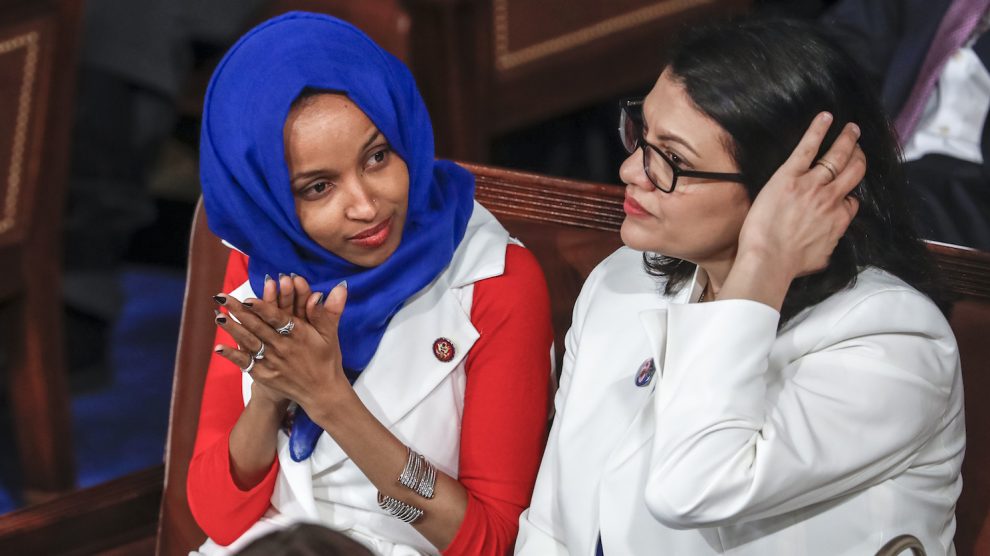
Rep. Ilhan Omar, D-Minn., left, joined at right by Rep. Rashida Tlaib, D-Mich., listens to President Trump’s State of the Union speech at the Capitol in Washington Feb 5, 2019 (photo: AP / J. Scott Applewhite)

Calling for fair treatment of Palestinians does not constitute anti-Semitism.

By  Mae Elise Cannon | Religion News Service | Mar 7, 2019

While we seek and advocate for justice for Palestinians, we must also acknowledge the rootedness of anti-Semitism in Christian history, and its remnants in some of today’s Christian rhetoric.

The question of what constitutes legitimate critique of Israel as opposed to anti-Semitism is front and center in the conversation about Israel in the U.S. following the outcry regarding Rep. Ilhan Omar’s tweets about the American Israel Public Affairs Committee and the impending anti-Semitism resolution in the House.

In light of debates on Capitol Hill about what defines anti-Semitism and recent increased incidents of hatred toward Jews, it is particularly paramount to weed out and eradicate anti-Semitism, while also distinguishing it from legitimate criticism of Israel.

How does one criticize Israel’s policies without being anti-Semitic?

We need to listen to what the Jewish community says about anti-Semitism. While there are differences of opinion and multiple perspectives, particularly across conservative and liberal divides, commonalities also exist.

Continue reading “Anti-Semitism versus legitimate criticism of the state of Israel”

Debunking the myth that anti-Zionism is antisemitic

Protesters in New York City call for a boycott of Israel in 2016. (photo: Pacific Press / LightRocket via Getty Images)
All over the world, it is an alarming time to be Jewish – but conflating anti-Zionism with Jew-hatred is a tragic mistake.

By Peter Beinart | The Guardian | Mar 7, 2019

I don’t consider Israel an apartheid state. But its ethnic nationalism excludes many of the people under its control.

It is a bewildering and alarming time to be a Jew, both because antisemitism is rising and because so many politicians are responding to it not by protecting Jews but by victimizing Palestinians.

On 16 February, members of France’s yellow vest protest movement hurled antisemitic insults at the distinguished French Jewish philosopher Alain Finkielkraut. On 19 February, swastikas were found on 80 gravestones in Alsace. Two days later, the French president, Emmanuel Macron, after announcing that Europe was “facing a resurgence of antisemitism unseen since World War II”, unveiled new measures to fight it.

Among them was a new official definition of antisemitism. That definition, produced by the International Holocaust Remembrance Alliance in 2016, includes among its “contemporary examples” of antisemitism “denying the Jewish people their right to self-determination”. In other words, anti-Zionism is Jew hatred. In so doing, Macron joined Germany, Britain, the United States and roughly 30 other governments. And like them, he made a tragic mistake.

Continue reading “Debunking the myth that anti-Zionism is antisemitic”

Analysis: There’s a different kind of escalation brewing in the West Bank

A graffiti reading 'enough with the administrative edicts, price tag, revenge' spray-painted on a wall in Palestinian village in the West Bank, 2018
A graffiti reading ‘enough with the administrative edicts, price tag, revenge’ spray-painted on a wall in Palestinian village in the West Bank, 2018. (photo: Israel Police)
The rise of settler violence against Palestinians is likely to continue as the army, the police and Israeli society stand by passively — or even encourage attacks.

By Amira Hass | Haaretz | Mar 6, 2019

Israeli security officials have noted the rise in nationalist crime by Jews against Palestinians.

The noticeable escalation in the West Bank is firstly due to settler violence toward Palestinians. And the assumption among Palestinians must be that this escalation will only continue, as the army and police, as well as Israeli society as a whole, stand by without trying to or succeeding in halting it, in the best case, and supporting and encouraging it, in the other case.

This anxiety can be felt in everyday Palestinian conversations about what the near future might bring, in the choice of travel routes that stay as far from certain settlements as possible and in deciding not to go out to work in the field or to take animals to graze because of the proximity of violent settlements. The expected entry of avowed Kahanists into the Knesset, and with the prime minister’s encouragement yet, shows the breakdown of more barriers in Israeli society against the wish-fulfillment of those who dream of mass expulsion.

Continue reading “Analysis: There’s a different kind of escalation brewing in the West Bank”

Breaking the silence: Inside the Israeli right’s campaign to silence an anti-occupation group

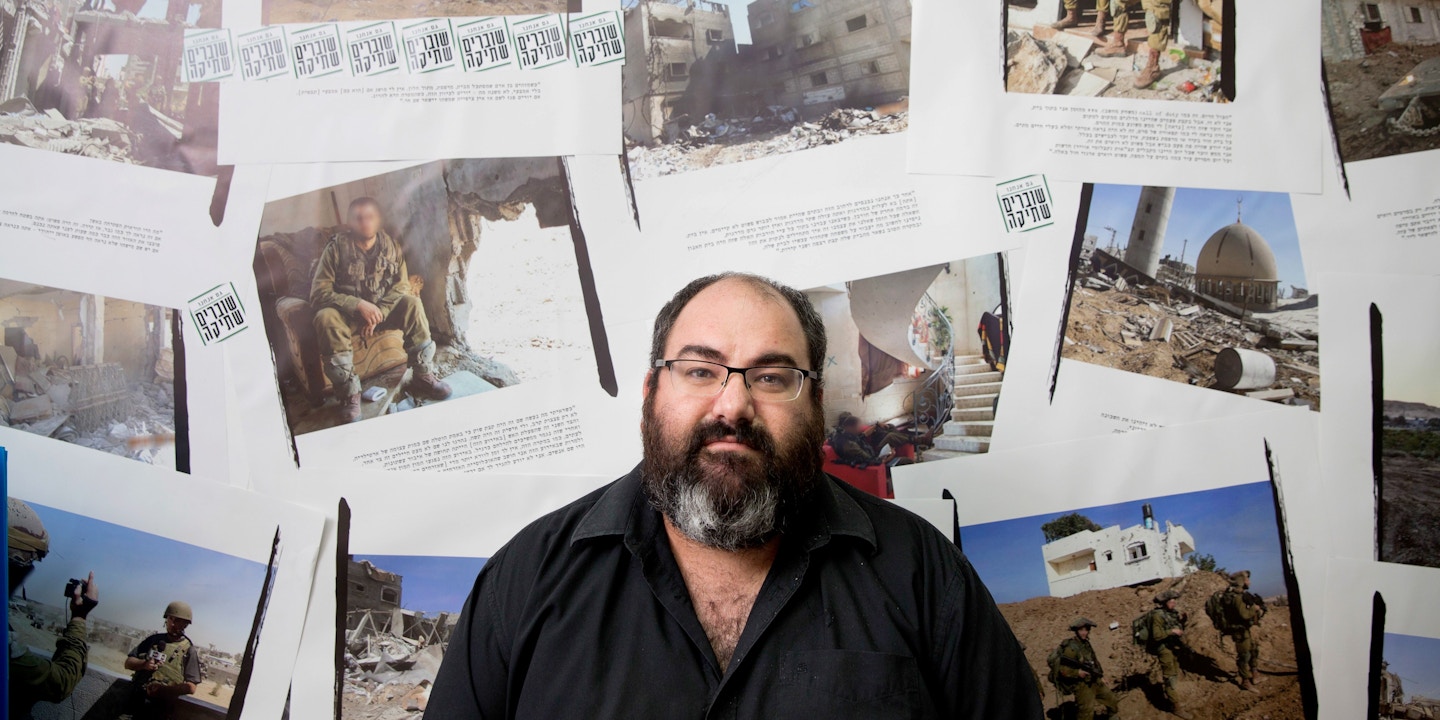
In this photo taken Tuesday, Nov. 21, 2017. Yehuda Shaul, co-founder of
Yehuda Shaul, a co-founder of Breaking the Silence, after a media briefing in Tel Aviv, Israel, on Nov. 21, 2017. (photo: Oded Balilty / AP)
This small organization of Israeli veteran combatants has found themselves at the center of an orchestrated campaign to discredit their anti-occupation and human rights work.

By Mairav Zonszein | The Intercept | Mar 3, 2019

For Breaking the Silence, the discovery of a network of spies was just the tip of the iceberg.

On Jan 12, 2016, Yuli Novak called her staff of a dozen people together in their Tel Aviv offices to reveal the identity of a spy who had infiltrated the organization. At the time, Novak was the executive director of Breaking the Silence, an Israeli anti–occupation group that collects testimonies of Israeli soldiers operating in Palestinian territories. She informed the staff that a man calling himself “Chai” had been secretly videotaping them. Chai had been active with the group for a year and a half, visiting their office on a weekly basis, and had grown close to several staff members.

“The moment I said it, everyone’s first reaction was to look left and right,” Novak told me over iced tea in Jaffa, near Tel Aviv, in July. “The initial feeling was paranoia — everyone thinking to themselves, Who else? People were automatically suspicious. In that moment, you don’t know who is for you and who is against you.” Frima Bubis, who joined Breaking the Silence just before Chai was exposed, remembers the feeling. “Your mind just runs — I even suspected Yuli. It was awful. Everyone scared of the other, but everyone looking to others for support,” Bubis said. “I remember it as a moment of serious trauma of trust. It was a relief that it wasn’t anyone from the staff.”

Continue reading “Breaking the silence: Inside the Israeli right’s campaign to silence an anti-occupation group”

Opinion: The real reason for Netanyahu’s ferocious attacks on Israel’s Arab citizens

Israeli Prime Minister Benjamin Netanyahu after a meeting of the Likud party in Ramat Gan. February 21, 2019
Israeli Prime Minister Benjamin Netanyahu after a meeting of the Likud party in Ramat Gan. Feb 21, 2019. (photo:  AFP)
Netanyahu escalating anti–Arab incitement for political dividends.

By Ron Gerlitz | Haaretz | Feb 25, 2019

What motivates political attacks against Arab citizens is the conviction among right–wing politicians, including the prime minster himself, that incitement and threats buy them more political power with voters and within their own parties.

As Israel prepares for elections on April 9, an ongoing campaign of incitement by the government against the country’s Arabs citizens and their political leaders moves into high gear.

Prime Minister Benjamin Netanyahu has worked mightily to get extreme–right Otzma Yehudit into the next Knesset and boost post–election support for his heading the new government. Wooing an ultra-racist party that channels Meir Kahane in its violent, vitriolic platform targeting Arab citizens and threatening their basic rights – this, Netanyahu views as reasonable political horsetrading, while simultaneously leading the vigorous delegitimization of a blocking majority to his continued rule that would include Arab parties.

Recent dire warnings from Netanyahu accused Benny Gantz and Yair Lapid of harboring dangerous plans: perhaps forming a government reliant on the support of Arab citizens, or even including their representatives in the governing coalition.

Continue reading “Opinion: The real reason for Netanyahu’s ferocious attacks on Israel’s Arab citizens”

Webinar: Palestinian Children in Israeli Military Detention (Tomorrow)

Logo

Please join our brothers and sisters Jewish Voices for Peace Health Advisory Council for an in-depth webinar and discussion on Palestinian children in Israeli detention with Brad Parker from Defense of Children International
Date: Tuesday, Mar 5, 2019
Time: 5:00–6:00 pm, PST
8:00–9:00 pm, EST
Location: Webinar
Information: Event information here →
Tickets: Free
Event Details

Brad Parker will be speaking about the ill-treatment and violations Palestinian child detainees experience; the impact of those violations on children, families, and communities; and then touch on the congressional advocacy work, including drafting and getting HR 4391 introduced in the last Congress as well as current efforts in the 116th Congress.

Brad Parker is a Senior Adviser, Policy and Advocacy, at Defense for Children International – Palestine. He specializes in issues of juvenile justice and grave violations against children during armed conflict, and leads DCIP’s legal advocacy efforts on Palestinian children’s rights. Parker regularly writes and speaks on the situation of Palestinian children, particularly issues involving detention, ill-treatment and torture of child detainees within the Israeli military detention system, and violations of international humanitarian law and international human rights law. He leads DCIP’s US Program and is a co-leader of the No Way to Treat a Child campaign in the United States and Canada. He is a graduate of the University of Vermont and received his JD from the City University of New York School of Law.

More information here →

Webinar: Palestinian Children in Israeli Military Detention (Tue)

Logo

Please join our brothers and sisters Jewish Voices for Peace Health Advisory Council for an in-depth webinar and discussion on Palestinian children in Israeli detention with Brad Parker from Defense of Children International
Date: Tuesday, Mar 5, 2019
Time: 5:00–6:00 pm, PST
8:00–9:00 pm, EST
Location: Webinar
Information: Event information here →
Tickets: Free
Event Details

Brad Parker will be speaking about the ill-treatment and violations Palestinian child detainees experience; the impact of those violations on children, families, and communities; and then touch on the congressional advocacy work, including drafting and getting HR 4391 introduced in the last Congress as well as current efforts in the 116th Congress.

Brad Parker is a Senior Adviser, Policy and Advocacy, at Defense for Children International – Palestine. He specializes in issues of juvenile justice and grave violations against children during armed conflict, and leads DCIP’s legal advocacy efforts on Palestinian children’s rights. Parker regularly writes and speaks on the situation of Palestinian children, particularly issues involving detention, ill-treatment and torture of child detainees within the Israeli military detention system, and violations of international humanitarian law and international human rights law. He leads DCIP’s US Program and is a co-leader of the No Way to Treat a Child campaign in the United States and Canada. He is a graduate of the University of Vermont and received his JD from the City University of New York School of Law.

More information here →

Progressives must stop weaponizing charges of anti-Semitism against critics of Israel

Rep. Ilhan Omar, an outspoken and successful American Muslim Black woman, embodies the very threat to patriarchal white supremacy and colonialism that many in power find so disturbing. (Photo: Lorie Shaull/Flickr/cc)
Rep. Ilhan Omar, an outspoken and successful American Muslim Black woman, embodies the very threat to patriarchal white supremacy and colonialism that many in power find so disturbing. (photo: Lorie Shaull / Flickr)
Pitting marginalized groups against each other poses a real threat to Jews, Muslims, and Blacks alike in our country.

Jordan Goldwarg, Aneelah Afzali | Common Dreams | Feb 27, 2019

It is important to ask why marginalized community members are the main targets of outrage, and who benefits when marginalized groups are pitted against each other.

As an American Jew and an American Muslim, we find the cycle of attacks on Congresswoman Ilhan Omar, Congresswoman Rashida Tlaib, Dr. Marc Lamont Hill, Tamika Mallory, Linda Sarsour, Angela Davis, and others deeply troubling. These attacks reflect a weaponization of the “anti-Semitism” charge against certain individuals (especially Muslim and/or Black leaders supporting Palestinian human rights), which turns progressive allies against each other and ignores the real source of physical threat to our Jewish (and Muslim and Black) siblings.

There is no doubt that anti-Semitism is alive and well. The FBI reported a 37% increase in anti-Semitic crimes from 2016 to 2017 (the most recent year for which data is available). Islamophobia has also increased sharply in recent years, as we face some of the highest levels of anti-Muslim hate crimes in our nation’s history along with hateful rhetoric and policies from the highest levels of our government (such as the Muslim Ban). And Black Americans are still victims of hate crimes more than any other group in our country, with a 16% increase from 2016 to 2017.

Continue reading “Progressives must stop weaponizing charges of anti-Semitism against critics of Israel”