‘The settlers brought caravans and put them on a hill next to us’

WhatsApp-Image-2021-04-06-at-11.05.01-AM-1000x668
A new outpost in the South Hebron Hills, March 2021. (photo: Basil al-Adraa)
Israel makes it easy for settlers to take over our land. Meanwhile, Palestinians who’ve lived here for generations are attacked and evicted.

By Basil al-Adraa | +972 Magazine | Apr 9, 2021

This is how it happens. Settlers bring in caravans and take over land with ease. Before they even move in, they have their own paved road and are connected to electricity and water, with the support of the regional council.

Last Monday night, I received a phone call from a friend. “Two large trucks just passed me,” he said. “They were carrying caravans. They just passed right by the road under your home.”

I live in a Palestinian community called A-Tawani in the South Hebron Hills. After my friend called me, I immediately got into my car to look for the trucks. I drove until I found them, and began following them, wanting to understand what was going on.

Continue reading “‘The settlers brought caravans and put them on a hill next to us’”
The tormented dance of the colonizer: Peter Beinart, liberal Zionism and the battle for Palestine

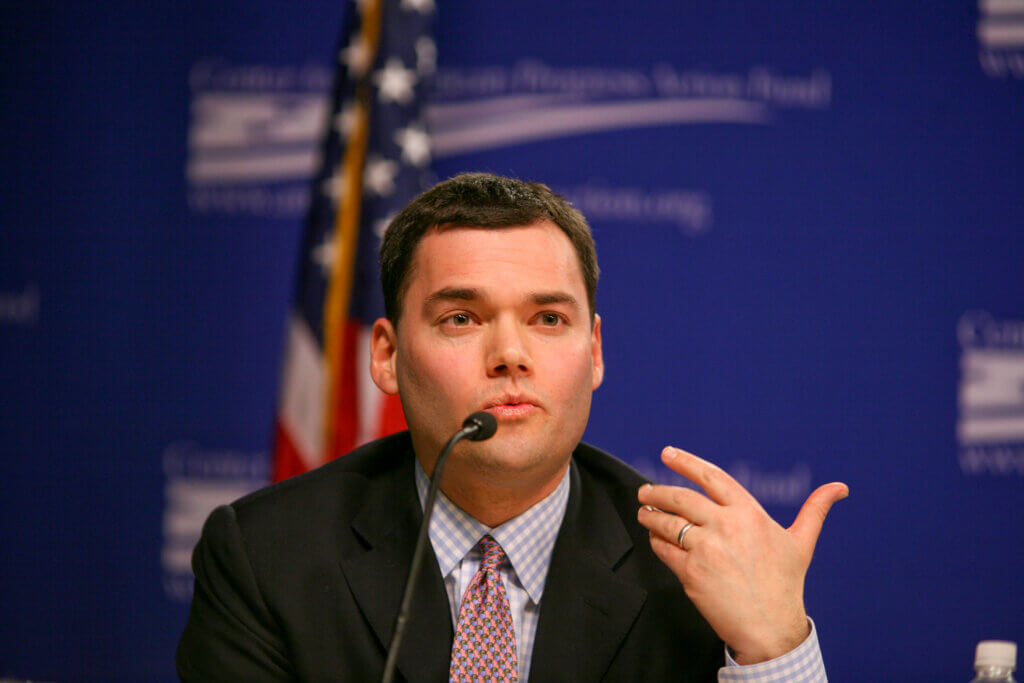
Peter Beinart speaking at an event hosted by the Center for American Progress on February 3, 2009. (photo: The Center for American Progress / Flickr)
Peter Beinart’s call for equality seeks to reform Israel as a Jewish project instead of repudiating its system of racial supremacy, placing Jewish identity above Palestinian rights.

By Mark Braverman | Mondoweiss | Apr 6, 2021

Today, with the possibility of a Palestinian state foreclosed by successive waves of colonization and annexation, Beinart has turned to unification as the answer.

Earlier this year Jerusalem-based journalist and analyst Nathan Thrall called out the Zionist left for promoting the fiction that as long as Israel refrains from annexing occupied Palestinian land, it does not cross the line into apartheid. The essay, “The Separate Regimes Delusion: Nathan Thrall on Israel’s Apartheid,” was published by the London Review of Books on January 21, 2021. “The premise that Israel is a democracy,” he wrote, “rests on the belief that one can separate the pre-1967 state from the rest of the territory under its control.” The “separate regimes delusion” has been a key component of the almost five-decades long political theater of the peace process to establish a Palestinian state in the West Bank and Gaza. As Israel has continued to take land and impose a system of control and fragmentation that has made the creation of a sovereign Palestinian state impossible, liberal Zionists have clung desperately to the fiction of the two-state solution as all that stands in the way of the now undeniable reality that Israel and its occupied territories comprise a single apartheid state. Accordingly, a storm of protest erupted in response to the government’s espoused intent to annex 30% of the West Bank in early summer 2020. It was in the midst of this controversy that Peter Beinart’s “Yavne: A Jewish Case for Equality in Israel-Palestine” appeared on July 7, 2020 in Jewish Currents. Cutting the Gordian knot of a Jewish and democratic Israel, Beinart endorsed the idea of a single state for Jews and Palestinians.

Continue reading “The tormented dance of the colonizer: Peter Beinart, liberal Zionism and the battle for Palestine”

Blinken tells Israel: Palestinians should enjoy same rights, freedoms as you do

US-DIPLOMACY-RIGHTS-BLINKEN
US Secretary of State Antony Blinken speaks during the release of the “2020 Country Reports on Human Rights Practices,” at the State Department in Washington, DC on March 30, 2021. (photo: Mandel Ngan / Pool / AFP)
US secretary of state to Foreign Minister Ashkenazi: ‘Israelis and Palestinians should enjoy equal measures of freedom, security, prosperity and democracy’

By AFP and TOI Staff | The Times of Israel |  Apr 3, 2021

“We believe when it comes to settlement activity that Israel should refrain from unilateral steps that exacerbate tensions and that undercut efforts to advance a negotiated two-state solution,”
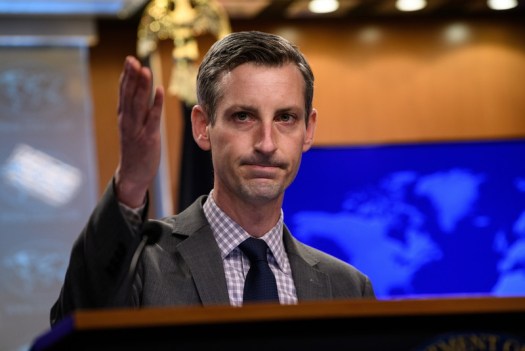
— Ned Price, State Department spokesman 

US Secretary of State Antony Blinken called Friday on Israel to ensure “equal” treatment of the Palestinians as the new US administration cautiously steps up efforts for a two-state solution.

In a telephone call with Foreign Minister Gabi Ashkenazi, Blinken “emphasized the administration’s belief that Israelis and Palestinians should enjoy equal measures of freedom, security, prosperity and democracy,” State Department spokesman Ned Price said.

Continue reading “Blinken tells Israel: Palestinians should enjoy same rights, freedoms as you do”

State Department buries Israeli occupation in word salad

020421-ned-price
Spokesperson Ned Price attempted this week to clarify the State Department’s muddled language on the Israeli occupation. (photo: Reuters)
Biden continues to stay disturbingly close to Trump.

By Michael Brown |  The Electronic Intifada | Apr 2, 2021

Recognizing the reality of occupation, moreover, means recognizing that Israel has no sovereignty over these territories and that the Palestinians living in them enjoy essential international protections, including the Fourth Geneva Convention.

Last year, presidential candidate Joe Biden personally intervened to keep the word “occupation” out of the Democratic Party’s platform regarding Israel.

In doing so, he infuriated a portion of the party’s base – a group Biden and his advisers presumably figured would dislike President Donald Trump and his anti-Palestinian policies even more than they might have disliked Biden.

Now the Biden administration is trying to thread the needle on the Israeli occupation of Palestinian land and Syria’s Golan Heights with the State Department’s latest annual human rights report.

It is titled: “2020 Country Reports on Human Rights Practices: Israel, West Bank and Gaza.”

Continue reading “State Department buries Israeli occupation in word salad”

Why I signed the Jerusalem Declaration on Antisemitism

IHRA-1536x1066
(photo: Mark Kerrison / Alamy Live News
The damage done by the IHRA definition of antisemitism is profound.

By Barry Trachtenberg | Jewish Currents | Mar 26, 2021

Although I remain apprehensive about inadvertently reinforcing beliefs in Jewish exceptionalism, the widespread adoption and abuse of the flawed IHRA definition has convinced me that it needs outright replacement

In the fall of 2017, in my capacity as a scholar of Jewish history, I advised the US House Judiciary Committee to reject codifying into law definitions of antisemitism such as those that were contained in the “Anti-Semitism Awareness Act,” which was then under consideration by Congress. I objected to the language of the bill, which was based on the definition of antisemitism adopted by the International Holocaust Remembrance Alliance (IHRA)—a definition that equates valid criticism of Israel and Zionism with antisemitism and has thus become a tool for the suppression of protected speech. But I was also concerned with the possibility that the legislation would inadvertently reinforce perceptions of Jewish exceptionalism: By claiming that there was a need for a set of standards that was distinct from existing civil rights legislation and which defined what could and couldn’t be said about Jews, I argued, Congress not only risked putting unconstitutional limits on free speech, but also risked reinforcing the idea that Jews are a people for whom special rules need to be made. I testified that at the core of anti-Jewish hatred rests the belief that Jews are exceptionally unique in the world, and that by making legislation that was focused exclusively on antisemitism rather than religious, racial, and ethnic hatred more broadly, Congress would be singling out Jews in a way that would run contrary to the stated goals of the legislation.

Continue reading “Why I signed the Jerusalem Declaration on Antisemitism”

‘We will not be silenced, siloed, or stopped’: federal judge tosses lawsuit targeting Palestinian rights group

CoUoSpSWgAAYAmS-580x387
(photo: US Campaign for Palestinian Rights)
A federal judge has dismissed a Jewish National Fund lawsuit that targeted the US Campaign for Palestinian Rights for alleged terror connections over its support for BDS.

By Michael Arria | Mondoweiss] | Mar 30, 2021

Lawsuits like this one are frequently implemented by pro-Israel groups in an attempt to bog down Palestinian organizations and stifle support for movements like BDS.

A federal judge has dismissed a lawsuit that targeted a Palestinian rights organization for alleged terror connections.

In 2019 the Jewish National Fund (JNF), and 12 American citizens living in Israel, sued the US Campaign for Palestinian Rights (USCPR) for $90 million. The lawsuit alleged that USCPR had funneled money to Boycott National Committee (BNC), which was then used for terrorist activities. The USCPR was represented by attorneys at the Center for Constitutional Rights (CCR).

Continue reading “‘We will not be silenced, siloed, or stopped’: federal judge tosses lawsuit targeting Palestinian rights group”

Gaza enters second coronavirus wave, with 25% of tests coming back positive

.
A medical worker of UNRWA gives a shot of the Sputnik V Covid-19 vaccine at UNRWA’s clinic in the Rafah, in the southern Gaza, on March 3, 2021. (photo: Abed Rahim Khatib / Flash90)
For weeks, the coastal enclave enjoyed a lull, even as as a surge in infections shook the West Bank. But with thousands of new cases, a new wave is officially here

By Aaron Boxerman | The Times of Israel | Mar 29, 2021

“We’re in a new wave. The virus curve is rising by the day. We expect the rate of positive tests to also continue to rise,”
— Dr. Aed Yaghi, Gaza branch of the Palestinian Medical Relief Society

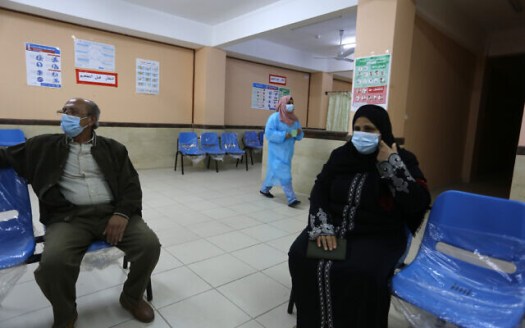
With cases spiking, the Gaza Strip has entered a second wave of the coronavirus pandemic, health officials in the coastal enclave told The Times of Israel on Monday.

Gaza saw 891 new coronavirus cases in 24 hours, the Gaza Health Ministry reported on Monday. The total number of active infections nearly tripled over the past two weeks, from 2,291 to 6,619.

The daily rate of positive tests in Gaza has skyrocketed to 25 percent over the past 24 hours, according to Hamas health officials. The high positivity rate indicates that the virus is likely spreading widely undetected.

Continue reading “Gaza enters second coronavirus wave, with 25% of tests coming back positive”

We need a better definition of anti-Semitism

b5d11286-d5b6-49d3-bf7a-1b0f273afcd8
People visit the Yad Vashem museum on Jan. 27, 2019, in Jerusalem. (photo: Ilia Yefimovich / Getty Images)
A popular working definition adopted by the U.S. government is overly broad and politicized.

By Joshua Shanes and Dov Waxman | Slate | Mar 26, 2021

Scholars, students, activists, and even artists have been branded anti-Semites (even when they are Jewish) for opposing Zionism, advocating for a Palestinian right of return, or promoting the Boycott, Divestment, and Sanctions campaign against Israel.

During a period when far-right, white nationalist, and anti-Semitic extremists have been parading and brawling on the streets of American cities, storming and looting the U.S. Capitol, and even murdering Jews in their places of worship, debating the definition of anti-Semitism might seem to be a trivial and pedantic academic exercise. Yet it has become a hotly contested, politically controversial issue, not only in the United States, but also in other Western democracies, including Germany and the United Kingdom.

Continue reading “We need a better definition of anti-Semitism”

Palestinian advocacy is not ‘terrorism’

Samidoun-1024x768
Activists with Samidoun Deutschland protest in Germany on March 18, 2021. (photo: Samidoun/Twitter) 
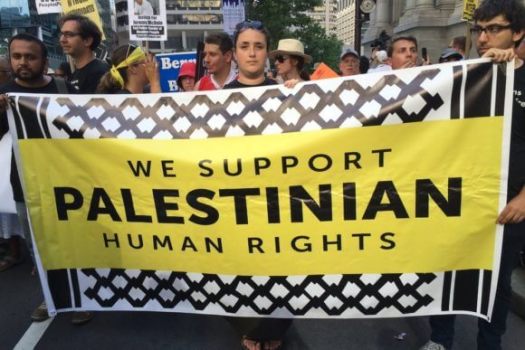
This statement was issued on March 22, 2021 by the Canada Palestine Association and BDS Vancouver-Coast Salish.  It highlights the efforts to silence Palestinian advocacy groups.

By BDS Vancouver-Coast Salish | Mondoweiss | Mar 23, 2021

There are no concrete charges against Samidoun, simply that it helps Palestinian prisoners and is involved in “anti-Israel propaganda efforts.”

On February 28, 2021, Israel’s Defense Minister Benny Gantz declared that he was adding the Samidoun Palestinian Prisoner Solidarity Network to Israel’s “terror list.” The designation was based on accusations that are both spurious and false. There has been a recent upsurge in the campaign by the Israeli government to thwart effective Palestinian civil society groups that refuse to be silenced or sanitized.

There are no concrete charges against Samidoun, simply that it helps Palestinian prisoners and is involved in “anti-Israel propaganda efforts.” Samidoun operates as a public and transparent prisoner advocacy group; it is independent and has no organizational connection or affiliation with any Palestinian party.

Continue reading “Palestinian advocacy is not ‘terrorism’”

A Day in the Life of Abed Salama

M3C7129-2-BW-photo-of-Abed
Abed Salama, West Bank, March 2021 
One man’s quest to find his son lays bare the reality of Palestinian life under Israeli rule. This piece in NY Review of Books describes the experience of one Palestinian father after a deadly road crash in the West Bank in 2012, in which a school bus carrying Salama’s son collided with a large truck on its way to an Israeli-owned quarry.  This piece explores the long history of how the West Bank came to be first occupied and then widely settled by Israel, creating the conditions that led to this particular human tragedy.  This article is free to view through April 4.

By Nathan Thrall | New York Review of Books | Mar 19, 2021

On the day before the accident, Milad Salama could hardly contain his excitement for the kindergarten class trip. “Baba,” he said, addressing his father, Abed, “I want to buy food for the picnic tomorrow.” Abed took his five-and-a-half-year-old son to a nearby convenience store, buying him a bottle of the Israeli orange drink Tapuzina, a tube of Pringles, and a chocolate Kinder Egg, his favorite dessert.

Early the next morning, Milad’s mother, Haifa, helped her fair-skinned, sandy-haired boy into his school uniform: gray pants, a white-collared shirt, and a gray sweater bearing the emblem of his private elementary school, Nour al-Houda, or “light of guidance.” Milad’s nine-year-old brother, Adam, old enough to walk to school on his own, had already left. Milad hurried to finish his breakfast, gathered his lunch and picnic treats, and rushed out to board the school bus. Abed was still in bed.

Continue reading “A Day in the Life of Abed Salama”