“The Stones Cry Out” Solidarity Delegation — February 27 to March 7, 2024

Dear friends,

In these dire days, our Palestinian siblings are crying out to us, urging us to stand in solidarity with them in Palestine, to witness and demonstrate to the world that they are not alone in their struggle for justice. And so we respond boldly, with courage, and in faith.

“The Stones Cry Out” Solidarity Delegation has three actions:

1) Delegation to Palestine — February 27 to March 3
Palestinians are urging us to come and stand with them. A delegation comprised of U.S. church leaders, lay leaders, and representatives from organizations devoted to Palestine will meet with Palestinian religious, political, and NGO leaders in Bethlehem from February 27 to March 3. Visits and meetings will be planned by Kairos Palestine and the Global Kairos for Justice Coalition in Bethlehem, in coordination with the delegation’s organizers. On Sunday, March 3, we will worship with our Palestinian siblings and hope to offer a worship experience that can be shared with congregations at home. Delegation participants are asked to make their own travel arrangements and to arrive in Bethlehem on Tuesday, February 27. Detailed schedules and costs for meetings, in-country transportation, meals, and more are forthcoming.

2) Delegation to D.C. — March 5 & 6
We must speak directly to the U.S. government, which is not only complicit but actively funding Israel’s genocide. We will meet in D.C. with allies from area organizations who are preparing for meetings and actions. Drawing on the power of our having just returned from Palestine, we plan to garner widespread media attention. Those who aren’t able to make the trip to Palestine are welcome to join us in D.C.

3) Action Across the U.S. — March 6
It is important that we publicly demonstrate nationwide support for the urgency of a ceasefire and immediate relief for the people of Gaza, and a sustainable solution that ensures justice for the Palestinian people. We are inviting denominational Palestine-Israel committees (PINs), churches, justice organizations, and individuals across the U.S. to plan actions, including demonstrations, prayer or worship events, and educational events, on Wednesday, March 6, in coordination with our actions in D.C.

Friends, we realize the time is short. But we must answer our Palestinian siblings’ urgent plea. Please share this invitation widely with your network. For complete information about the delegation and to reserve your spot, please contact Michael Spath at Lmichaelspath@gmail.com.

On behalf of the delegation’s sponsors, planning committee, and especially our Palestinian partners,

Michael Spath, Mark Braverman, Doug Thorpe, Don Wagner, & Wendell Griffen

How Israel’s Democratic Crisis Affects Palestinians

Chotiner-Raja-Shehadeh.jpg
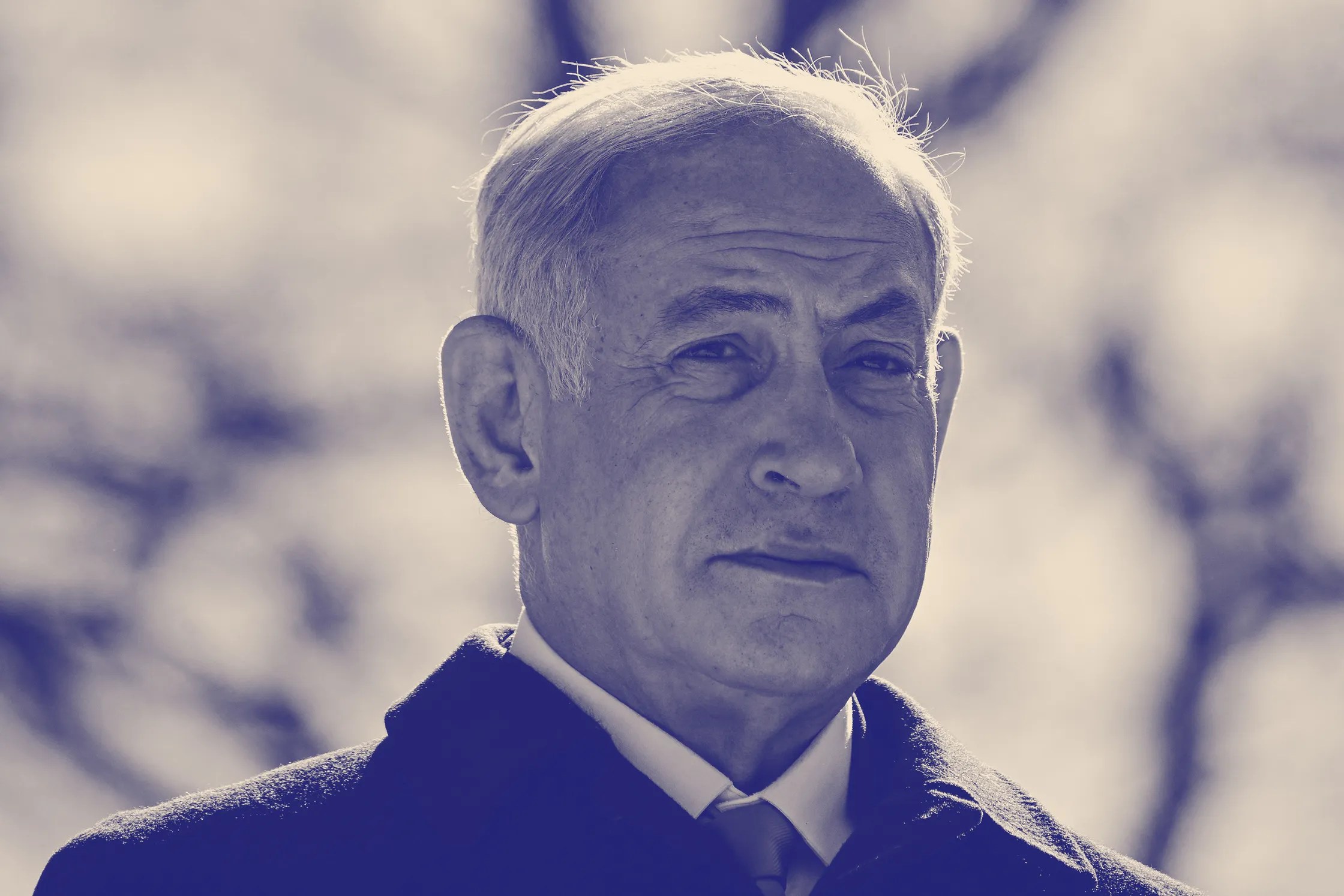
The attack of Benjamin Netanyahu’s government on Israel’s High Court “has to do with the role of the High Court, to some extent, in the occupied territories,” the Palestinian lawyer Raja Shehadeh says.Photograph by Tobias Schwarz / AFP / Getty

Could the widespread protests against Netanyahu’s judicial overhaul change the status quo in the West Bank?

By Isaac Chotiner | New Yorker | August 15, 2023

In January, shortly after Benjamin Netanyahu swore in Israel’s new government, I spoke by phone with Raja Shehadeh, the Palestinian lawyer and activist who co-founded the human-rights organization Al-Haq. Shehadeh was concerned about many of the extremists who had joined Netanyahu’s coalition, but he also predicted that the government’s impact was likely to register more strongly among Israelis than Palestinians, who have been living under occupation for decades. Netanyahu has now overseen parts of a judicial overhaul that opponents characterize as a profound threat to Israeli democracy, as well as an expansion of Israeli settlements. There has also been an increase in violence by settlers, which—combined with the actions of Israeli security forces—has resulted in the deaths of more than a hundred and fifty Palestinians; Palestinian attacks on Israelis have caused more than twenty deaths. Amid this increase in violence, the Palestinian Authority has struggled to maintain order in the West Bank.

Shehadeh and I spoke again recently about what the most right-wing government in Israel’s history has meant for Palestinians, whether the protests in Israel against the Netanyahu government could expand to address the occupation, and Shehadeh’s despair over the impossible choices facing the Palestinian people. Our conversation, edited and condensed for clarity, is below.

Continue reading “How Israel’s Democratic Crisis Affects Palestinians”

I Wish I Was Wrong

Credit: Amir Levy / Getty

By Jonathan Kuttab | FOSNA website | June 6, 2023

The current crisis within Zionism and the Israeli state is merely the logical extension of long-held policies and that it is impossible for the result to have been other than what we are witnessing today.

When the current right-wing Israeli government was formed, I wrote that this was predictable, inevitable, and irreversible. I wish I was wrong.

What I meant by this is that the current crisis within Zionism and the Israeli state is merely the logical extension of long-held policies and that it is impossible for the result to have been other than what we are witnessing today. I also predicted that Israel had embarked on a path that necessarily resulted in it being more openly racist, discriminatory, fascist, and brutal, and that there is no way for that not to have happened. The current situation is not an aberration but simply a logical extension, and there is no way to return somehow to a gentler, kinder Israel that is both “Jewish and democratic.” There has never been such an Israel in the experience of Palestinians. All that happened is that the mask has been removed.  The current government no longer feels the need or even has the ability to hide reality. In fact, every week brings us new actions and legislation that both reveal and openly promote such bigotry and fascism. Once the mask has been removed, it can no longer be worn again.

The latest legislation to be proposed speaks clearly of the desire to permit larger and larger communities the ability to openly exclude Arabs, including Israeli citizens, from living in Jewish communities. The law speaks openly of “judaizing the Galilee, the Negev, and Judea and Samaria,” making it abundantly clear that apartheid is practiced not only within the Occupied Territories, where different systems and laws apply to Arabs and Jewish settlers, but also within the boundaries of “Israel proper.” One minister in the new government linked this to the need to appoint new judges “who know that Jews do not want Arabs to live next to them and in their communities.”

Continue reading “I Wish I Was Wrong”

St. Mark’s Mideast Focus Ministry presents


Please join this Saturday afternoon conversation about the current situation in Israel-Palestine.  Speakers will be Miko Peled, Israeli-American activist for justice and author of The General’s Son: Journal of an Israeli in Palestine, and Maya Garner, advocate for justice in Palestine and founder of Friends of Hebron, an American non-profit working with peace and justice advocates in the West Bank.
       
  Date: Saturday, May 20, 2023  
  Time: 2:00 PM  
  Location: Bloedel Hall at St. Mark’s Cathedral  & On-line  
  Information:

No need to register for in-person participation;
to participate online join using this Zoom link.

 
  Tickets: Free  
Event Details

Following the conversation, Peled will sign copies of the new Tenth Anniversary Edition of The General’s Son, and the Saint Mark’s Mideast Focus Ministry will officially open the collection of resources now housed in the Bloedel “Center Stage” meeting room.

Hosted by Amnesty International: Campaign for Palestinian Human Rights [Pacific NW]; co-sponsored by Saint Mark’s Mideast Focus Ministry, The Bishop’s Committee for Justice & Peace in the Holy Land of the Diocese of Olympia, and Kairos Puget Sound Coalition.

Bringing Assistance to Israel in Line With Rights and U.S. Laws

Screen Shot 2023-04-19 at 4.13.21 PM
Credit: Carnegie Endowment for International Peace / Getty

Ensuring that Israel, the largest recipient of U.S. security assistance, complies with federal laws and international human rights standards will require closely tracking and monitoring its weapons use.

By Josh Ruebner, Salih Booker, Zaha Hassan | Carnegie Endowment for International Peace | May 12, 2021

Through FY2020, the United States has provided Israel with $146 billion in military, economic, and missile defense funding. Adjusted for inflation, this amount is equivalent to $236 billion in 2018 dollars, making Israel the largest cumulative recipient of U.S. assistance since World War II.

After many years of increasing U.S. military aid to Israel, members of Congress are beginning to debate the wisdom and morality of writing a blank check for weapons—some of which are used against Palestinians living under military occupation in the West Bank and Gaza Strip in violation of U.S. laws.

A recent exchange between legislators shows the evolving debate. Congresswoman Betty McCollum introduced a bill on April 15—currently co-sponsored by seventeen representatives—to ensure that U.S. funding is not used for Israel’s ill-treatment of Palestinian children in its military judicial system, forced displacement of Palestinians through home demolitions and evictions, and illegal annexations of Palestinian land. In response, Congressman Ted Deutch produced a letter on April 22, signed by more than 300 representatives, arguing against “reducing funding or adding conditions on security assistance”—which essentially means disregarding Israel’s egregious policies and violations of existing U.S. laws aimed at protecting human rights. The fact that a bill restricting aid to Israel drew seventeen sponsors to date and a letter defending that aid was signed by three-quarters of members—as opposed to all of them—shows that the debate is slowly shifting.

Continue reading “Bringing Assistance to Israel in Line With Rights and U.S. Laws”

The sad truth behind Israeli ‘happiness’

F190508HP63-1000x668
People wear Israeli flags as they take part in celebrations marking Israel’s 71st Independence Day in Jerusalem, May 8, 2019. (credit: Hadas Parush/Flash90)
How can a country that administers constant violence and suffers deep inequalities be ranked the fourth happiest in the world?

By Asaf Calderon | +972 Magazine |  Apr 17, 2023

That there is a huge discrepancy between Israeli citizens and occupied Palestinians is no surprise…

Here’s a strange headline: in the 2023 World Happiness Report, Israel is ranked the fourth happiest country on the planet. We are bested only by the Finns, Danes, and Icelanders, and leave the Dutch, Swedes, and Norwegians in the dust. It is an impressive result at any time, and all the more so while hundreds of thousands of Israelis are on the streets showing just how unhappy they are with their current far-right government.

On the surface, it is remarkable that a country whose citizens are constantly exposed to (and administering) violence, suffering from deep economic and racial inequalities, and facing unprecedented instability — a country recently declared by its own president to be “at the edge of the abyss” — made it even into the top half of the list. So how do we explain this?

Continue reading “The sad truth behind Israeli ‘happiness’”

Shrinking the Conflict: Debunking Israel’s New Strategy

Protest against Israeli settlements in the village of Beit Dajan in Nablus, Palestine - 25 Nov 2022
November 25, 2022, Nablus, West Bank, Palestine: A Palestinian protester holding a flag argues with the Israeli soldier during the demonstration against Israeli settlements in the village of Beit Dajan near the West Bank city of Nablus. (Credit Image: Nasser Ishtayeh/SOPA Images via ZUMA Press Wire/APAimages)

By Walid Habbas | Al-Shabaka: The Palestinian Policy Network | Mar 6, 2023

The “shrinking the conflict” approach falsely assumes that Palestinian resistance is apolitical and unrelated to the struggle for liberation from Israeli apartheid and occupation.

Overview

Since 2021, a growing number of Israeli leaders have proposed new policies to manage their occupation of the West Bank, including East Jerusalem, and Gaza. These policies are rooted in the new concept of “shrinking the conflict” — an approach introduced in 2018 by Israeli historian Micah Goodman recommending the management of “the conflict below the threshold of war, while improving the fabric of life for the Palestinian population.”

The approach, which is a revised version of Benjamin Netanyahu’s “economic peace” model, aims to entrench the Israeli regime’s military occupation in order to prevent the establishment of either a Palestinian state or a one-state reality. Unlike the “economic peace” strategy, the “shrinking the conflict” approach is designed to reduce Palestinian “waves of terror and violent clashes” by purportedly broadening Palestinians’ freedoms within Israel’s system of apartheid.

Continue reading “Shrinking the Conflict: Debunking Israel’s New Strategy”

A mass wave of Israeli army refusal could be a transformative moment

F230210YS15-1000x668
Israeli reserve soldiers, veterans and activists protest outside the Supreme Court in Jerusalem, against the government’s planned reforms, February 10, 2023. (credit: Yonatan Sindel / Flash90)

Civil resistance against the government has put the Israeli military in an unparalleled crisis, presenting an opportunity for those fighting apartheid.

By Shimri Zameret | +972 Magazine | Mar 5, 2023

Internal army chat groups are reportedly flooded with rank-and-file soldiers stating they either refuse or will refuse to serve if the judicial coup succeeds.

During the Second Intifada, as the Israeli army was killing thousands of Palestinians in its effort to suppress the uprising, I was part of a movement of Israeli youth and soldiers who refused to serve in the army. From the age of 18 to 20, I spent 21 months under arrest and in prison, alongside many others, in protest of the occupation and its brutal policies. It was one of the largest campaigns of conscientious objection seen in Israel — one that, until recently, seemed very unlikely to occur at such a scale again.

Over the past two weeks, however, and for the first time in two decades, a new movement of Israeli army refusers has emerged in opposition to the far-right government, led by Benjamin Netanyahu, as it advances a slew of anti-democratic legislation. The proposed laws, described as a “judicial coup” by opponents, will severely weaken the country’s courts, giving the ruling coalition almost unlimited power. While impacting the rights of women, LGBTQ people, secular people, and other minorities, it is Palestinians on both sides of the Green Line who will face the heaviest brunt of the legislation.

Continue reading “A mass wave of Israeli army refusal could be a transformative moment”

Another mainstream Israeli voice warns of Apartheid

Fkl267sXEAAaT7X
Finance Minister Bezalel Smotrich in occupied East Jerusalem. (credit: from his Twitter feed, Dec 22, 2022)

Israeli Finance Minister Bezalel Smotrich published a shocking plan in 2017 to advance Israeli apartheid. Now that it is being put into action veteran journalist Ron Ben-Yishai finally recognizes the danger.

By Jonathan Ofir | Mondoweiss | Feb 22, 2023

 …Israel has so far been framing its deportations, its military crackdowns, its whole occupation, as a temporary state of emergency. Smotrich wants to do away with this: Drop the pretensions and say it like it is – that it’s a state of Jewish supremacy from the river to the sea, and that Palestinians need to accept it officially, or leave, or die.

Jimmy Carter is now approaching the end of his life in hospice, and we must remember all those who called Carter antisemitic when he published “Palestine: Peace Not Apartheid” in 2006. Abraham Foxman, the former head of the Anti-Defamation League, and Deborah Lipstadt, Biden’s special envoy on antisemitism, should apologize while they still can, Peter Beinart has said, reminding us that Nancy Pelosi, then chair of the Democratic Party, rebuked Carter by saying “it is wrong to suggest that the Jewish people would support a government in Israel, or anywhere else, that institutionalizes ethnically-based oppression.”

That was a really long time ago, and meanwhile, the human rights community has caught up with Carter’s appraisal. He got it right. Now, with a government that openly declares “exclusive” and “unquestionable” rights for the “Jewish people” in the “Land of Israel” (all of historical Palestine), Nancy Pelosi’s indignation appears as a very dusty statement, not to mention its disingenuous strawman accusation.

Continue reading “Another mainstream Israeli voice warns of Apartheid”

The drones never sleep

am_150518_ash_00_4
Palestinian protesters run from tear gas canisters fired by an Israeli quadcopter drone. (credit: Ashraf Amra / APA images)

Israeli drones have proven their lethality, with over 2,000 Palestinians killed by drone strikes in the past 12 years.

By Ola Mousa  | The Electric Intifada | Feb 7, 2023

“Drones take videos, track and assassinate; they also direct bomber aircrafts”
— Yousef al-Sharqawi, a retired Palestinian Authority major-general

Atallah al-Attar, 35, gets anxious in the evenings.

He lives on his family’s farm in the town of Beit Lahiya in the northern Gaza Strip, close to the boundary with Israel.

Evenings are when Israeli drones most often fly overhead.

On this particular January afternoon, he softly explained why he has an acute fear of drones.

“The incident is very painful,” he said.

Continue reading “The drones never sleep”