“The resolution prompted Israel to suspend cooperation with UNESCO, however an analysis of its actions reveals that Israel has not been keen on cooperating with the world cultural organization for almost ten years. In fact, the drama Israel has caused around this resolution may be a way to entrench its continued non-compliance with UNESCO decisions.”
In the days leading up to the adoption of a UNESCO resolution on Occupied Palestine, the media has focused almost exclusively on Israel’s allegation that the resolution denies Jewish heritage in the Old City of Jerusalem. A deeper look at the text of the resolution, as well as a review of developments in the Old City over the past decade, offer insight into the possible reasons for the creation of this media narrative. Simply put, it is part of a long series of repeated Israeli attempts to deflect attention from the ways in which Tel Aviv has refused to comply with previous UNESCO decisions on Jerusalem.
The flurry of news articles following the acceptance of the resolution on October 18th have continuously recycled Israeli claims that it is “contentious” and “anti-Israel” because it “ignores” and “denies” Jewish connection to Jerusalem’s holy sites. The text, however, specifically “[affirms] the importance of the Old City of Jerusalem and its Walls for the three monotheistic religions,” and references other UNESCO documents that do the same. (For instance document 200 EX/25, which states “the Old City of Jerusalem is the sacred city of the three monotheistic religions — Judaism, Christianity and Islam, and . . . each of its communities has a right to the explicit recognition of their history and relationship with the city.”)
The resolution prompted Israel to suspend cooperation with UNESCO, however an analysis of its actions reveals that Israel has not been keen on cooperating with the world cultural organization for almost ten years. In fact, the drama Israel has caused around this resolution may be a way to entrench its continued non-compliance with UNESCO decisions.
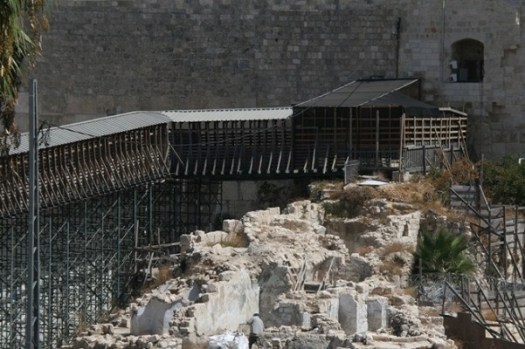
“Israel, the occupying Power, had not complied with any of the 12 decisions of the UNESCO Executive Board as well as six decisions of the World Heritage Committee that request the implementation of the reactive monitoring mission to the Old City of Jerusalem and its Walls.”
“These sorts of attacks on academic freedom, in which Israel’s defenders have played a disproportionate role, are all too common on campuses across the country, with devastating results. They have led to the intimidation of students, the silencing or firing of faculty and the cancellation of classes.”
Last week, my email inbox and Twitter feeds were flooded with hateful messages impugning my integrity. The source of this invective was a shadowy organization called Canary Mission, which maintains what it hopes will function as a blacklist of professors and students it accuses of “promoting hatred of the USA, Israel and Jews on college campuses.” My public criticism of Israel’s policies of military occupation and apartheid — its unequal treatment of Palestinians — has earned me a spot on the list, there being no distinction, apparently, between criticism of the policies of a foreign power and “hatred” of an entire ethnic group.
Were I a more junior professor, or untenured — or a student — the charges it levels, although they are untrue, could be damaging. And that is the point: In language only recently excised from its website, Canary Mission makes explicit its intention “to ensure that today’s radicals are not tomorrow’s employees.” Daniel Pipes — a prominent member of what the Center for American Progress calls “the Islamophobia misinformation experts” — writes approvingly of the project: Students should understand that “attacking” Israel “can damage … future careers.”
“I have survived the past three wars, but that is not the problem. In this place, wars come and go. The bigger struggle is not to lose hope. The only way I can do that is to retreat, and create my own world, and become oblivious.”
— Ali, age 36, waiter in Gaza City
Ali was born in Gaza and for almost ten years has been living under a tight blockade on air, land and sea, entering its tenth year in June 2016. The blockade keeps him and the rest of the 1.8 million people of Gaza isolated and locked into a tiny 365 square kilometers-enclave — the Gaza Strip has one of the highest population densities in the world — tormented by extreme poverty and dilapidated by repeated conflicts.
Chronic fuel and electricity shortages, with power cuts between 18 and 22 hours per day, extreme water pollution — 95 per cent of the Gaza groundwater is undrinkable — and devastated infrastructure, as a dire reminder of repeated cycles of armed violence, are the daily reality. Gaza’s people are denied a human standard of living. This was not always the case: before the imposition of restrictions on movements of people and goods, the Gaza Strip was a relatively developed society with a productive base and a thriving economy.
Blockade and occupation have reversed this process, accelerated by repeated Israeli military operations and widespread destruction, and today Gaza is subject to what the UN calls de-development. Located at the Mediterranean Sea between Egypt and Israel, Gaza could be famous for its palm trees, fruits and white beaches. Instead, it is known for a sewage and hygiene crisis titled by the Time magazine a “ticking global-health time bomb.
Thank you to all the volunteers who made this year’s convention a huge success!
For those of you who couldn’t make it this weekend, among the many offerings, the Bishop’s Committee prepared a book of essays on Israel, Palestine, and the Conflict. We will be publishing the individual essays over the coming weeks, but if you would like to download the entire book, you may do so here: You Can’t Say We Didn’t Know: Some Perspectives on Israel, Palestine, and the Conflict.
Yours in Peace,
— The Bishop’s Committee
Randolph Urmston, Chairman, The Bishop’s Committee
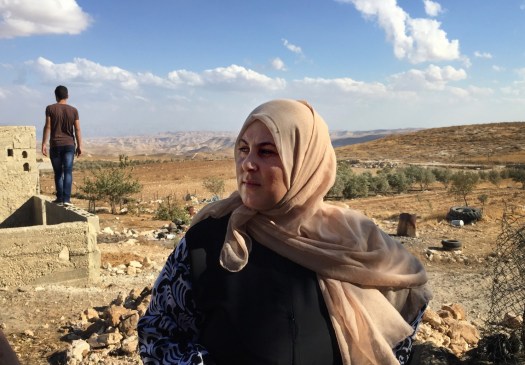
“The village is one of 241 Palestinian communities in the Israeli-controlled West Bank — a zone known as Area C — that lack services because ‘Israel practically bans Palestinian construction’ while helping Jewish settlements grow, according to the Israeli human rights group B’Tselem.”
Let there be light.
That is a plea of residents of this Palestinian village who have waited nearly three decades for electricity while well-lit Israeli settlements sprang up around them. Now they are pinning their hopes on a new local women’s committee that is determined to get them on the grid.
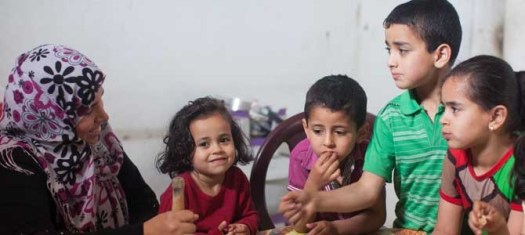
Just a 20-minute drive from bustling modern Jerusalem, on the side of a mountain whose name means “Paradise,” Jubbet adh Dhib is like a step back in time.
Without refrigeration, food goes bad. Elderly Palestinians fall down in the dark. Children can’t study at night. With no WiFi and limited television, villagers feel cut off from the world.
“Our children don’t have a good childhood,” said Fadia al-Wahsh, the leader of the women’s committee.
“They see kids everywhere, with iPads and Internet” in more prosperous Palestinian communities, she said. “My son says, ‘Why do you make me live here?’ ”
A few hundred yards from Jubbet adh Dhib are the bright lights of Sde Bar, a small Israeli settlement and a neighborhood of the larger settlement of Nokdim, where Israeli Defense Minister Avigdor Lieberman lives. But the villagers have no access to the schools, cafes, art galleries, garbage collection, tennis courts and public pools at these or other settlements just minutes away.
1.6 million food-insecure Palestinians in need of food assistance
745,000 non-refugees in need of food assistance
65,000 internally displaced persons (IDP’s) in Gaza following the 2014 war
Decades of occupation coupled with severe restrictions on the movement of people and goods have undermined the living conditions and reduced access to livelihoods for Palestinians. Food insecurity is mostly due to a lack of economic access: food prices are mainly driven by Israel and out of reach for many poor households — the GDP per capita in Palestine (USD 4,700) is six times less than that of Israel (USD 30,000).
The impact of the 2014 conflict in Gaza continues to be devastating to the Palestinian people and economy. Against this backdrop, more than 27 percent of the population — or 1.6 million people — suffers from food insecurity. In Gaza, one in two is food insecure, and one in three is severely affected.
As poor and vulnerable Palestinians spend more than half of their income on food, WFP’s assistance is critical to meet their food needs. This prevents further deteriorations in food security and livelihood status, and prevents negative coping mechanisms. WFP targets 600,000 of the most vulnerable, food insecure non-refugees in Palestine who have been affected by the ongoing conflict and occupation, a fiscal crisis and a steady decline in living standards. WFP has been present in Palestine since 1991.
“In recent years, the suppression of Palestine solidarity voices on American campuses has become alarmingly widespread, triggering protests and calls for the protection of academic freedom. ‘The crackdown is a nation-wide phenomenon,’ according to Palestine Legal, an organization dedicated to protecting the First Amendment rights of Palestine solidarity activists.”
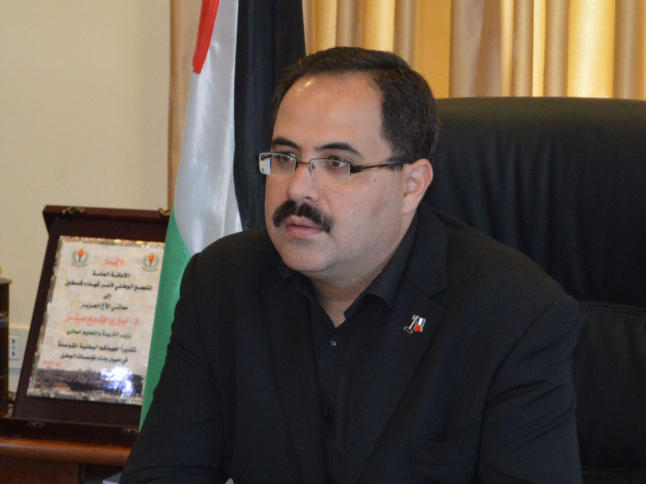
In an interview with Palestine Square last week, Palestinian Education Minister, Dr. Sabri Saidam, condemned tactics by US academic institutions “undermining the Palestinian narrative or paying lip service to the occupation.” The minister was in Washington, D.C., at the head of a delegation of 19 Palestinian university representatives to take part in a recently established U.S.-Palestinian Higher Education Dialogue, organized by the State Department and the U.S. Consulate in Jerusalem. “This initiative is a result of longstanding cooperation between Palestinian and American academic institutions,” Saidam explained.
In recent years, the suppression of Palestine solidarity voices on American campuses has become alarmingly widespread, triggering protests and calls for the protection of academic freedom. A recent case involved the suspension of a student-led course on Palestine at the University of California Berkeley. “The crackdown is a nationwide phenomenon,” according to Palestine Legal, an organization dedicated to protecting the First Amendment rights of Palestine solidarity activists. According to their latest records, from January 1, 2014, through June 30, 2016, there were 563 incidents of censorship, punishment, or other burdening of advocacy for Palestinian rights across the US, 85% of which targeted students or scholars.
“The military alliance between the United States and Israel has long been at odds with the stated intentions of successive administrations in Washington to foster peace in the Holy Land. One White House after another has preferred the “solution” of having it both ways: supporting a two-state solution while richly rewarding, with lethal weaponry, an incorrigible client state that was working as fast as it could to undermine just such a solution.”
Washington has finally thrown in the towel on its long, tortured efforts to establish peace between Israel and the Palestinians. You won’t find any acknowledgement of this in the official record. Formally, the United States still supports a two-state solution to the conflict. But the Obama administration’s recent 10-year, $38 billion pledge to renew Israel’s arsenal of weaponry, while still ostensibly pursuing “peace,” makes clear just how bankrupt that policy is.
For two decades, Israeli leaders and their neoconservative backers in this country, hell-bent on building and expanding settlements on Palestinian land, have worked to undermine America’s stated efforts—and paid no price. Now, with that record weapons package, the United States has made it all too clear that they won’t have to. Ever.
You must be logged in to post a comment.