The pandemic’s savage political revelations, from the U.S. to Palestine

Palestinian policemen wearing protective gear stand guard during a simulation training organized by the ministry of health and the ministry of interior in Gaza City on July 18, 2020. (Photo: Ashraf Amra/APA Images)
Palestinian policemen wearing protective gear stand guard during a simulation training organized by the ministry of health and the ministry of interior in Gaza City on July 18, 2020. (photo: Ashraf Amra / APA Images)
The issues of inequity being seen during this pandemic are also seen by Palestinians in Israel and the occupied territories who suffer from high levels of structural racism and cross generational trauma.

By Alice Rothchild | Mondoweiss | Aug 8, 2020

It can be argued that race (a predominantly social construct) is not the issue– rather, that the racism within our societies where African Americans, Hispanics, Native Americans, and other people of color live and work creates the inequities and vulnerabilities that produce the racial and ethnic differences in the data that are now obvious.

Much of the analysis of COVID-19 and Palestine examines the pandemic through a political lens. Palestinians in Israel and the territories have had less access to testing and information due to their second-class citizenship and the conditions of occupation. In the West Bank and Gaza, there are significant deficits in medical resources (such as ventilators) and trained (and adequately paid) medical staff.

In general Palestinians under occupation have high rates of diseases related to stress, poverty, smoking, and poor nutrition such as diabetes, hypertension, and obesity. They tend to live in environments contaminated by the detritus of war and the toxics from unregulated industries (such as Israeli industrial zones in the West Bank) with high levels of asthma and cancer. They often work in jobs that cannot be done on Zoom and that provide no labor protections– notably the construction and homecare workers who travel daily to Israel from the West Bank, waiting for hours in crowded checkpoints.

Continue reading “The pandemic’s savage political revelations, from the U.S. to Palestine”
Livestreamed Event: A Conversation on a Shared Homeland


Jewish Currents (photo: Tanya Habjouqa / NOOR / Redux)
Please join our brothers and sisters at Jewish Currents and the Foundation for Middle East Peace (FMEP) for a livestreamed discussion of what a shared Israeli-Palestinian homeland would actually look like.
Date: Tuesday, August 11, 2020
Time: 12:00pm EST / 9:00am PST
Location: On-line livestreamed event
Information: Event information here →
Tickets: Free, registration required
Event Details

Moderated by Jewish Currents Editor-at-Large Peter Beinart, this event will feature Sari Nusseibeh, a Palestinian academic and former activist; Meron Rapoport, an Israeli journalist; and Dr. Limor Yehuda, an Israeli legal scholar.

This event is co-sponsored by FMEP, which was created in 1979 by Merle Thorpe, Jr., a Washington-based lawyer and philanthropist, to promote a just resolution to the Israeli-Palestinian conflict. The Foundation advances this goal through its grants program, public programming, and research.

Peter Beinart is professor of journalism and political science at the City University of New York, Editor-at-Large of Jewish Currents, an Atlantic and CNN contributor and a fellow at the Foundation for Middle East Peace.

Sari Nusseibeh is a Palestinian Professor of Philosophy and former President of the Al-Quds University in Jerusalem. Until December 2002 he was the representative of the Palestine Liberation Organization in that city.

Meron Rapoport is an award-winning Israeli journalist who writes for Local Call/972+ Magazine and collaborates with Middle East Eye. He is one of the founders of A Land for All/Two States One Homeland, an Israeli-Palestinian movement promoting a confederative solution between an independent Palestine and an independent Israel.

Dr. Limor Yehuda is a legal scholar interested in the role of human rights and international law in peace processes. She is currently a fellow at Tel Aviv University and a founder of A Land for All.

More information here →

Man-made Israel (and the obsessive erasure of Palestinian history)

Masada, 2018.  (photo: Gary Todd, on Flicker)
Hellbent on crafting an umbilical cord between itself and a biblical, mythical 2000-year old past, Israel has erased the ancient history of Palestinians.

By Sam Bahour | Mondoweiss | July 31, 2020

‘The Invention of Ancient Israel’ is not an easy read. It is one of those books that when you finish reading the last lines and look up you feel like you just emerged from a washing machine.

THE INVENTION OF ANCIENT ISRAEL
The Silencing of Palestinian History
By Keith W. Whitelam
296 pp. Routledge. £24.79

What do you get when you mix ten decades of biblical studies, an Old Testament, the ideology of Zionism, and a tablespoon of politically motivated archaeology, all mixed in a bowl of historical evidence? Author Keith W. Whitelam undertook this recipe and reports on the results in “The Invention of Ancient Israel: The Silencing of Palestinian History” (of 1997). The short answer to the question is that one is left with a toxic modern state, hell-bent on crafting an umbilical cord between itself and a mythical 2000-year old past. In other words, the State of Israel.

If no one were hurt during this process, one could just turn a blind eye and be content that, To each his own. But when the results of the recipe never produce a stable product, and an entire people are continuously being battered into oblivion, we each have a responsibility to step in and say enough is enough.

Continue reading “Man-made Israel (and the obsessive erasure of Palestinian history)”

Present absences

Hawa-Palestine-getty_img
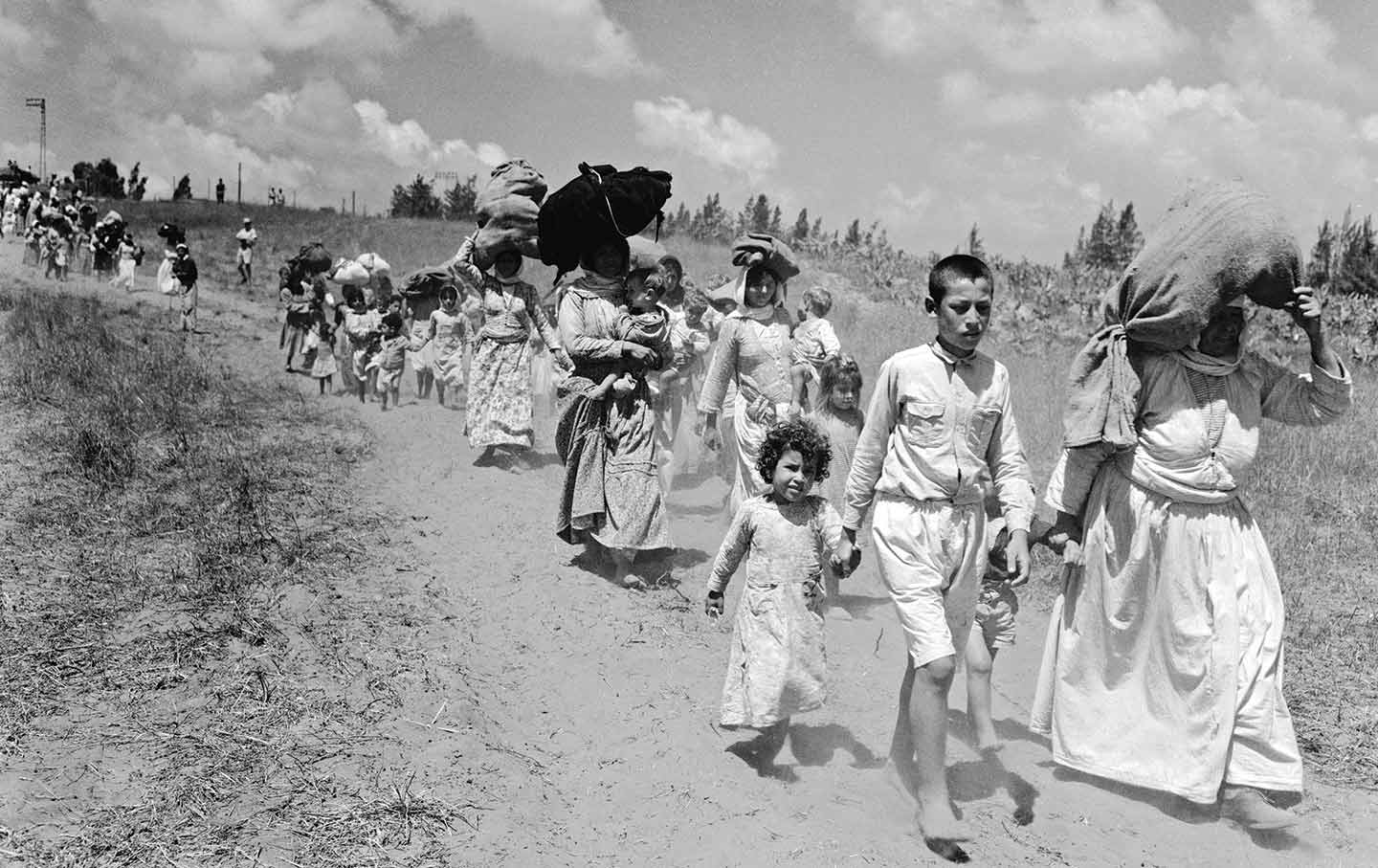
Near Tulkarem, 1948. (photo: Bettmann / Getty)
Book review of Rashid Khalidi’s latest book, The Hundred Years’ War on Palestine: A History of Settler Colonialism and Resistance, 1917-2017.

By Kaleem Hawa | The Nation | July 27, 2020

For as long as I have been alive, the barriers in the West to advocating for Palestinian rights have deterred all but the most committed people.

Here’s the script: Criminalize the boycotts, deport the human rights advocates, rebrand anti-Zionism as anti-Semitism, smear the leftist Jews, infiltrate the leftist organizations, defund the aid programs, torpedo the political campaigns, fire the high school teachers and speech pathologists and network commentators, and pinkwash the occupation. The tactics vary today, but the intent remains the same. For as long as I have been alive, the barriers in the West to advocating for Palestinian rights have deterred all but the most committed people.

Often, as a result, the responsibility has fallen on the shoulders of Palestinians. Rashid Khalidi, a professor at Columbia and a codirector of its Center for Palestine Studies, is one of the best known to have taken up this responsibility. An acclaimed historian and former adviser to the Palestine delegation during the Madrid talks in 1991, he has written about the origins of Arab nationalism, American Cold War policy in the Middle East, the construction of Palestinian identity, and the history of the Israeli-Palestinian peace process. He has also played an important role in representing Palestinians in Western media and in mentoring a growing generation of Palestinian writers and academics, including Noura Erakat and Lana Tatour.

Continue reading “Present absences”

Friends of the IDF lobby group secures forgivable US COVID loans for Israeli soldiers


Israel Defense Forces Feature photo
In this Nov 26, 2015 photo, members of the Israel Defense Forces pose for a photo for social media. (photo: Twitter / @IDF
A non-profit organization that supports IDF soldiers received a $2.5 million PPP loan under the guise of a “religious organization,” but adds up to a mere pittance of the continued bonanza of American tax-payer dollars flowing to the apartheid state.

By Raul Diego | MintPress News | July 24, 2020

From aiding the wholesale dispossession of Palestinian lands by Israeli settlers to killing children with targeted headshots, the Israeli Defense Forces are anything but a boon for humanity.

A non-profit organization that “that provides for wellbeing of the soldiers of the Israel Defense Forces (IDF)” was awarded a $2.5 million forgivable PPP loan by the (Small Business Administration) SBA. The Friends of Israeli Defense Forces (FIDF) is the only organization “authorized to represent the IDF across the United States and Panama” where they claim to operate 20 regional offices, with a P.O. Box in New York.

The FIDF’s loan was filed under the category of “religious organization” in the SBA’s Paycheck Protection Program (PPP) loan data, despite the NPO being listed as a Y12 organization under the IRS’ NTEE classification system for non-profits: a “Mutual/Membership Benefit Organization,” which (in the case of FIDF) raises funds for issues relating to “foreign affairs and national security,” according to the tax-exempt organizations database published by ProPublica.

Continue reading “Friends of the IDF lobby group secures forgivable US COVID loans for Israeli soldiers”

Israel’s Jewish National Fund is uprooting Palestinians – not planting trees

The Jewish National Fund blue box
The Jewish National Fund Blue Box
The Jewish National Fund is a thriving relic of Europe’s colonial past, even if today it wears the garb of an environmental charity. As recent events show, ethnic cleansing is still what it excels at.

By Jonathan Cook | Mondoweiss | July 22, 2020

But the JNF’s expulsion activities did not end in 1948, when Israel was established through a bloody war on the ruins of the Palestinians’ homeland – an event Palestinians call the Nakba, or catastrophe.

The Jewish National Fund, established more than 100 years ago, is perhaps the most venerable of the international Zionist organizations. Its recent honorary patrons have included prime ministers, and it advises UN forums on forestry and conservation issues.

It is also recognized as a charity in dozens of western states. Generations of Jewish families, and others, have contributed to its fundraising programs, learning as children to drop saved pennies into its trademark blue boxes to help plant a tree.

And yet its work over many decades has been driven by one main goal: to evict Palestinians from their homeland.

Continue reading “Israel’s Jewish National Fund is uprooting Palestinians – not planting trees”

Divided We Stand: Allies Debate the Two-State Solution

Separation wall between Israel and the West Bank near Jerusalem. (photo: Mazur Travel via Shutterstock)
Please join our brothers and sisters at New York Jewish Agenda (NYJA) for a livestreamed debate over the future resolution of the Israeli-Palestinian conflict.  Participants in the discussion will feature Peter Beinart, Jeremy Ben-Ami, and Rabbi Jill Jacobs.
Date: Friday, July 24, 2020
Time: 1:00 pm Eastern Time / 10:00am Pacific Time
Location: Online Event
Information: Event information here →
Tickets: Zoom registration
Event Details

The event will feature Jewish Currents Editor-at-Large Peter Beinart, author of a recent essay arguing that the two-state solution is obsolete, in discussion with Jeremy Ben-Ami and Rabbi Jill Jacobs.

Peter Beinart is professor of journalism and political science at the City University of New York, Editor-at-Large of Jewish Currents, an Atlantic and CNN contributor and a fellow at the Foundation for Middle East Peace.

Jeremy Ben-Ami is the President of J Street, bringing to the role both deep experience in American politics and government and a passionate commitment to the state of Israel.

Rabbi Jill Jacobs is the Executive Director of T’ruah. Formally, she was a Rabbi-in Residence at Jewish Funds for Justice (JFSJ), a national public foundation dedicated to mobilizing the resources of American Jews to combat the root causes of domestic social and economic injustice.

More information here →

Edward Said and the ‘rendezvous of victory’

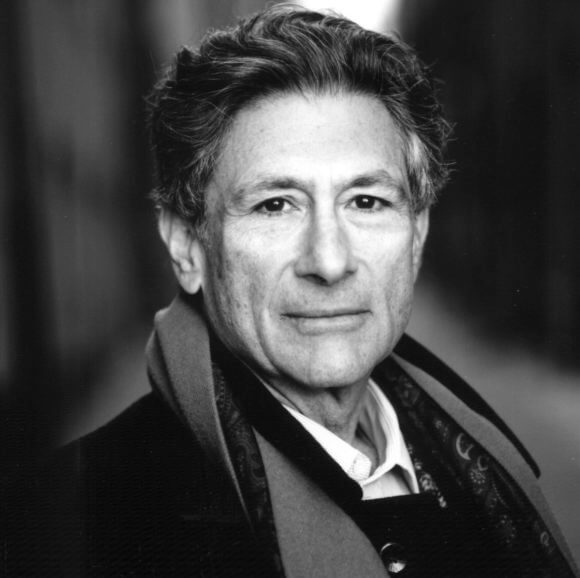
Edward Said
Edward Said
Palestinians find inspiration in the first anti-apartheid movement and other struggles against settler colonialism in their call for BDS and secular democracy in historic Palestine.

By Haidar Eid | Mondoweiss | July 15, 2020

I was inspired by Edward Said because I belong to a generation that did not witness the Nakba. I am part of a generation that was thought to be resigned to more than 50 years of military occupation, and more than 70 years of dispossession and apartheid.

Since the beginning of the formation of his political consciousness in 1967, Edward Said emerged as the world’s most significant moral intellectual since Jean Paul Sartre and Bertrand Russel. As professor of literature and literary criticism and spiritual figurehead of the Palestinian cultural landscape, together with Ghassan Kanafani, Mahmoud Darwish, and countless others, he was instrumental in making Palestine one of the predominant moral causes of our time. His dedication to fundamental Palestinian human rights elevated him to a status of icon and inspiration.

After the official leadership of the Palestine Liberation Organization signed the infamous Oslo Accords in 1993, Said began to argue that it was high time that the Palestinian people moved away from the illusion of the two-state solution and advocate a democratic approach, one that could guarantee their basic rights, namely freedom, equality, and justice.

Continue reading “Edward Said and the ‘rendezvous of victory’”

The U.S. struggle for justice for Palestine begins a new chapter

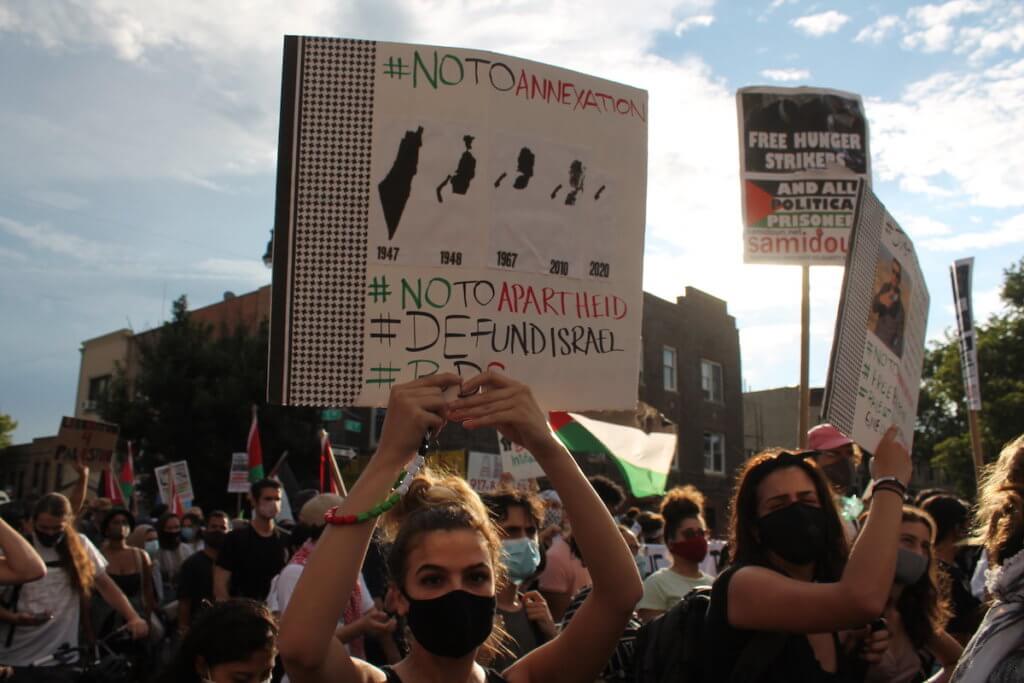
BROOKLYN, NEW YORK, July 1 - Several thousand Palestinians and supporters rallied in the Palestinian-American neighborhood of Bay Ridge, then marched four miles north to the Barclays Center, to oppose threats by Israel to annex parts of the occupied West Bank. (Photo by Joe Catron)
Brooklyn, NY, July 1 – Several thousand Palestinians and supporters rallied in the Palestinian-American neighborhood of Bay Ridge, then marched four miles north to the Barclays Center, to oppose threats by Israel to annex parts of the occupied West Bank. (photo by Joe Catron)
The progress and victories of recent years absolutely are a cause for celebration. But it is important to keep in mind that the fight is far from over.

By Ariel Gold and Mary Miller  | Mondoweiss | July 14, 2020

…we must recognize that the change happening now cannot be credited to any one action, individual, or organization. Rather, it is the culmination of countless efforts and the work of several groups.

2020 has indisputably been a chaotic year. From the coronavirus pandemic and subsequent disruption of daily life, to the killing of George Floyd and the passionate resurgence of the Black Lives Matter movement that followed, to the looming general election: there has been plenty occupying the minds and newsfeeds of Americans. But in between all the headline-grabbing stories, another movement has been gaining traction: the effort to end the United States’ support for Israeli apartheid and finally bring peace and justice to the Palestinian people.

Israeli Prime Minister Benjamin Netanyahu was set to announce plans to annex parts of the West Bank on July 1. That date has come and gone, and still no formal announcement has been made. But what is perhaps most noteworthy about this incident isn’t that Netanyahu almost moved from de facto to de jour annexation of the West Bank, but that the response from influential members of Congress made it clear that, should Israel plan to move forward with annexation, it would not go without consequence.

Continue reading “The U.S. struggle for justice for Palestine begins a new chapter”

Senate Dems introduce amendment that would block Israel from using U.S. funds for annexation

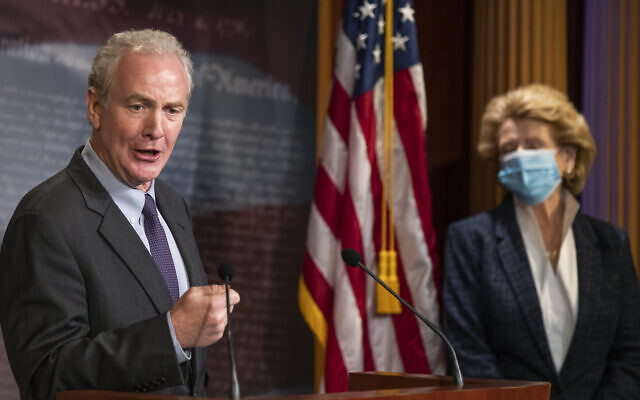
US Senator Chris Van Hollen, a Maryland Democrat, with Senator Debbie Stabenow, a Wisconsin Democrat, right, speaks during a news conference on Capitol Hill, June 16, 2020, in Washington. (AP Photo/Manuel Balce Ceneta)
US Senator Chris Van Hollen, a Maryland Democrat, with Senator Debbie Stabenow, a Wisconsin Democrat, right, speaks during a news conference on Capitol Hill, June 16, 2020, in Washington. (photo / AP/ Manuel Balce Ceneta)
U.S. legislative efforts continue to discourage annexation while still showing support for Israel.

By Michael Arria | Mondoweiss | July 6, 2020

‘I do not think American dollars should be aiding and abetting the unilateral annexation of territory.’
—Senator Chris Van Hollen (MD)

12 Senate Democrats have introduced legislation that would prohibit Israel from using U.S. military aid to annex portions of the West Bank.

S. 4049 was filed an amendment to 2021’s National Defense Authorization Act (NDAA). “None of the funds authorized to be appropriated by the United States-Israel Security Assistance Authorization Act of 2020, this Act, or any other Act enacted before the date of the enactment of this Act, or otherwise made available for the Department of Defense, may be obligated or expended to deploy, or support the deployment of, United States defense articles, services, or training to territories in the West Bank unilaterally annexed by Israel after July 1, 2020, or to facilitate the unilateral annexation of such territories,” it reads.

Continue reading “Senate Dems introduce amendment that would block Israel from using U.S. funds for annexation”