2021: The year Palestinians entered America’s debate over Israel-Palestine

Peter-Beinart-1024x640
Peter Beinart speaking at Temple De Hirsch Sinai, Seattle, Washington, May 23, 2019 at an event sponsored by J Street (CC by Joe Mabel via Wikimedia)
Shifting media developments are giving Palestinian voices more access to shape the Israel-Palestine conversation.

By Peter Beinart | The Beinart Notebook |  Jan 3, 2022

In recent years, the gulf between traditional and social media has narrowed… And so for Palestinian commentators, social media has become a backdoor into the establishment media from which they were long barred.

For my entire adult lifetime, the mainstream American conversation about Israel-Palestine—the one you watch on cable television and read on the opinion pages—has been a conversation among political Zionists. Its participants have argued over how the Jewish state should behave, not whether it should exist. Last year that began to change. Palestinians entered America’s public discussion in an unprecedented way, and with their entrance, anti-Zionism entered too. In 2021, the terms of US discourse began to shift. The ramifications of that shift will likely be with us for decades to come.

Continue reading “2021: The year Palestinians entered America’s debate over Israel-Palestine”
2021 in review: A year of struggle and victories for the Palestinian cause

101121_GAZA_MN_1_00-1-1024x683
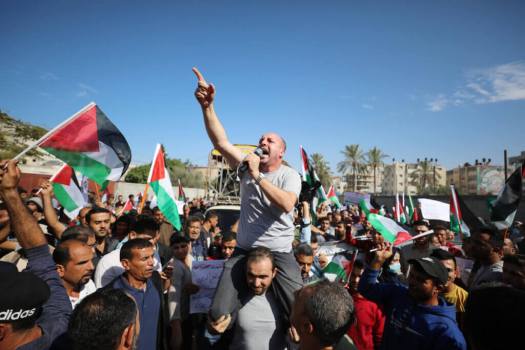
Palestinians take part in a protest against the Israeli decision to declare six Palestinian human rights groups as “terror organizations”, in Gaza City on November 10, 2021. (credit: Mahmoud Nasser / APA Images)
2021 was a watershed year for Palestinians. The struggle for Palestinian freedom and liberation saw unprecedented levels of global solidarity and unity amongst Palestinians despite their forced fragmentation

By Yumna Patel | Mondoweiss | Dec 28, 2021

From the streets to the digital sphere, Palestinians were suppressed and censored at every turn. And yet still, their voices were heard around the world more than ever before.

2021 was a watershed year for Palestinians. The struggle for Palestinian freedom and liberation saw unprecedented levels of global solidarity. From Jerusalem, to the West Bank, Gaza, and Palestinian communities inside Israel, Palestinians rose up together in defiance of the Israeli occupation, and demanded a better future. The fight against forcible expulsion of Palestinians in Sheikh Jarrah and Silwan reached the global stage, and more human rights groups joined the calls to end Israeli Apartheid.

Despite the strides made towards justice and equality this year, 2021 was not without its challenges for Palestinians. Palestinians entered the second year of the coronavirus pandemic, and like much of the global south, struggled to get their hands on the life saving vaccines being hoarded by the world’s richest countries.

Continue reading “2021 in review: A year of struggle and victories for the Palestinian cause”

Church leaders warn of a ‘systematic attempt’ to drive Christians out of Jerusalem and the Holy Land

61bf2364a353a8001850ae19
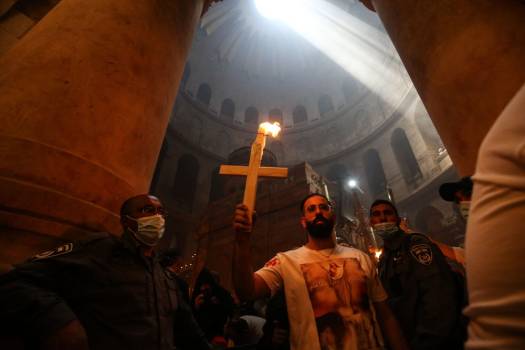
Orthodox Christians mark Holy Saturday at the Church of the Holy Sepulchre in East Jerusalem on May 1, 2021. (credit: Mostafa Alkharouf / Anadolu Agency via Getty Images
Church leaders in Jerusalem raise concerns about ongoing assaults and vandalization of holy sites.

By Alia Shoaib |  Insider |  Dec 19, 2021

Church leaders warned that radical groups continue to “acquire strategic property” in the Christian Quarter of Jerusalem with the goal of diminishing the Christian presence.

Church leaders in Jerusalem warned that Christians had become the target of “frequent and sustained attacks by fringe radical groups” across the Holy Land in a strongly-worded statement.

The Patriarchs and Heads of Local Churches in Jerusalem pointed to “countless incidents” of physical and verbal assaults and the vandalizing of holy sites and churches.

In March of this year, the Romanian church monastery in Jerusalem was vandalized and its entrance set on fire. It was the fourth such attack on the monastery in a month, Daily Sabah reported.

Continue reading “Church leaders warn of a ‘systematic attempt’ to drive Christians out of Jerusalem and the Holy Land”

From Birchbark Books to Palestine: Takeaways from Louise Erdrich’s The Sentence

Rasha-678x455
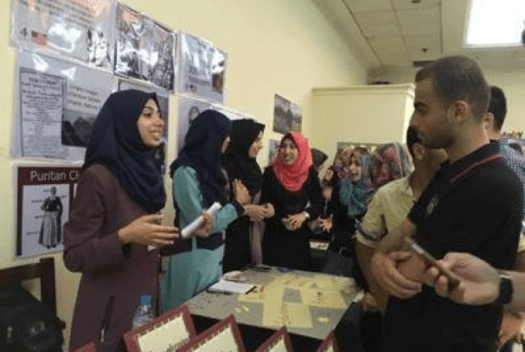
Rasha Ghabayen explains to a group of students the history of Native American Literature. (credit: Yousef Aljamal, Palestine Chronicle)
A look at the ways literature crosses borders and unites people in a common anti-colonial struggle.

By Benay Blend | Palestine Chronicle | Dec 5, 2021

…what both Palestinians and Native Americans have in common are “white saviors,”

In the past few years, several articles and books have focused on the ties between Native American and Palestinian activists/scholars. See, for example, Steven Salaita’s ‘Internationalism:  Decolonizing Native America and Palestine’ (2016), ‘Holy Land in Transit: Colonialism and the Quest for Canaan’ (2006), and Marion Kawas, “Solidarity Between Palestinians and Indigenous Activists Has Keep Roots” (2020).

Louise Erdrich does not draw these links in her most recent novel ‘The Sentence’ (2021), but it nevertheless brings to mind several commonalities as well as differences between the Palestinian solidarity movement and various forms of Native activism. Moreover, Erdrich highlights those moments in 2021 that called for alliances between various movements for social justice, including climate change and the murder of unarmed black men by local police, in particular George Floyd, so it makes sense to look for lessons regarding the Palestine solidarity movement that could be taken from the book.

Continue reading “From Birchbark Books to Palestine: Takeaways from Louise Erdrich’s The Sentence”

Ben, Jerry and Hochul’s boycott hypocrisy

2ZWCR3O3ZND4XCDLRVVDTH3FQA
Ben & Jerry’s (credit: Joe Raedle / Getty Images)
The differing interpretations of boycott legitimacy.

By Katherine Franke | New York Daily News|  Nov 28, 2021

Yet in the same week that the Biden administration signaled that it was inclined to boycott China over its human rights violations, the governor of New York announced that she plans for state government to divest from the company that owns Ben & Jerry’s over the ice cream manufacturer’s decision to restrict sales in the Israeli-occupied West Bank.

Last week, Republican members of Congress issued adamant calls on the U.S. government to boycott the Winter Olympics in Beijing to protest the Chinese government’s abuses of the human rights of Uyghurs and the crackdown on protesters and journalists in Hong Kong. The Biden administration has signaled an inclination to do so. Meanwhile, the Women’s Tennis Association threatened to pull all of its tournaments in China after the disappearance of Peng Shuai, a top female tennis player was who has claimed to have been sexually assaulted by a Chinese government official.

Continue reading “Ben, Jerry and Hochul’s boycott hypocrisy”

Biden’s balancing act in the Middle East has a problem: Israel

download
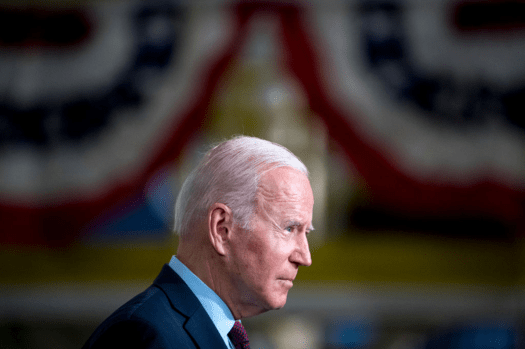
Palestinian advocates say President Joe Biden is not doing enough to increase the pressure on Israel. (credit: Nic Antaya / Getty Images)
In an interview, Israel’s interior minister dismisses U.S. plans to reopen a consulate in Jerusalem and downplays reports of Israeli settler violence against Palestinians.

By Nahal Toosi  | Politico | Nov 19, 2021

Palestinian advocates say Biden is not doing enough to increase the pressure on Israel, especially if he is serious about seeking a two-state solution to the decades-old conflict — something Trump said he could live without.

Soon after taking office, President Joe Biden and his aides began using a new talking point when discussing the Israeli-Palestinian conflict — part of an effort to rebalance a U.S. policy the previous U.S. administration had skewed heavily to favor Israel.

“Israelis and Palestinians,” the phrase usually goes, “deserve equal measures of freedom, dignity, security, and prosperity.”

In recent weeks, however, a series of Israeli actions against Palestinians have exacerbated tensions with the Biden administration while testing how serious the U.S. president is about respecting the rights of everyone in the conflict.

Continue reading “Biden’s balancing act in the Middle East has a problem: Israel”

Why Israel Calls Human Rights ‘Terrorism’

53024416
TALMON, WEST BANK – MARCH 23, 1989: A Jewish settler armed with an Uzi machine gun watches as settlers move caravans and equipment March 23, 1989 to establish the new settlement of Talmon north-west of the nearby Palestinian town of Ramallah in the West Bank. As of December 2003, the left-wing Israeli Peace Now movement said that Talmon had over 1,600 residents. (Photo by Maggie Ayalon / GPO via Getty Images)
In a widely condemned move, the Israeli government has banned the group I founded. This is how it enforces impunity for its illegal policies of occupation.

By Raja Shehadeh | The New York Review | Oct 27, 2021

Throughout the more than four decades since Al-Haq’s founding, the organization has continued to serve the objectives for which it was established: documenting and resisting through the law Israeli human rights violations, including the mistreatment of prisoners, the economic exploitation of the Occupied Territories’ natural resources, and the illegal settlement building.

In 1978 I returned to Ramallah from my legal studies in London brimming with ideas about the importance of the rule of law and the possibilities for resisting the Israeli occupation using international law. The following year, I and two colleagues, a Yale graduate named Charles Shammas and the American lawyer Jonathan Kuttab, established an organization we called Al-Haq (Arabic for The Right) as an affiliate of the International Commission of Jurists (ICJ) in Geneva. It was one of the first human rights groups in the Arab world and the first and only one of its kind in the Israeli-occupied territories.

Al-Haq’s first major activity was to document the extensive changes in local laws in the occupied West Bank mandated by Israeli military orders. These, in violation of international law, were designed to enable Israel to carry out illegal acquisitions of land for the building of illegal Israeli settlements. In a study Jonathan and I authored, titled The West Bank and the Rule of Law, published in 1980 jointly by Al-Haq and the ICJ, we pointed out that these orders were withheld from public view. That Israel was thus using secret legislation to break international law was a national embarrassment, though it was denied by the government and initially challenged by a number of Israeli journalists. After investigating the matter, these journalists learned that we had not exaggerated and that these orders indeed had not been published.

Read the full article here →

The long and winding road for Palestinian educational equity in Israeli schools

1112px-ToNofHagalil-770x515
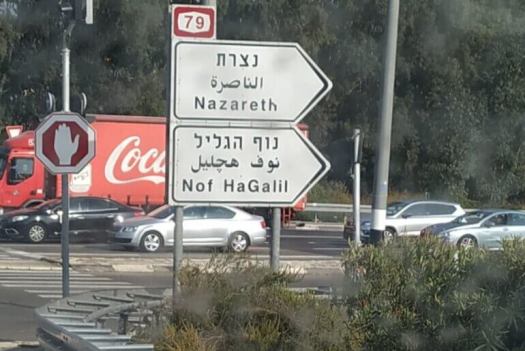
Road signs directing to Nazareth and Nof Hagalil (credit: Wikimedia)
Palestinian students are forced to leave the mixed Israeli city of Nof Hagalil to attend school in nearby Nazareth because local schools refuse to accommodate Arab students.

By Dr. Reem Khamis-Dakwar | Mondoweiss | October 27, 2021

For over 20 years now, Arab residents of Nof Hagalil have demanded the establishment of a local Arab school.

Nazareth Illit (literally translating to “upper Nazareth”) is the former name of a city built upon the hills overlooking my hometown. Like the very establishment of the Israeli state nine years prior, Nazareth Illit was founded in 1956 upon land confiscated from Palestinians in an effort to “Judaize the Galilee.” In 2019, the city was renamed Nof Hagalil in order to further disconnect it from Nazareth, the largest Arab city in the ‘48 territories. The intention of this performative gesture was clear; Nof Hagalil, formerly Nazareth Illit, is a Jewish city regardless of how many Arab citizens may now live there. After all, the city became one of few promising sites for Arab couples to relocate given the structural racism affecting the growth of Arab towns which Human Rights Watch has reported “stifles the community’s growth and undermines its well-being while promoting the development of a Jewish majority city next to it.

Continue reading “The long and winding road for Palestinian educational equity in Israeli schools”

FOSNA Statement on Israel’s Labeling of Top Palestinian Human Rights Agencies as “Terrorist Organizations”

Screen Shot 2021-10-24 at 7.05.57 AM

FOSNA Executive Director and Al-Haq Cofounder responds to Israel’s accusations.

By Jonathan Kuttab | Friends of Sabeel-North America | Oct 23, 2021

This is a far cry from the polemical, false accusations thrown at us occasionally by Israeli propagandists like the NGO Monitor. It carries practical consequences, such as the seizure of assets, arrest of personnel, and the criminalization of anyone who donates to or cooperates with us in any way.

About 40 years ago, Raja Shehadeh, Charles Shammas, and I created Al-Haq, the first Palestinian human rights organization. After our first publication, “The West Bank and the Rule of Law,” an Israeli ambassador contemptuously dismissed us as “a mouthpiece for the PLO” and for “making a mountain out of a molehill.” We argued back through the International Commission of Jurists, which was our sponsor, that we are totally independent and meticulous about our facts and documentation. We challenged him to prove his claims or to show that ANY of our publications contained any materially incorrect facts. He never replied.

In fact, we were viewed with some suspicion within the Palestinian community because we were strictly independent and spoke the language of human rights and international law, rather than political polemics. This was new for most Palestinians. We persisted, however, and other organizations followed in our footsteps. We managed to have a positive impact on Palestinian society as a serious human rights organization. Al-Haq is now one of several world-renowned and respected human rights organizations. I am proud to say that over the years Al-Haq has meticulously maintained its high standards and, after the Oslo process, was courageous enough to apply the same standards of objectivity, independence, and defense of human rights not just to the Israeli occupation, but also to the behaviour of the Palestinian Authority, and also of Hamas.

Continue reading “FOSNA Statement on Israel’s Labeling of Top Palestinian Human Rights Agencies as “Terrorist Organizations””

Israel moves to ban six Palestinian rights groups it accuses of terrorism, prompting international outrage

imrs
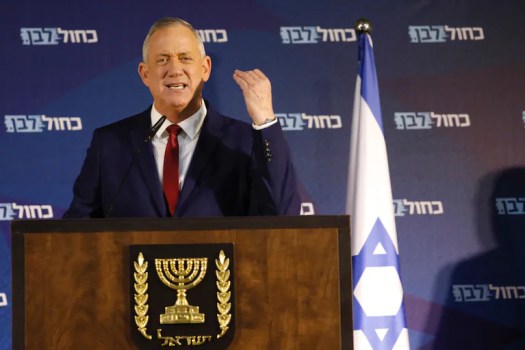
Israeli defense minister Benny Gantz signed off on the terrorism designations. (credit: Ariel Schalit / AP)
Human rights work and dissent in Israel facing continued intimidation.

By Amy Cheng | The Washington Post | Oct 22, 2021

The terrorism designation effectively bans the groups by allowing authorities to freeze their funds, raid their offices and prohibit fundraising and public expressions of support for the organizations, according to international monitors.

Israel designated six leading Palestinian rights organizations as terrorist groups on Friday, in the latest blow to activists who say space for dissent in the occupied territories has steadily shrunk amid intimidation by Israeli and Palestinian authorities alike.

The announcement was swiftly condemned by watchdogs in Israel and internationally, who say the designations are unsubstantiated and are attempts to muzzle prominent critics of the Israeli government.

The terrorism designation effectively bans the groups by allowing authorities to freeze their funds, raid their offices and prohibit fundraising and public expressions of support for the organizations, according to international monitors.

Continue reading “Israel moves to ban six Palestinian rights groups it accuses of terrorism, prompting international outrage”