Israel’s BDS blacklist is straight out of apartheid

2200
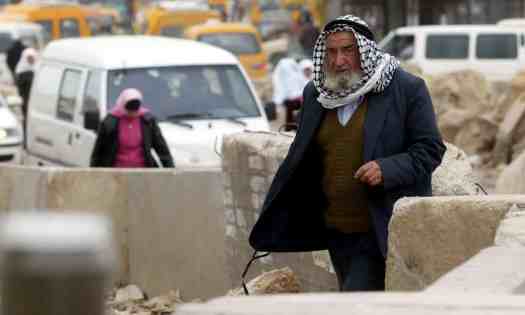
A Palestinian navigates cement blocks at an Israeli checkpoint. Travel bans, evictions, and home demolitions have become part of daily life for Palestinian families. (photo: Abbas Momani / AFP / Getty Images)

Banning NGO’s that support the BDS movement is a desperate attempt to silence human rights defenders.

By Asad Rehman | The Guardian | Jan 9, 2018


The bans and blacklists that we face today are only a shadow of what Palestinians endure every single day. This year we remember that it is 70 years since more than 800,000 Palestinians were forcibly displaced from their homes; they are still denied their right to return by Israel.

Over these seven decades, Israel has imposed travel bans, evictions, and home demolitions that have become part of daily life for Palestinian families. So are arbitrary arrest and detention without trial, collective punishment, violence, and torture without redress.


Israel’s “BDS blacklist,” published in the Israeli media on Sunday, bans 20 charities and human rights groups from entering the country, because they support the Palestinian-led boycott, divestment and sanctions (BDS) movement — a campaign that holds Israel to account over violations of Palestinian rights and international law.

This repressive move is borrowed straight from the playbook of South Africa’s apartheid regime, which had the same aim of silencing critics. Ultimately, Israel’s blacklist will fail, just as South Africa’s did. But first and foremost, the ban calls for a robust condemnation from people of conscience around the world — and the UK government, which continues to conduct “business as usual” with Israel. [As does the US government.]

As one of the blacklisted organizations, War on Want is in good company, alongside groups such as the US Campaign for Palestinian Rights, Jewish Voice for Peace and the American Friends Service Committee — a US Quaker group awarded a Nobel peace prize in 1947 for assisting people persecuted by the Nazis.

Continue reading “Israel’s BDS blacklist is straight out of apartheid”
Israel made itself a pariah by barring me and my fellow activists

gettyimages-452932550-1515362884
(photo: Getty Images)

The author with roots in Palestine speaks to her exile from her family’s homeland.

By Ariel Gold | The Forward | Jan 7, 2018


As BDS grows, builds and succeeds, Israel becomes more and more desperate to contain it. The latest effort is this blacklist. . . . By blacklisting organizations and banning even Jews and Quakers who take principled stances to support Palestinian human rights, Israel is isolating itself even further.


As a Jewish mother, one of the most important things to me is to instill in my children a sense of Jewish identity and values. For my now 15- and 16-year-old children, this has over the years included Tot-Shabbat at our synagogue, Hebrew school, Jewish summer camp and even Jewish youth group trips to Israel.

As a family, our history dates back to Rabbi Joseph Karo of 14th-Century Palestine, writer of the Shulchan Aruch (the codification of Jewish religious law). In 2015, I took my children to visit Karo’s grave, in the holy Jewish city of Safed. It was the most prominent grave in the cemetery. My son, daughter and I placed stones at the gravesite of the ancient rabbi our family descends from and said a short prayer.

But our identity as a Jewish family manifests in another way, too: in the responsibility to think critically and act as effectively and morally as possible. This means a commitment to ending the human rights abuses Israel commits against Palestinians.

Continue reading “Israel made itself a pariah by barring me and my fellow activists”

AFSC among human rights organizations barred from Israel

pb_59854_img_0818-lpr
(photo: AFSC)

Statement by the Nobel Peace Prize-winning peace organization on being blacklisted by Israel.

By American Friends Service Committee | Jan 8, 2018


“May we look upon our treasures, and the furniture of our houses, and the garments in which we array ourselves, and try whether the seeds of war have nourishment in these our possessions.”
— 17th-Century Quaker abolitionist John Woolman


Yesterday the American Friends Service Committee (AFSC) was included on a list of 20 organizations whose staff may be denied entry to Israel because of their support for the Palestinian-led boycott, divestment, and sanctions (BDS) movement.

Motivated by Quaker belief in the worth and dignity of all people, AFSC has supported and joined in nonviolent resistance for over 100 years. We answered the call for divestment from apartheid in South Africa, and we have done the same with the call for BDS from Palestinians who have faced decades of human rights violations.

Throughout our history, we have stood with communities facing oppression and violence around the world. In 1947 we were awarded the Nobel Peace Prize in part for our support for Jewish refugees fleeing the Holocaust. We will continue our legacy of speaking truth to power and standing for peace and justice without exception in Israel, occupied Palestine, and around the world.

Continue reading “AFSC among human rights organizations barred from Israel”

Jared Kushner’s diplomatic role complicated by his financial ties

07kushnerisrael1-superjumbo
Jared Kushner and his wife, Ivanka Trump, at the end of a diplomatic trip to Israel in May. Shortly before, Kushner Companies received a $30 million investment from one of Israel’s largest financial institutions, Menora Mivtachim. (photo: Mandel Ngan / Agence France-Presse / Getty Images)

Kushner continues to do business with major Israeli investors, and continues to donate to West Bank settlements.

By Jesse Drucker | The New York Times | Jan 7, 2018


“The ethics laws were not crafted by people who had the foresight to imagine a Donald Trump or a Jared Kushner. No one could ever imagine this scale of ongoing business interests . . . that give the president and his top adviser personal economic stakes in an astounding number of policy interests.”
— Robert Weissman, the president of Public Citizen, a nonprofit government ethics group


Last May, Jared Kushner accompanied President Trump, his father-in-law, on the pair’s first diplomatic trip to Israel, part of Mr. Kushner’s White House assignment to achieve peace in the Middle East.

Shortly before, his family real estate company received a roughly $30 million investment from Menora Mivtachim, an insurer that is one of Israel’s largest financial institutions, according to a Menora executive.

The deal, which was not made public, pumped significant new equity into 10 Maryland apartment complexes controlled by Mr. Kushner’s firm. While Mr. Kushner has sold parts of his business since taking a White House job last year, he still has stakes in most of the family empire — including the apartment buildings in and around Baltimore.

Continue reading “Jared Kushner’s diplomatic role complicated by his financial ties”

As the 2-State solution loses steam, a 1-state plan gains traction

merlin_130961651_7b205757-0f5f-4e40-b83d-1ed666aad56e-superjumbo
Israeli and American flags were projected on the walls of the Old City of Jerusalem last month just before President Trump recognized Jerusalem as Israel’s capital. (photo: Uriel Sinai / The New York Times)

Absorbing the nearly three million Palestinians on the West Bank would either spell the end of a Jewish state or destroy Israeli democracy if Palestinians were denied equal rights.

By David Halbfinger | The New York Times | Jan 5, 2018

“If the two-state solution dies, it will be the responsibility of Israel, not the Palestinians. But if the Israelis kill it, which they’re in the process of doing now, unfortunately with the help of Trump’s administration, then the only option will be for us to fight the apartheid system and bring it down, which means one state with equal rights for everybody.”
— Mustafa Barghouti, a physician who sits on the P.L.O.’s central council


The Israeli right, emboldened by President Trump’s recognition of Jerusalem as Israel’s capital, is not the only faction arguing for a single state between the Jordan River and the Mediterranean Sea.

The Palestine Liberation Organization has also begun to ask whether that might not be such a bad idea, though it has a radically different view of what that state would look like.

As momentum ebbs for a two-state solution to the Israeli-Palestinian conflict, both sides are taking another look at the one-state idea. But that solution has long been problematic for both sides.

For the Israelis, absorbing three million West Bank Palestinians means either giving up on democracy or accepting the end of the Jewish state. The Palestinians, unwilling to live under apartheid-like conditions or military occupation, have also seen two states as their best hope.

Now, for the first time since it declared its support for a Palestinian state side-by-side with Israel in 1988, the P.L.O. is seriously debating whether to embrace fallback options, including the pursuit of a single state.

Continue reading “As the 2-State solution loses steam, a 1-state plan gains traction”

The full Israeli blacklist

3097918427
Members of Jewish Voice for Peace and Code Pink, both on Israel’s newly announced BDS blacklist, demonstrate against Israeli military operations in Gaza, Washington, DC, Jul 21, 2014. (photo: Atheer Ahmed Kakan / Anadolu Age)

Here is the complete list of international NGO’s blacklisted by Israel.

US Organizations

  • American Friends Service Committee
  • American Muslims for Palestine
  • Code Pink
  • Jewish Voice for Peace
  • National Students for Justice in Palestine
  • US Campaign for Palestinian Rights

European Organizations

  • The France Association Palestine Solidarity
  • BDS France
  • BDS Italy
  • The European Coordination of Committees and Associations for Palestine
  • Friends of Al-Aqsa
  • Ireland Palestine Solidarity Campaign
  • The Palestine Committee of Norway
  • Palestine Solidarity Association of Sweden
  • Palestine Solidarity Campaign
  • War on Want
  • BDS Kampagne

Other Organizations

  • BDS Chile
  • BDS South Africa
  • BDS National Committee

Read the reference article here →

I’m a US Jew on Israel’s BDS blacklist, I have family in Israel, but I won’t be silenced

1169020029
Rebecca Vilkomerson (right) in July 2016 with Caroline Hunter, who was part of the movement to end apartheid in South Africa. (photo: JVP)

Israel wants to intimidate the growing numbers of Jews fighting for equality and freedom for all people in Israel/Palestine. It won’t work.

By Rebecca Vilkomerson | Haaretz | Jan 7, 2018


As long as Israel continues to violate the fundamental rights of Palestinians, people will continue to speak out — Palestinians, Jews, and people of conscience the world over.


The first time I went to Israel I was four months old. Throughout my childhood and young adulthood I visited regularly: My grandparents, in Haifa; and my aunt, uncle and cousins, on a religious kibbutz near the Jordanian border. There was no place, with the exception of the town where I grew up, to which I felt more connected.

As an adult, married to an Israeli, we spent three years living in Tel Aviv with our two young daughters, who also have Israeli citizenship.

In March last year, the Israeli Knesset passed a bill that forbids entry to “foreign nationals who call for economic, cultural or academic boycotts of either Israel or the settlements,” and yesterday, the Ministry of Foreign Affairs announced that as a result 20 organizations have been placed on a blacklist that would prohibit entry specifically to its leaders. That list was published in full Sunday. Jewish Voice for Peace, the organization of which I am executive director, is one of the organizations named.

Despite the fact that my grandparents are buried there, that my aging in-laws still live there, and my extensive ties of friendship and family, my support for the Boycott, Divestment and Sanctions movement (BDS) for Palestinian rights now excludes me from Israel.

Continue reading “I’m a US Jew on Israel’s BDS blacklist, I have family in Israel, but I won’t be silenced”

Nobel Peace Prize-winning American Friends Service Committee banned from Israel

5184
Palestinians walk past a sign on a wall in Bethlehem calling for a boycott of Israeli products from Jewish settlements. (photo: Thomas Coex / AFP / Getty Images)

Israel imposes travel ban on 20 foreign NGOs over boycott movement.

By Peter Beaumont | The Guardian | Jan 7, 2018


“This move is reminiscent of South Africa’s apartheid regime which also prepared blacklists in order to punish people and prevent the entry of those opposed to its racist policies.”
— Hassan Jabareen, of the Legal Centre for Arab Minority Rights in Israel


The prominent British campaign group War on Want has been listed as one of 20 foreign NGOs whose representatives are banned from visiting Israel over their support of the pro-Palestinian boycott, sanctions and divestment (BDS) movement.

The publication of the list, which also includes a well-known Jewish anti-occupation group and a Nobel peace prize-winning US Quaker group, had been threatened for months by Israel.

The organizations were singled out by Israel’s rightwing strategic affairs and public security minister, Gilad Erdan, for advocating boycotts of Israel over its treatment of Palestinians.

Human rights groups condemned the move as an assault on free speech. A number of individuals have been refused entry into Israel in recent months, including a prominent African theologian and official of the World Council of Churches.

Continue reading “Nobel Peace Prize-winning American Friends Service Committee banned from Israel”

Israel blacklists 20 international organizations

08jerusalem1-master768
The Shuafat refugee camp, behind a section of Israel’s separation barrier in Jerusalem. (photo: Oded Balilty / Associated Press

Israel may also be compiling a blacklist of individuals to be barred from entry.

By David Halbfinger | The New York Times | Jan 7, 2018


“When Israel, which aims to portray itself to the world as liberal and democratic, blacklists activists dedicated to nonviolent organizing and dissent, it only further exposes itself as a fraud.”
— Yousef Munayyer, the director of the Campaign for Palestinian Rights


Israel on Sunday published a blacklist of 20 organizations, including a Jewish group in the United States, whose leaders it has barred from entering the country for supporting an economic, cultural and academic boycott of Israel.

The list was drawn up under a nearly year-old law enacted to combat the so-called boycott, divestment and sanctions movement, which Israelis overwhelmingly oppose, consider anti-Semitic and view as calling for the country’s destruction.

Supporters of the pressure strategy favor the boycott of Israel until it ends the occupation of the West Bank, provides full equality under the law to Palestinian citizens of Israel and grants a right of return to Palestinian refugees. But refugees number in the millions, and their return would probably spell the end of Israel as a Jewish state.

Continue reading “Israel blacklists 20 international organizations”

Tapes reveal Egyptian leaders’ tacit acceptance of Jerusalem move

merlin_131695367_2ba55a6a-c40d-4fa3-b1e0-42e8985d5470-master675
As Palestinian protesters clashed with Israeli soldiers in the West Bank, an Egyptian intelligence officer was quietly working to persuade Egyptians to accept the decision. (photo: Shadi Hatem / European Pressphoto Agency)

Arab governments publicly condemned President Trump’s statement on Jerusalem but criticism in state-owned and pro-government media across the Arab world was muted.

By David D. Kirkpatrick | The New York Times | Jan 6, 2018


“How is Jerusalem different from Ramallah, really?”
— Egyptian intelligence officer Capt. Ashraf al-Kholi


As President Trump moved last month to recognize Jerusalem as the capital of Israel, an Egyptian intelligence officer quietly placed phone calls to the hosts of several influential talk shows in Egypt.

“Like all our Arab brothers,” Egypt would denounce the decision in public, the officer, Capt. Ashraf al-Kholi, told the hosts.

But strife with Israel was not in Egypt’s national interest, Captain Kholi said. He told the hosts that instead of condemning the decision, they should persuade their viewers to accept it. Palestinians, he suggested, should content themselves with the dreary West Bank town that currently houses the Palestinian Authority, Ramallah.

Continue reading “Tapes reveal Egyptian leaders’ tacit acceptance of Jerusalem move”